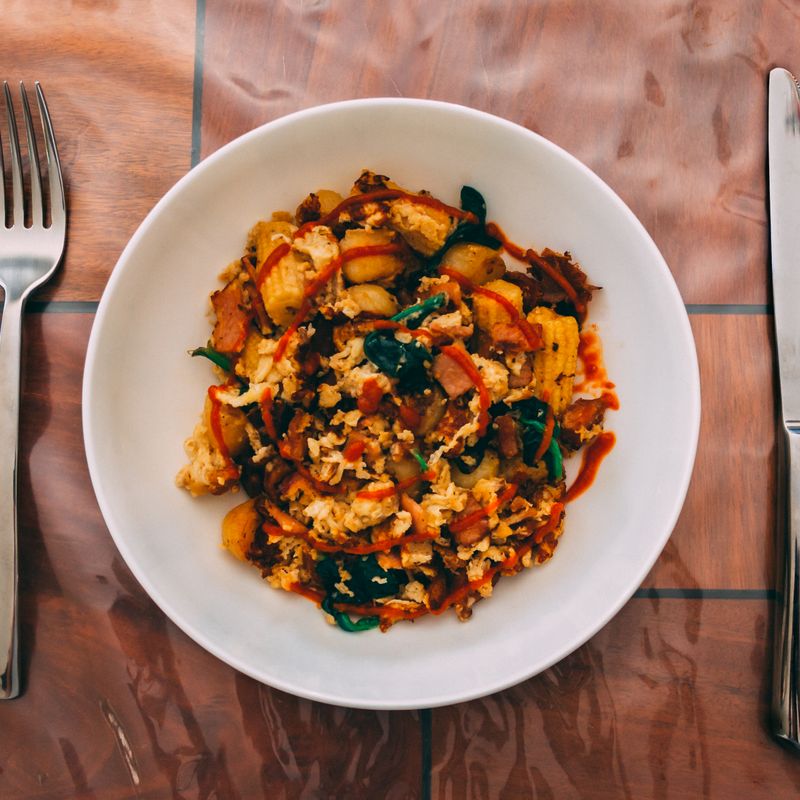
Spanish Chorizo and White Bean Stir-Fry
A rustic Spanish-inspired stir-fry that brings together smoky chorizo, tender white beans, and colorful bell peppers in minutes. The chorizo releases its oils to coat the vegetables, creating a deeply savory sauce enhanced by smoked paprika and garlic. Serve over rice or with crusty bread to soak up every drop.
Steps
Before you start
- Drain and rinse the canned white beans thoroughly to remove excess starch
- Have all ingredients prepped and within arm's reach before you start cooking
- Use a large skillet (12-inch) to avoid crowding the pan
Cook chorizo until crispy
- Heat the 12-inch skillet over medium-high heat.
- Add the sliced chorizo and cook for 4–5 minutes, stirring occasionally, until the edges are browned and the chorizo begins to release its flavorful oils.
- The slices should look slightly shrunken and golden.
- Transfer to a paper-towel-lined plate; leave about 1 tablespoon of the chorizo oil in the pan.
+ Show details− Hide details
Ready when: Edges browned and golden; chorizo releases oils
Tip: Don't remove all the chorizo fat—it's the base for your sauce. Spanish chorizo is already fully cooked, so you're just rendering the fat and crisping the edges.
Sauté bell peppers
- To the same skillet (still over medium-high heat), add the red and yellow bell pepper chunks.
- Stir frequently for 5 minutes until the peppers are tender-crisp with light golden spots on the edges.
- They should still have some bite and not be mushy.
+ Show details− Hide details
Ready when: Peppers are tender-crisp with light caramelization
Tip: High heat and frequent stirring help the peppers caramelize slightly without steaming. If your pan is too crowded, they'll release moisture and become soft instead.
Add garlic and spices
- Reduce heat to medium.
- Push the peppers to the sides of the pan and add the minced garlic to the center, cooking for 30 seconds until fragrant.
- Then sprinkle the smoked paprika and ground cumin over everything and stir for 30 seconds to toast the spices and coat all the vegetables.
- You'll smell the deep, smoky aroma building.
+ Show details− Hide details
Ready when: Spices are fragrant and evenly distributed
Tip: Toasting the spices blooms their flavors. Don't let them burn—30 seconds is enough. If you're using heat-sensitive paprika, reduce to medium or even medium-low before adding.
Add beans and chorizo
- Add the drained white beans and cooked chorizo back to the skillet.
- Stir everything together for 2–3 minutes until the beans are heated through and well coated with the oil and spices.
- The mixture should be fragrant and evenly combined.
+ Show details− Hide details
Ready when: Beans are heated through and evenly coated; dish is steaming
Tip: If the pan looks dry, drizzle with a little extra olive oil. The stir-fry should have a glossy, cohesive appearance.
Finish with lemon and seasonings
- Remove from heat.
- Squeeze the fresh lemon juice over the entire dish and stir to combine.
- Taste and adjust with salt, freshly ground black pepper, and a pinch of red pepper flakes if desired.
- The lemon brightens the rich, smoky flavors and adds a vital citrus note.
+ Show details− Hide details
Ready when: Seasonings are balanced; lemon is fully incorporated
Tip: Always finish after removing from heat so the acid doesn't cook off and the fresher flavor comes through. Taste before serving to ensure the balance is right for your palate.
Garnish and serve
- Transfer to a serving bowl or individual plates.
- Scatter the fresh chopped parsley over the top.
- Serve immediately, optionally with crusty bread, rice, or sautéed greens on the side.
+ Show details− Hide details
Tip: Parsley adds a bright, herbaceous finish and color contrast. If you prefer a more Spanish touch, use cilantro instead, or skip it and pass fresh lemon wedges at the table.
Good to know
Tips
- Spanish chorizo varies by brand and region—look for a semisoft, cured version that's meant to be sliced and eaten, not the raw chorizo meant for crumbling. Avoid Italian or Mexican chorizo for this recipe, as they have different flavor profiles.
- If your skillet sticks or seems dry after cooking the chorizo, the oil might have rendered away. Add the tablespoon of olive oil before sautéing the peppers to prevent sticking.
- This stir-fry pairs beautifully with saffron rice, crusty bread for soaking up the sauce, or a simple green salad with sherry vinaigrette to cut the richness.
- Smoked paprika oxidizes quickly and loses flavor once a can is opened. Store it in an airtight container away from light and heat, and replace it every 6 months for best results.
Storage & reheating
Store leftovers in an airtight container in the refrigerator for up to 3 days. To reheat, warm gently in a skillet over medium heat (2–3 minutes) or microwave in a covered bowl for 60–90 seconds, stirring halfway through. The stir-fry will keep its texture best if reheated gently rather than at high temperature.
Substitutions
- canned white beans (cannellini or great northern), drained and rinsed → chickpeas or cannellini beans (any pale, mild-flavored bean works). Great northern beans, butter beans, or even kidney beans will work; the cooking time remains the same since they're canned and just being warmed through.
- large red bell pepper → orange or green bell pepper, or a mix of any color. Red peppers are naturally sweeter and pair beautifully with chorizo, but any bell pepper color works. Avoid green peppers if your family dislikes their slightly bitter edge.
- smoked paprika → regular (non-smoked) paprika, or hot paprika if you prefer more heat. Smoked paprika is traditional and adds depth, but regular paprika will work in a pinch. Use hot paprika sparingly—start with ¾ tsp instead of 1.5 tsp and adjust to taste.
- fresh flat-leaf parsley, chopped → fresh cilantro or chives. Cilantro adds a Latin flair and pairs well with chorizo. Chives add oniony freshness. Both brighten the dish in different ways.
More stir-fries
See all →



Find more like this
- Meal
- Dinner
- Cuisine
- Spanish
- Main ingredient
- White BeansBell Peppers
- Method
- Stovetop