Spanish Almond and Garlic Ajo Blanco Dip
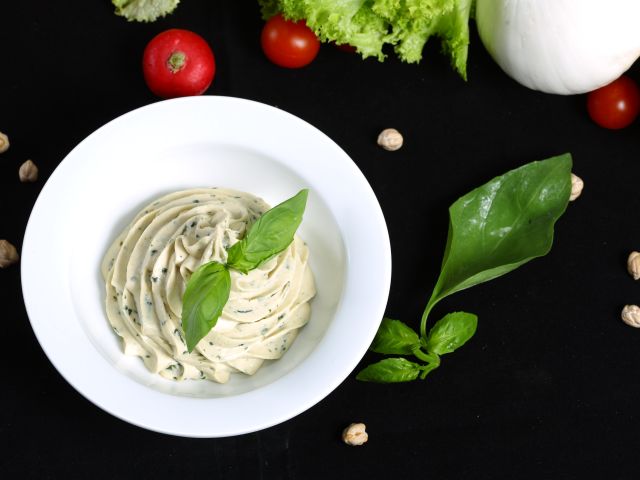
A silky, pale Andalusian almond dip enriched with garlic, bread, and sherry vinegar. Ajo blanco balances nutty roasted almonds with pungent garlic and tangy vinegar, bound by crustless bread and Spanish olive oil into a luxurious spread that tastes far more complex than its simple ingredients suggest. Serve with crusty bread, crudités, or grilled vegetables.
Steps
Before you start
- Use blanched roasted almonds for a pale, refined dip; skin-on almonds will create a grainier, darker result
- If your almonds seem dry, soak them in cool water for 15 minutes, then drain well before blending
- Have ice water on hand to loosen the mixture if it becomes too thick while blending
Soak the bread
- Place the torn bread pieces in a small bowl.
- Pour the ice water over them and let sit for 1–2 minutes until the bread is fully saturated.
- Do not squeeze the bread; simply allow it to absorb the water naturally.
+ Show details− Hide details
Ready when: Bread is soft and spongy throughout
Tip: This step creates the emulsifying base that will give the dip its silky texture; don't skip it.
Pulse almonds and garlic
- Add the almonds and garlic to the food processor.
- Pulse 8–10 times until the mixture is a coarse, sandy texture with no large pieces remaining.
- Scrape the bowl with a rubber spatula and pulse 2–3 more times.
- This step prevents the garlic from being over-processed into a paste while the almonds are still chunky.
+ Show details− Hide details
Ready when: Mixture is sandy and even, no whole almonds or large garlic pieces visible
Tip: Pulsing rather than continuous blending prevents overheating the almonds and releasing excess oil, which muddies the pale color.
Add bread and vinegar
- Add the soaked bread (with any remaining water) and the sherry vinegar to the food processor.
- Blend on medium speed for 30–45 seconds, pausing once to scrape down the sides with a rubber spatula.
+ Show details− Hide details
Ready when: Mixture is smooth and beginning to clump around the processor bowl
Tip: The bread is the key to emulsification; it allows the oil and water to bind into a creamy paste.
Drizzle in olive oil
- With the processor running on low speed, slowly drizzle the Spanish olive oil through the feed tube in a thin stream over 1–2 minutes.
- Add it too quickly and the mixture will separate.
- As the oil incorporates, the dip will lighten in color and become silkier.
+ Show details− Hide details
Ready when: Oil is fully incorporated, dip is pale, creamy, and homogeneous with no visible oil pools
Tip: This slow incorporation is crucial to prevent the dip from breaking into a greasy, separated mess. If it does separate, pulse in a few ice cubes and process for a few seconds.
Season and adjust consistency
- Add a pinch of sea salt and white pepper.
- Blend briefly to incorporate.
- If the dip is very thick, pulse in 1–2 tablespoons of ice water at a time until you reach a texture like soft mayonnaise—spreadable but not runny.
- Taste and add more salt, vinegar, or a few drops of water as needed.
+ Show details− Hide details
Ready when: Dip is creamy, pale, and tastes well-balanced—nutty, tangy, and garlicky without any single flavor dominating
Tip: White pepper gives a cleaner flavor than black pepper and keeps the pale color intact. Taste as you season; garlic can intensify slightly as the dip sits.
Transfer and serve
- Spoon the ajo blanco into a serving bowl.
- Drizzle lightly with additional Spanish olive oil and, if desired, garnish with a few toasted almond slivers or fresh parsley.
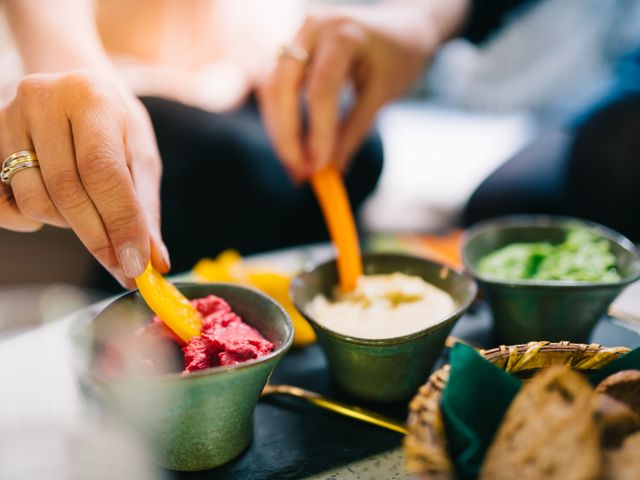
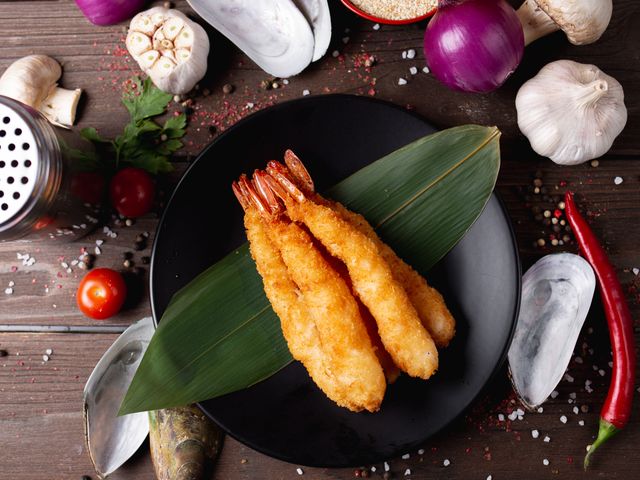
- Serve at room temperature with crusty bread, sliced vegetables, or alongside grilled shrimp or fish.
+ Show details− Hide details
Tip: Ajo blanco tastes better after 30 minutes at room temperature, as the flavors marry and mellow slightly. Serve it the same day for the freshest taste.
Good to know
Tips
- The pale ivory color of ajo blanco is part of its appeal—it comes from blanched almonds and careful handling. Any browning indicates over-processing or old almonds; use the freshest roasted almonds you can find.
- If your dip separates or becomes grainy after blending, it's often because the oil was added too fast or the room was warm. Pulse in 2–3 ice cubes and blend for a few seconds to emulsify it back together.
- Ajo blanco is traditionally served as a cold soup (thinned with more water and chilled) in summer Spain. For a dip, keep it thicker by using less water. The same recipe works either way.
- This dip pairs beautifully with Spanish cured jamón ibérico, Manchego cheese, roasted red peppers, or grilled shrimp. In Andalusia, it's also spooned over chilled gazpacho or served with grilled fish.
Make ahead
You can prepare the dip up to 2 days ahead. Store it in an airtight container in the refrigerator, covered with a thin layer of olive oil to prevent browning. Allow it to come to room temperature for 15–20 minutes before serving, as the flavors are muted when cold.
Storage & reheating
Room temperature (up to 4 hours): Cover loosely with plastic wrap. Refrigerator (up to 3 days): Store in an airtight container, topped with a thin layer of olive oil. Freezer (up to 1 month): Transfer to a freezer-safe container; thaw overnight in the refrigerator and re-blend briefly with a splash of water if the texture has become grainy.
Substitutions
- Spanish sherry vinegar → Red wine vinegar or aged balsamic vinegar (use slightly less—start with 2 tablespoons). Sherry vinegar's subtle sweetness is traditional, but other vinegars work. Balsamic will darken the dip slightly and add more body.
- blanched roasted almonds (unsalted) → Blanched unsalted peanuts (same weight) or pine nuts (use only 1 cup / 125 g due to their richness). Peanuts create an earthier dip; pine nuts yield a more luxurious, buttery result. The pale color and texture will be slightly different.
- Spanish extra virgin olive oil, fruity → High-quality extra virgin olive oil from another region (Greek, Italian, or Portuguese). Spanish fruity oils are traditional, but any fine olive oil works. Avoid neutral oils; the oil's flavor is essential.
- day-old white bread, crusty → A portion of soaked blanched almonds (reduce roasted almonds by ¼ cup / 30 g and use ¼ cup / 30 g blanched raw almonds, soaked and drained, in place of bread). For a nut-forward dip with no bread. The texture will be slightly grainier but equally authentic. Some regions skip bread entirely.