Sourdough Discard Beet and Walnut Patties
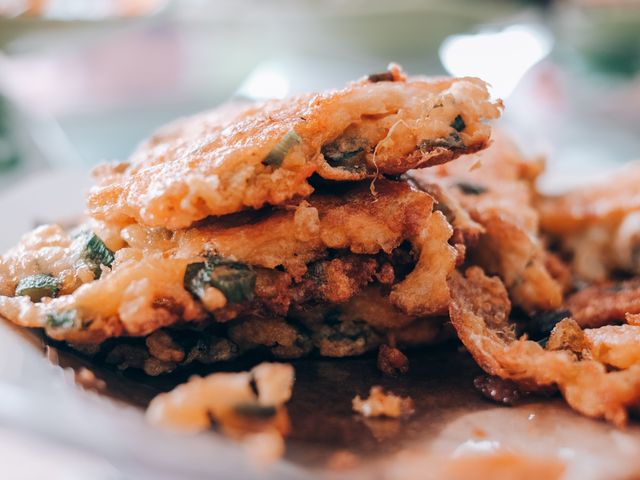
Crispy, golden pan-fried patties made with tangy sourdough discard, earthy roasted beets, crunchy walnuts, and fresh dill. These savory bites are naturally nutty and slightly fermented, with a tender crumb inside and caramelized edges. Inspired by Eastern European cooking traditions, they're perfect as appetizers, side dishes, or snacks served with sour cream or yogurt.
- Prep
- 20 min
- Cook
- 12 min
- Wait
- 15 min
- Total
- 47 min
- Makes
- 8–10 patties (2–2½ inches / 5–6 cm each)
Steps
Before you start
- Roast or use pre-cooked beets; they must be completely cooled before mixing
- Have your sourdough discard at room temperature
- Finely chop walnuts and fresh dill just before use so they don't oxidize or weep
- Measure out all ingredients before you begin—the batter is wet and will not wait
Mix wet ingredients
- In a medium bowl, whisk together the sourdough discard (1 cup / 240 ml) and the room-temperature egg until combined.
- The mixture will be thick and slightly bubbly from the fermentation.
- Stir well to create a uniform base.
+ Show details− Hide details
Ready when: Egg is fully incorporated with no streaks; mixture is homogeneous
Tip: If your sourdough discard is very thick (like stiff starter), thin it slightly with 1–2 tablespoons water before mixing.
Fold in grated beets and walnuts
- Add the finely grated roasted beets (6 oz / 170 g) and chopped walnuts (½ cup / 60 g) to the sourdough mixture.
- Fold gently with a wooden spoon until the beets are evenly distributed and there are no visible streaks.
- The batter will be deep red and studded with walnut pieces.
+ Show details− Hide details
Ready when: Beets are evenly mixed throughout with no raw pockets
Tip: Overmixing will toughen the patties; stop as soon as no white streaks remain.
Add flour, herbs, and seasonings
- Sprinkle the all-purpose flour (¾ cup / 90 g), fresh dill (3 tbsp / 12 g), kosher salt (½ tsp / 3 g), and black pepper (¼ tsp) over the beet mixture.
- Using a wooden spoon, fold everything together gently but thoroughly until a thick, slightly wet batter forms.
- A few small flour streaks are fine—stop folding once the flour is largely incorporated and the dill is distributed.
+ Show details− Hide details
Ready when: Flour is mostly incorporated; dill is evenly scattered; batter is thick and holds loosely together
Tip: The batter should be wetter than a typical pancake batter but thicker than a crêpe batter. It will be sticky—this is correct.
Rest the batter and preheat pan
- Transfer the batter to a shallow plate and refrigerate for 15 minutes.
- This rest allows the flour to hydrate and makes the patties easier to shape.
- While the batter chills, place a large cast-iron or stainless steel skillet over medium-high heat and allow it to heat for 2–3 minutes until it is very hot (a drop of water should sizzle immediately).
+ Show details− Hide details
Ready when: Skillet is hot enough that a bead of water dances across the surface; batter is noticeably firmer
Tip: A hot pan is essential for crispy exteriors; if the pan is not hot enough, the patties will absorb oil and be greasy.
Oil the pan and prepare for frying
- Add 1½ teaspoons of neutral oil to the hot skillet and tilt the pan to coat the bottom lightly.
- Let the oil heat for 15 seconds until it shimmers and just begins to smoke slightly.
- You will use the remaining oil in batches as needed.
+ Show details− Hide details
Ready when: Oil shimmers and is very hot; slight smoke appears
Tip: Do not overheat the oil to the point of heavy smoking, as this burns the exterior before the center cooks.
Shape and fry first batch
- Working quickly, use a wet spoon or ¼-cup measure to scoop the batter onto the hot skillet, spacing patties about 2 inches (5 cm) apart.
- You should fit 3–4 patties in the skillet without crowding.
- Do not flatten them yet; let them cook undisturbed for 2–3 minutes on medium-high heat until the bottoms are golden brown and crispy.
- The edges will darken noticeably and the top will look damp but set.
+ Show details− Hide details
Ready when: Bottoms are deep golden brown; patty edges are crispy and browned; top is damp but no longer shiny
Tip: Resist the urge to flatten or move the patties—they will break apart. Let them develop a sturdy crust first.
Flip and cook second side
- Using a thin spatula, gently slide it under each patty and flip carefully.
- The patty should hold together; if it seems fragile, wait another 30 seconds.
- Cook the second side for 2–3 minutes on medium-high heat until it is also golden brown and the patty is firm to a gentle press.
+ Show details− Hide details
Ready when: Second side is golden brown; patty feels firm to gentle pressure; no wet batter visible at the edges
Tip: If the second side is browning much faster than the first, lower the heat slightly to medium. The interior needs time to cook through.
Drain and keep warmOven 200°F / 95°C
- Transfer the cooked patties to a plate lined with paper towels to drain excess oil.
- Keep the finished patties warm in a 200°F (93°C) oven or loosely covered with foil on the stovetop while you fry the remaining batter.
- Add another 1½ teaspoons of oil to the skillet before each new batch and repeat the cooking process until all batter is used.
+ Show details− Hide details
Ready when: Oil has drained onto paper towels; patties remain warm but not dried out
Tip: Blot the patties very briefly—you want them to retain some moisture inside. Do not let them cool completely or they will become dense.
Serve warm
- Arrange the warm patties on a serving platter.
- Serve immediately with a dollop of sour cream or Greek yogurt on the side for dipping, or a small spoonful on top of each patty.
- A sprinkle of fresh dill or a crack of fleur de sel on top adds a nice finishing touch.
+ Show details− Hide details
Ready when: Patties are still warm and steam rises gently; sour cream is ready
Tip: These patties are best eaten within 20 minutes of cooking, while their exterior is still crispy and the interior tender.
Good to know
Tips
- Sourdough discard patties are less crispy than regular pancakes because the sourdough binds moisture; embrace their tender-but-sturdy texture and aim for deeply caramelized edges rather than paper-thin crispness.
- If patties are falling apart as you flip them, your batter is too wet. Next time, reduce sourdough discard to ¾ cup or add 2–3 more tablespoons of flour. The batter should hold together but still be pourable.
- Roasted beets stay fresher and taste sweeter than canned or boiled beets; roast them yourself or buy vacuum-packed roasted beets from the grocery store to ensure the best flavor.
- These patties freeze beautifully, making them an ideal make-ahead appetizer or snack for lunch boxes. Freeze them uncooked on a baking sheet before transferring to bags, or fry them first and freeze for quick reheating.
Make ahead
"You can prepare the batter through step 3 up to 4 hours ahead and refrigerate it. Bring it to room temperature for 10 minutes before shaping and frying. Alternatively, fry the patties earlier in the day and reheat them in a 350°F (175°C) oven for 5–8 minutes until warmed through and edges crisp up again."
Storage & reheating
"Room temperature (2 hours): Keep in an airtight container and reheat in a 350°F (175°C) oven for 5–8 minutes. Refrigerator (4 days): Store covered in an airtight container; reheat gently as above. Freezer (2 months): Wrap cooled patties individually in plastic wrap and foil, or layer in a freezer-safe container with parchment between patties. Thaw in the refrigerator overnight and reheat in a 350°F (175°C) oven until heated through and edges crisp, about 10 minutes."
Substitutions
- roasted beets → 2–3 raw medium beets, peeled and finely grated (about 6 oz / 170 g). Raw beets will make the batter wetter; reduce the sourdough discard to ¾ cup (180 ml) to compensate. The flavor will be slightly earthier and less sweet.
- walnuts → Toasted pecans, sunflower seeds, or pumpkin seeds, finely chopped. Pecans will add a milder, sweeter nuttiness. Seeds will provide crunch with less fat. Use the same weight.
- fresh dill → 2 tablespoons fresh parsley plus 1 tablespoon fresh chives, finely chopped. This swap provides a gentler herb flavor without dill's distinctive anise notes.
- sour cream or Greek yogurt, for serving → Crème fraîche, Greek yogurt, or a mixture of yogurt and fresh horseradish. Yogurt is tangier and lighter; horseradish adds a pleasant sharp bite that complements the earthiness of beets.