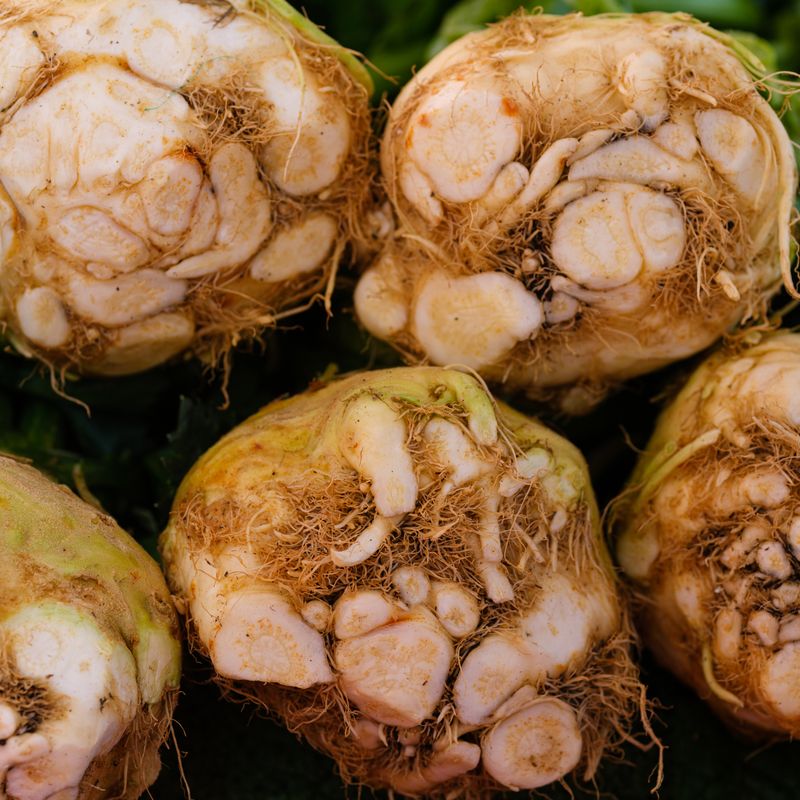
Slow Cooker Roasted Celeriac Root with Crispy Mustard Seed Oil Amaranth
Tender, caramelized celeriac slowly cooks in a warm spice bath while amaranth grains are finished in a mustard seed-infused oil with crispy seeds and aromatic garlic. Together they create a sophisticated vegetable-and-grain side with nutty depth and pleasant texture contrast—perfect alongside roasted meats or as a vegetarian main.
- Prep
- 20 min
- Cook
- 45 min
- Wait
- 4 hr 30 min
- Total
- 5 hr 35 min
- Makes
- 4 servings (about 1¼ cups each)
Steps
Before you start
- Peel the celeriac fully and cut into even 1-inch cubes so they cook uniformly
- Rinse amaranth under cold water to remove any debris
- Have all spices measured and ready before starting
- Plan for 4.5 hours in the slow cooker—cook on low
Build the slow cooker base
- Add the cubed celeriac to a 4–5 quart slow cooker along with the broth, white wine, sliced shallot, minced garlic, thyme sprigs, bay leaf, crushed coriander seeds, and black peppercorns.
- Stir gently to combine and season lightly with sea salt.
- Cover and set to low heat.
+ Show details− Hide details
Tip: Cut celeriac into uniform 1-inch pieces so they all cook at the same rate and become tender without falling apart.
Slow cook celeriac until tender
- Cook the celeriac on low for 4 hours.
- The cubes should be completely tender when pierced with a fork, with the edges beginning to soften but still holding their shape.
- The braising liquid will be aromatic with coriander and thyme.
- Do not stir during cooking.
+ Show details− Hide details
Ready when: Celeriac cubes are fork-tender and edges soften slightly
Tip: Resist the urge to open the lid—every peek adds 15–20 minutes to cooking time.
Toast and bloom mustard seeds
- About 30 minutes before the celeriac finishes (after 3.5 hours), warm the olive oil in a small saucepan over medium heat.
- Add the brown mustard seeds and sliced garlic cloves.
- Toast for 2–3 minutes, stirring frequently, until the seeds begin to crackle and pop loudly and smell nutty and slightly spicy.
- Add the red pepper flakes if using.
- Remove from heat and set aside.
+ Show details− Hide details
Ready when: Mustard seeds pop and crackle; garlic is golden and fragrant
Tip: Listen for the crackling sound—it signals the seeds are fully toasted. Don't let them burn or they'll taste bitter.
Cook amaranth in broth
- In the same saucepan or a fresh one, bring 2 cups (480 ml) of vegetable broth to a boil.
- Stir in the rinsed amaranth grains, reduce heat to low, and simmer covered for 18–20 minutes.
- The amaranth is done when all the liquid is absorbed and the grains are tender with a slight nuttiness, and you can see the little spiral germ at the grain's center.
+ Show details− Hide details
Ready when: All liquid is absorbed, grains are tender and fluffy
Tip: Use a lid or cover to prevent evaporation. Amaranth can foam slightly—this is normal.
Finish celeriac and strain
- When the celeriac has finished cooking (after 4 hours total), check the seasoning and adjust with additional sea salt if needed.
- Using a slotted spoon, transfer the celeriac cubes to a serving bowl, leaving most of the braising liquid behind.
- Discard the thyme sprigs and bay leaf.
+ Show details− Hide details
Tip: Reserve a few tablespoons of braising liquid if the celeriac seems very dry; fold it in gently to add moisture.
Combine and finish with mustard oil
- Fluff the cooked amaranth with a fork and fold it gently into the celeriac.
- Pour the warm mustard seed oil over the top, including the crispy garlic slivers and popped seeds.
- Toss very gently to combine, being careful not to break up the tender celeriac.
- Season to taste with additional sea salt.
+ Show details− Hide details
Tip: The mustard oil will pool slightly at the bottom—this is intentional and adds flavor with every bite.
Garnish and serve
- Divide the celeriac and amaranth mixture among serving bowls or plates.
- Scatter the fresh chopped parsley and lemon zest over the top.
- Serve warm as a side dish or as a light vegetarian main with crusty bread and a simple green salad.
+ Show details− Hide details
Tip: Add the parsley just before serving so it stays bright green and fresh.
Good to know
Tips
- Celeriac browns beautifully and becomes creamy in the slow cooker—this slow cooking method is far superior to quick sautéing for developing its natural sweetness.
- The timing is designed so the amaranth finishes cooking just as the celeriac is done, then both are combined while warm so flavors meld.
- Amaranth is a complete protein containing all nine amino acids, making this dish hearty and satisfying even without meat.
- The mustard seed oil is the signature element—don't skip it or use pre-made mustard oil, as toasting the seeds fresh creates incomparable flavor and texture.
Make ahead
Prepare the celeriac cubes up to 1 day ahead and store them covered in the refrigerator. The slow cooker work can be done entirely the day before; reheat gently on low in the slow cooker for 30 minutes, then finish with the mustard seed oil just before serving.
Storage & reheating
Store leftovers in an airtight container in the refrigerator for up to 3 days. Reheat gently in a skillet over medium-low heat with a splash of broth, stirring occasionally, for about 5 minutes. The dish does not freeze well due to the texture of both the celeriac and amaranth.
Substitutions
- amaranth grains → farro, spelt berries, or pearl barley (use the same weight; cooking time may increase to 25–30 minutes). These grains have a similar nutty flavor and chewy texture; adjust cooking time as needed.
- celeriac root, peeled → parsnips or rutabaga, peeled and cut into 1-inch cubes. Both have a natural sweetness and will caramelize similarly in the slow cooker. Reduce cooking time to 3–3.5 hours for parsnips.
- brown mustard seeds → cumin seeds or fennel seeds, toasted and ground. Provides different spice notes but maintains the toasted-seed oil concept. Use 1 tablespoon of whole seeds, toasted and lightly ground.
- dry white wine → additional vegetable broth or vermouth. Maintains acidity and depth without the wine; use the same amount.
More vegetable sides
See all →


Find more like this
- Meal
- Dinner
- Method
- StovetopSlow Cooker