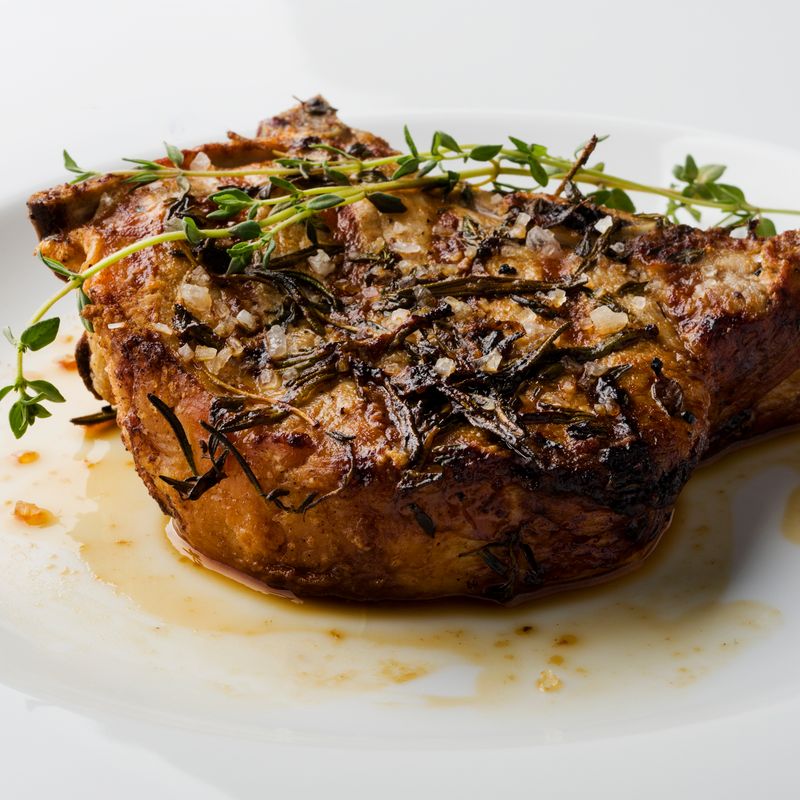
Simple Herb Vinegar Pork Chop Marinade
A bright, herbaceous marinade using apple cider vinegar as its acidic base, with dried thyme and rosemary to flavor pork chops. The vinegar tenderizes the meat while the aromatics infuse it with savory depth. Ready in 30 minutes for a quick weeknight meal, or marinate overnight for richer flavor.
- Prep
- 5 min
- Cook
- 10 min
- Wait
- 30 min
- Total
- 45 min
- Makes
- Enough marinade for 4 pork chops (½ cup)
Steps
Before you start
- Pat pork chops dry with paper towels so they sear properly
- Have a shallow dish or zip-lock bag ready to hold the chops and marinade
- Read through the marinating time: minimum 30 minutes, up to 24 hours ahead
Combine marinade ingredients
- In a small bowl, whisk together the apple cider vinegar, olive oil, minced garlic, dried thyme, crushed rosemary, salt, and black pepper until well combined.
- The oil and vinegar will emulsify slightly as you whisk.
+ Show details− Hide details
Ready when: Mixture is uniform and herbs are fully incorporated
Tip: Crush the rosemary between your palms before adding to release its aromatic oils and prevent tough leaf pieces in the final dish
Marinate the pork chops
- Place the pork chops in a shallow glass dish or gallon-size zip-lock bag.
- Pour the marinade evenly over them, turning to coat all sides.
- If using a bag, press out excess air and seal.
- Refrigerate for at least 30 minutes, or up to 24 hours.
- The longer they marinate, the more tender and flavorful they become.
+ Show details− Hide details
Ready when: Pork chops are evenly coated and have sat for at least 30 minutes
Tip: For overnight marinating, do not let the pork sit more than 24 hours or the vinegar will make the outer surface mushy
Remove chops and prepare skillet
- Remove the pork chops from the refrigerator 15 minutes before cooking so they reach close to room temperature.
- This ensures even cooking.
- Pat them dry with paper towels.
- Heat a 12-inch (30 cm) skillet over medium-high heat (about 5 minutes) until a drop of water sizzles immediately on contact.
+ Show details− Hide details
Ready when: Skillet is very hot and a water drop skitters across the surface
Tip: Dry the chops well so they develop a golden crust rather than steaming; moisture prevents browning
Sear the pork chops
- Once the skillet is hot, carefully lay the pork chops flat in the pan without crowding (work in batches if needed).
- Do not move them for 4 minutes.
- They should develop a deep golden-brown crust on the first side.
+ Show details− Hide details
Ready when: First side is deep golden-brown and releases easily from the pan
Tip: Resist the urge to flip early; moving the chops disturbs the crust formation and they will stick or tear
Flip and finish cooking
- Flip each chop and cook on the second side for 3 to 4 minutes over medium-high heat until the internal temperature reaches 140–145°F (60–63°C) at the thickest part away from the bone.
- The chops will continue cooking slightly as they rest.
+ Show details− Hide details
Ready when: Internal temperature is 140–145°F (60–63°C) measured with an instant-read thermometer
Tip: Modern food safety guidelines allow pork to be served at 145°F; slightly pink flesh near the bone is safe and keeps the meat juicy
Rest and serveOven 150°F / 65°C
- Transfer the cooked pork chops to a warm plate and rest for 5 minutes uncovered.
- The residual heat will finish cooking the interior to 150°F (65°C) while the juices redistribute, keeping the meat tender.
- Serve warm, optionally drizzled with any pan drippings.
+ Show details− Hide details
Ready when: Pork chops have rested for 5 minutes and are ready to eat
Tip: Even a brief rest significantly improves juiciness; do not skip this step even if pressed for time
Good to know
Tips
- The acidity in the vinegar tenderizes the pork and keeps it juicy during cooking, especially important if your chops are lean. Do not skip the marinating step
- If your chops are very thick (over 1.5 inches / 4 cm), reduce the heat to medium after searing and cover the skillet for the final 2–3 minutes so the inside cooks through without the outside burning
- Save any pan drippings after searing; they are packed with browned flavor. Spoon them over the rested chops or add a splash of water to deglaze the pan and pour it over as a light pan sauce
- Dried herbs are concentrated in flavor, but if stored for over 6 months they lose potency. If your dried thyme or rosemary smells faint, use about 50% more
Make ahead
Prepare the marinade and marinate the pork chops up to 24 hours ahead. Store in an airtight container or zip-lock bag in the refrigerator. Remove from the fridge 15 minutes before cooking.
Storage & reheating
Leftover cooked pork chops: cover and refrigerate for up to 3 days. Reheat gently in a 350°F (175°C) oven for 10 minutes or in a covered skillet over low heat until warmed through. Do not reheat the raw marinade.
Substitutions
- apple cider vinegar → white wine vinegar or red wine vinegar. Use the same amount; white wine vinegar is milder, red wine vinegar slightly earthier. The flavor profile will shift but remain herbaceous and bright
- dried thyme → 2 teaspoons (2 g) fresh thyme leaves, chopped. Fresh herbs have a more delicate flavor, so use roughly double the amount of dried. Add just before marinating
- dried rosemary → 2 teaspoons (2 g) fresh rosemary, finely chopped. Fresh rosemary is more assertive; use a slightly smaller amount than dried. Strip leaves from the stem and mince finely to avoid tough bits
- bone-in or boneless pork chops → boneless skinless chicken breasts (6–8 oz each, pounded to ½-inch thickness) or thick-cut salmon fillets. Chicken will cook in 6–7 minutes total (3–3.5 per side) to 165°F (74°C); salmon in 3–4 minutes per side to 145°F (63°C). Reduce marinating time for delicate fish to 15–20 minutes
More main dishes
See all →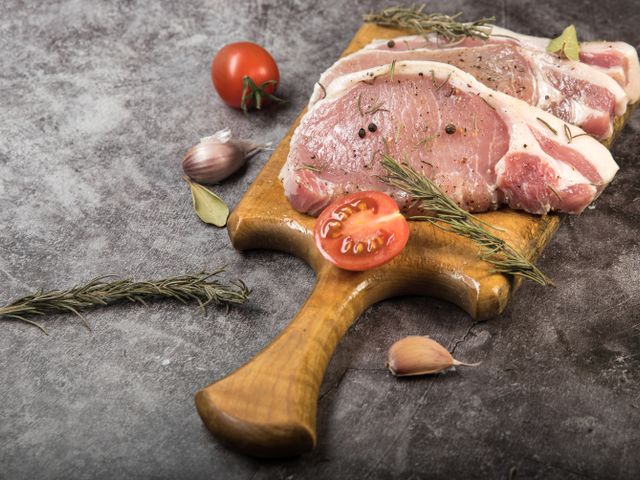

Find more like this
- Meal
- Dinner
- Main ingredient
- Pork Chops
- Method
- Stovetop