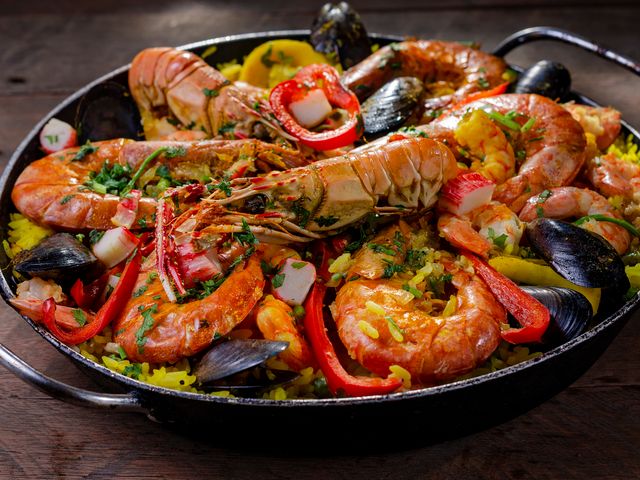
Seafood Paella
A Spanish one-skillet dish of saffron-infused short-grain rice loaded with shrimp, mussels, and clams. The rice develops a prized crispy, caramelized layer (socarrat) on the bottom while staying tender and aromatic throughout. Ready in under an hour.
- Prep
- 20 min
- Cook
- 35 min
- Wait
- 5 min
- Total
- 1 hr
- Makes
- 4 servings (about 2 cups each)
Steps
Before you start
- Bring the stock to a simmer in a separate pot and keep it hot throughout cooking
- Check that all seafood is fresh and clams/mussels close when tapped
- Measure out the saffron threads and steep them in warm stock 10 minutes before starting
- Have all ingredients prepped and within arm's reach of your stovetop
Steep saffron
- Place saffron threads in a small bowl with ¼ cup (60 ml) of warm stock from your simmering pot.
- Cover and let sit for 10 minutes to allow the saffron to release its color and flavor.
- Set aside.
+ Show details− Hide details
Ready when: Liquid turns deep golden and smells intensely fragrant
Tip: Steep saffron in warm (not boiling) stock to extract maximum flavor and color.
Sauté aromatics
- Heat olive oil in a 14-inch paella pan (36 cm) over medium heat.
- Once shimmering, add the diced onion and cook for 4 minutes, stirring occasionally, until softened and translucent.
- Add minced garlic and cook for 1 minute until fragrant.
- Stir in the diced red bell pepper and cook for 3 minutes, stirring occasionally.
+ Show details− Hide details
Ready when: Onion is translucent, pepper is slightly softened
Tip: Do not let garlic brown; it will turn bitter. Keep the heat at medium to control the pace.
Toast rice
- Add the short-grain rice to the pan and stir constantly with a wooden spoon for 2 minutes.
- The rice grains should become slightly translucent at the edges and smell toasted and nutty.
- This step prevents the rice from becoming mushy and helps develop flavor.
+ Show details− Hide details
Ready when: Rice grains are opaque with translucent edges, smells nutty and toasted
Tip: Toast the rice to seal the grain surface and prevent starch leaching, which keeps paella from becoming mushy.
Deglaze with wine
- Pour in the dry white wine and stir constantly for about 1 minute, scraping up any browned bits from the pan bottom.
- The wine will mostly evaporate.
+ Show details− Hide details
Ready when: Wine is almost fully evaporated and liquid is minimal
Tip: Scraping the pan bottom gets flavorful browned bits (fond) into the dish.
Add stock and seasonings
- Pour in the saffron mixture (including the steeped saffron threads) and the remaining hot stock.
- Stir in the smoked paprika.
- Do not stir the rice again after this point—resist the urge to mix it.
- Season with a pinch of salt and black pepper.
- The liquid should cover the rice by about ½ inch (1 cm).
+ Show details− Hide details
Ready when: Liquid is at a gentle boil, saffron is fully dissolved
Tip: Do not stir after this step; stirring releases starch and breaks up the rice, making it mushy instead of tender with individual grains.
Cook rice, undisturbed
- Increase heat to medium-high and let the paella cook at a gentle boil for 18–20 minutes without stirring.
- The liquid will gradually be absorbed by the rice.
- After 15 minutes, you may listen for a subtle crackling sound from the pan bottom—this is the beginning of the socarrat (the prized crispy layer).
- Adjust heat slightly if the bottom seems to be browning too fast.
+ Show details− Hide details
Ready when: Most liquid is absorbed, rice is al dente when a grain is bitten, a light crackling hums from the bottom
Tip: Listen for the subtle crackling sound—it signals the socarrat developing. This is desirable, not burning. If it sounds too loud, lower heat slightly.
Arrange seafood
- Nestle the shrimp, mussels, and clams into the rice, distributing them evenly across the pan.
- Scatter the frozen peas over the top.
- Do not stir; let them nestle into the rice.
- The seafood will rest on top and cook in the residual heat and steam from the rice.
+ Show details− Hide details
Ready when: Seafood is arranged on top of the rice
Tip: Nestle the shellfish gently into the rice; they don't need much cooking and will overcook if submerged in liquid.
Cook seafood through
- Continue cooking on medium-high heat for 4–5 minutes.
- The shrimp will turn opaque and pink, the mussel and clam shells will open, and the rice on the bottom will develop a deeper golden-brown socarrat crust.
- Discard any clams or mussels that do not open.
+ Show details− Hide details
Ready when: Shrimp are opaque and pink, mussel and clam shells are wide open, rice bottom is golden-brown and sounds crackling
Tip: Discard any mussels or clams that don't open even after cooking—they were already dead and unsafe to eat.
Rest and finish
- Remove the paella from heat.
- Drape a clean kitchen towel loosely over the pan (not covering it tightly) and let it rest for 5 minutes.
- This allows the residual heat to finish cooking the seafood gently and allows flavors to meld.
- Taste and adjust seasoning with salt and pepper.
- Garnish generously with fresh chopped parsley and serve directly from the pan with lemon wedges on the side.
+ Show details− Hide details
Ready when: Rice is tender with individual grains, seafood is cooked through, flavors have melded
Tip: Use a loose towel drape, not a tight cover, to keep heat in without trapping steam that would soften the socarrat.
Good to know
Tips
- Paella is a one-pan dish meant to be served directly from the pan at the table; it is both rustic and impressive. Embrace the theatrical presentation.
- The socarrat (crispy bottom layer) is not a mistake—it is the hallmark of excellent paella. Listen for gentle crackling, and do not scrape it off the pan; it adds flavor and texture.
- Use a paella pan (14 inches / 36 cm) if you have one. A wide shallow skillet (at least 12 inches / 30 cm) works, but the socarrat may be less even in a deeper pot.
- Keep your stock at a gentle simmer the entire time so that when you add it to the rice, the temperature of the pan does not drop significantly. Cold stock will shock the rice and slow cooking.
Storage & reheating
Paella is best served fresh from the pan. Leftovers can be refrigerated in an airtight container for up to 2 days; reheat gently in a covered skillet over low heat with a splash of stock to restore moisture. Do not freeze, as the texture of shellfish and rice deteriorates significantly. The socarrat crust will soften when reheated.
Substitutions
- Spanish short-grain rice (such as bomba or Valenciano) → Arborio or carnaroli rice. These medium-grain risotto rices absorb liquid more slowly and may require slightly less total stock. Bomba or Valenciano rice is traditional for paella and preferred for its firmer texture.
- seafood or chicken stock → Chicken stock or vegetable stock. Seafood stock provides the most authentic flavor, but chicken stock is a reliable substitute. Vegetable stock will be milder.
- dry white wine → Additional stock (same volume). If you prefer not to use wine, replace it with stock. You will lose some acidity and complexity, but the dish will still be delicious.
- littleneck clams, cleaned → Extra shrimp or mussels. If clams are unavailable or too expensive, increase shrimp or mussels by 4 oz (115 g) to maintain protein content.