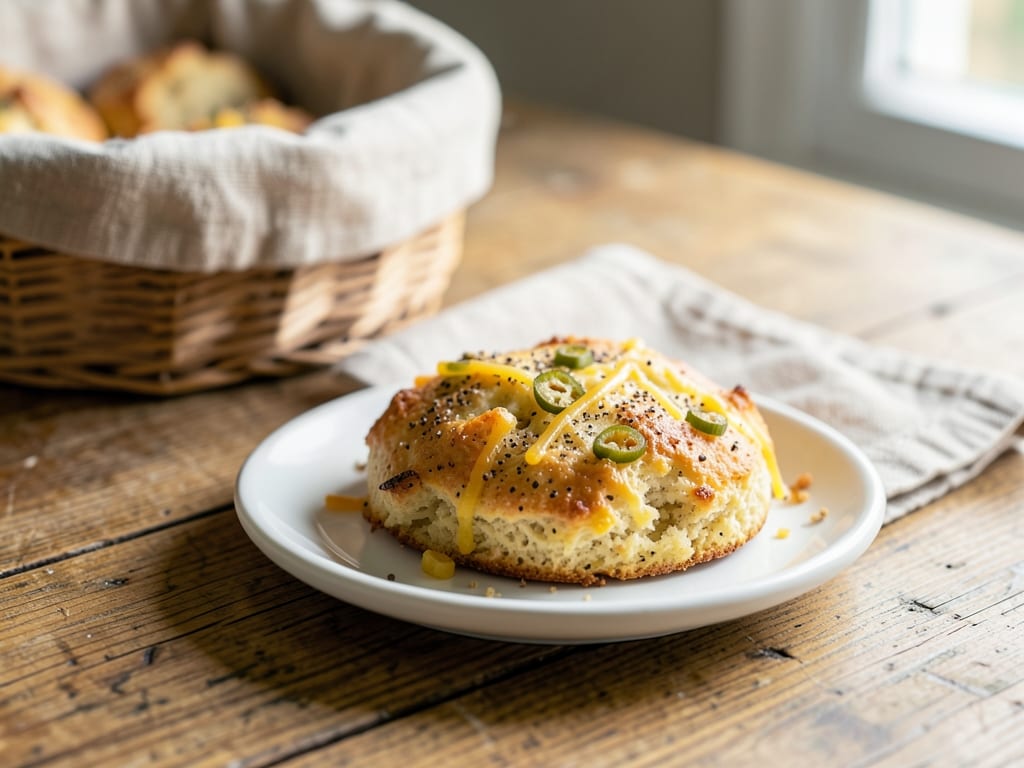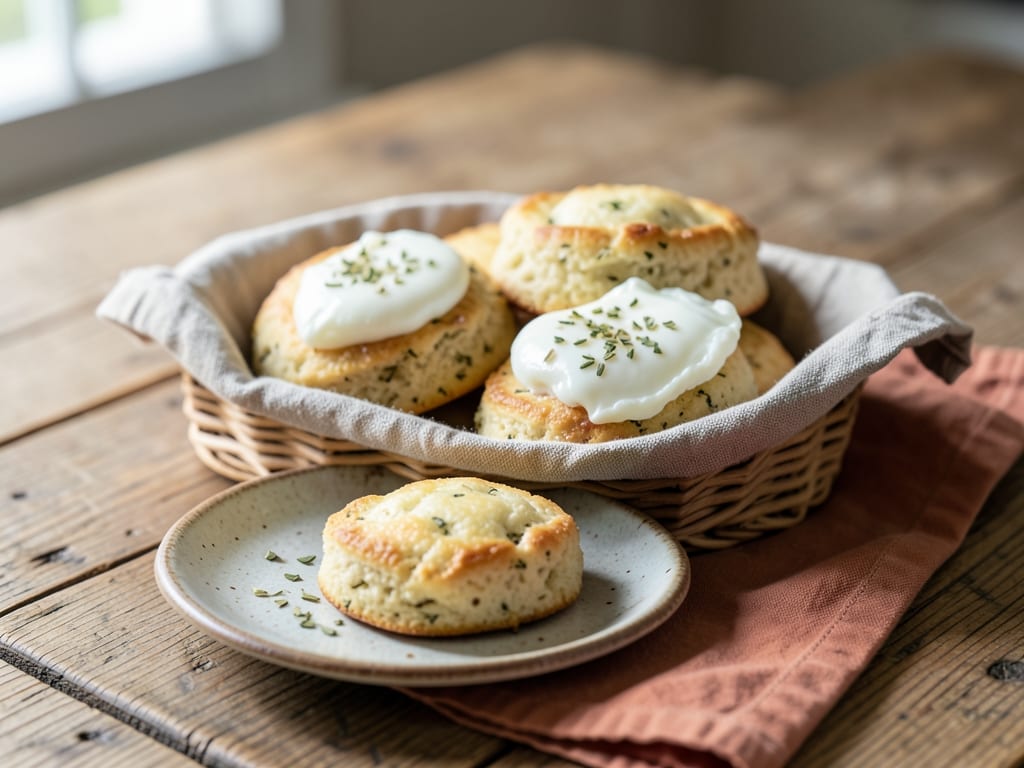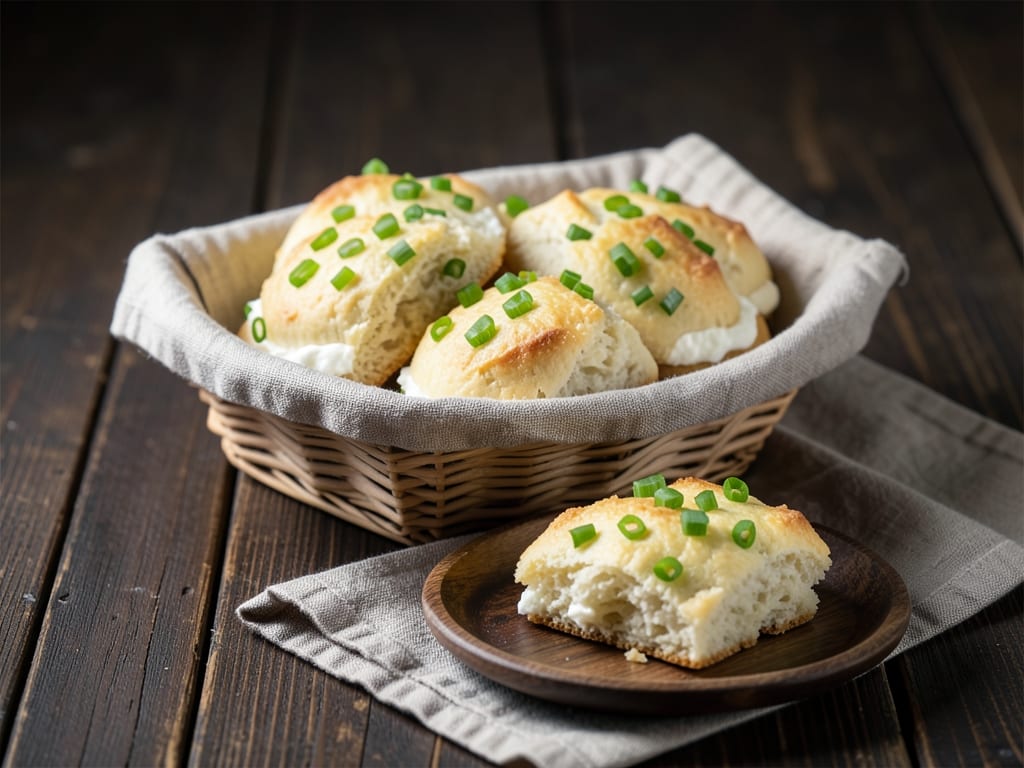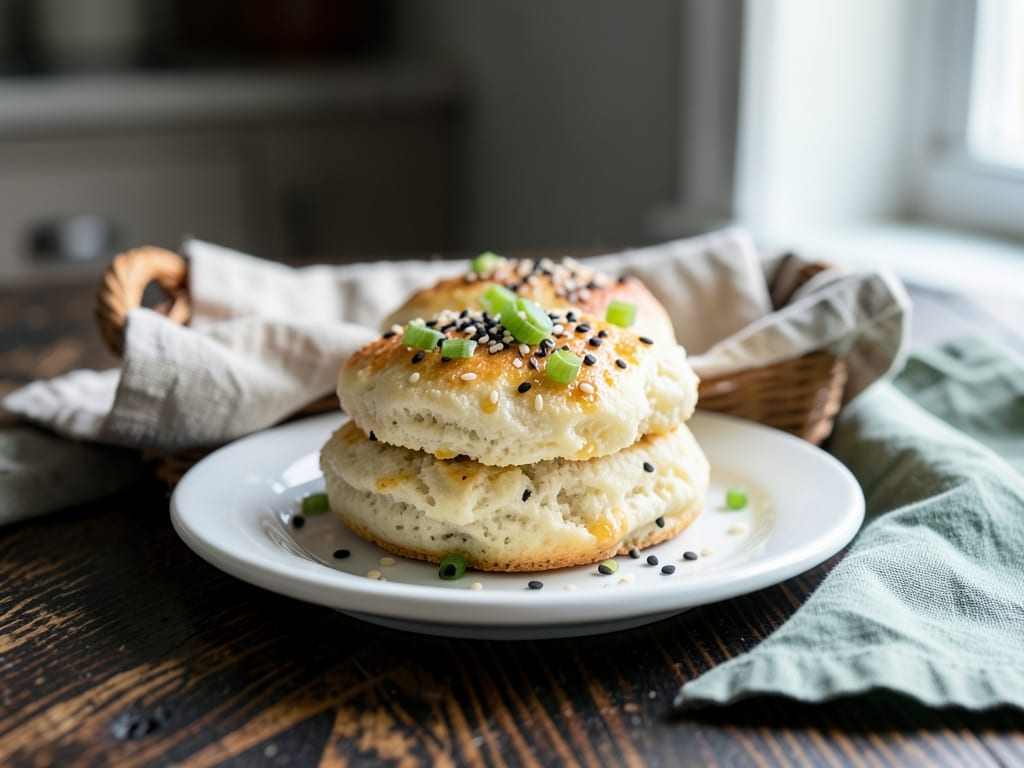
Scallion and Sesame Cream Biscuits
Drop-method cream biscuits flavored with fresh scallions, toasted sesame seeds, and sesame oil. These tender, flaky biscuits are quick to make and pair perfectly with soups, stews, or as a side to Asian-inspired meals. The sesame seeds add a nutty depth while the scallions provide bright, fresh onion notes.
Steps
Before you start
- Preheat oven to 400°F (200°C)
- Gather and measure all ingredients
- Toast white and black sesame seeds in a dry skillet over medium heat for 2–3 minutes, stirring constantly, then let cool
- Keep butter and heavy cream cold until you're ready to mix
Mix dry ingredients
- In a large mixing bowl, whisk together the flour, baking powder, and salt.
- Whisk gently for 20–30 seconds until the baking powder is evenly distributed throughout and no visible lumps remain.
+ Show details− Hide details
Ready when: No lumps visible, baking powder evenly distributed
Tip: Whisking ensures the baking powder is distributed evenly for consistent rise throughout all the biscuits.
Cut in cold butter
- Add the cold butter cubes to the flour mixture.
- Using a fork, pastry cutter, or your fingertips, work the butter into the flour until the mixture resembles coarse breadcrumbs.
- Some pea-sized pieces of butter should still be clearly visible throughout.
+ Show details− Hide details
Ready when: Mixture resembles wet sand with visible butter pieces throughout
Tip: Keep the butter as cold as possible—warm butter will make tough, dense biscuits. Work quickly and don't let the mixture get warm.
Add sesame and scallions
- Gently fold in the toasted white sesame seeds, black sesame seeds (if using), sliced scallions, and sesame oil.
- Fold with a rubber spatula or wooden spoon until the sesame seeds and scallions are evenly distributed throughout the dough, with no large streaks of unmixed flour visible.
+ Show details− Hide details
Ready when: Sesame seeds and scallions evenly distributed throughout; no large white flour streaks remain
Tip: Use a gentle folding motion to avoid overworking the dough, which would develop gluten and make the biscuits tough.
Add cream and bring together
- Pour all the cold heavy cream into the bowl at once.
- Using a rubber spatula or wooden spoon, gently fold the dough until it just comes together and looks shaggy and rough.
- Stop mixing when you see very little dry flour—some white streaks are perfectly fine.
- The dough should look somewhat lumpy and underdeveloped.
+ Show details− Hide details
Ready when: Shaggy, rough dough forms; most cream is incorporated with minimal visible dry flour
Tip: Overmixing is the most common mistake in biscuit-making. Undermixing is fine—the texture will be fluffier and more tender.
Prepare sheet and scoop biscuits
- Line a baking sheet with parchment paper.
- Using a 1-tablespoon measuring spoon or small cookie scoop, drop heaping spoonfuls of dough onto the prepared baking sheet, spacing them about 2 inches apart.
- You'll make 12–14 biscuits.
- Do not flatten, press, or shape the mounds—let them rise naturally.
+ Show details− Hide details
Ready when: All dough is scooped into roughly uniform mounds, spaced 2 inches apart
Tip: Leaving the biscuits in rough, unshapen mounds creates a rustic look and allows them to rise and puff more evenly in the oven.
Bake until goldenOven 400°F / 205°C
- Place the baking sheet in the preheated 400°F (200°C) oven.
- Bake for 12–15 minutes, until the tops are a deep golden brown and a toothpick or cake tester inserted into the center of a biscuit comes out clean or with just a few crumbs attached.
+ Show details− Hide details
Ready when: Tops are deep golden brown; toothpick inserted in center comes out clean or nearly clean
Tip: Avoid opening the oven door during baking—the temperature drop can prevent the biscuits from rising properly and cause uneven baking.
Good to know
Tips
- Keep all ingredients, especially the butter and cream, as cold as possible—this is the secret to flaky, tender biscuits. Have them measured and ready just before you start mixing.
- Toast the sesame seeds yourself in a dry skillet over medium heat for 2–3 minutes, stirring constantly, to deepen their nutty, toasted flavor. Commercially toasted seeds work too, but fresh toasting improves the dish noticeably.
- These biscuits are best served warm, fresh from the oven, within 1–2 hours of baking. Reheat them in a 325°F (163°C) oven for 5 minutes to restore their warmth and flakiness.
- The drop method is forgiving—you don't need to achieve perfect shapes. Rustic, bumpy biscuits taste just as delicious and have more character than perfectly uniform ones.
Make ahead
{"text": "Mix the dry ingredients (flour, baking powder, salt) and store in an airtight container at room temperature for up to 1 week. When ready to make biscuits, continue from step 2. Alternatively, scoop the dough onto a baking sheet and freeze for up to 3 weeks, then bake directly from frozen, adding 2–3 minutes to the baking time."}}
Storage & reheating
{"text": "Store in an airtight container at room temperature for 1–2 days, or refrigerate for up to 4 days. Freeze for up to 3 months. To reheat, place on a baking sheet at 325°F (163°C) for 5 minutes if at room temperature or chilled, or 8–10 minutes from frozen."}
Substitutions
- White sesame seeds → Equal parts white and black sesame seeds (1.5 tbsp each, total 3 tbsp). Creates a more evenly striped appearance with less sweet sesame flavor and more earthiness from the black seeds.
- Heavy cream, cold → Whole milk or buttermilk (¾ cup each). Biscuits will be slightly less rich but still tender; buttermilk adds a subtle tang if you prefer.
- Scallions, fresh → Fresh chives (3 tbsp chopped) or the green parts of scallions only (same amount). Provides a milder, more delicate onion or garlic-like flavor compared to whole scallions.
- Sesame oil (toasted) → Omit entirely and add ⅛ tsp white pepper. Creates a plainer, more neutral savory biscuit without sesame aromatics; works well if serving alongside dishes with competing flavors.