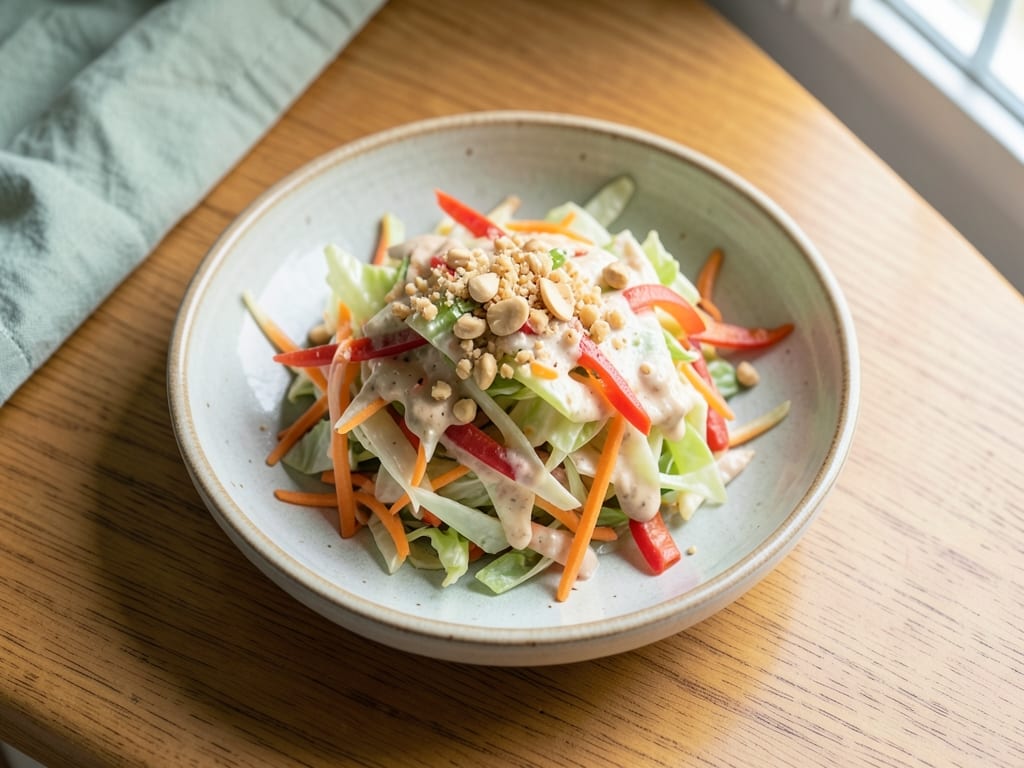
Sautéed Cabbage Slaw with Garlic and Thyme
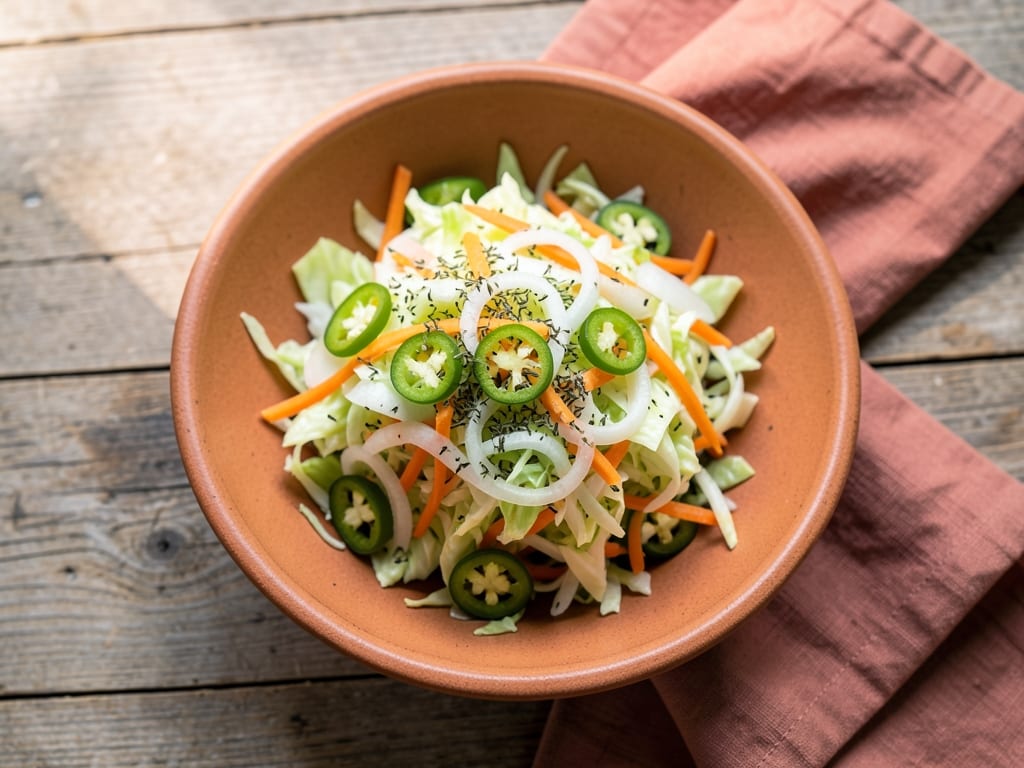
A warm French-style slaw where thinly sliced cabbage is sautéed until tender and lightly caramelized, infused with aromatic garlic and earthy thyme. This cooked vegetable dish is versatile—serve it alongside roasted chicken or pork, toss it with grains, or eat it warm as a simple vegetable course. The slow cooking mellows the cabbage's raw bite into something sweeter and more complex.
Steps
Before you start
- Slice the cabbage thinly (a mandoline or sharp knife works well)
- Have your garlic minced and thyme measured before you start cooking
- Use a large skillet so the cabbage has room to cook without crowding
Heat oil and sauté garlic
- Set a large 12-inch (30 cm) skillet over medium-high heat.
- Add the 3 tablespoons (45 ml) of olive oil and let it heat for about 1 minute until it shimmers.
- Add the minced garlic and cook for 30 seconds, stirring constantly, until fragrant but not browned.
+ Show details− Hide details
Ready when: Garlic is fragrant and just beginning to turn golden at the edges
Tip: Watch the garlic closely—burnt garlic tastes bitter and will ruin the dish
Add cabbage and thyme
- Add all the sliced cabbage to the pan along with the fresh thyme leaves.
- The cabbage will seem like a lot, but it will cook down significantly.
- Stir everything together to coat the cabbage with the oil, about 1 minute.
+ Show details− Hide details
Ready when: All the cabbage is wilted and coated with oil
Tip: Use two wooden spoons or tongs to toss the cabbage; it may spill over the sides of the pan initially
Reduce heat and cook low
- Lower the heat to medium.
- Continue cooking, stirring occasionally (every 2 minutes) to encourage even cooking and light caramelization.
- The cabbage will release its moisture at first, then gradually dry out and begin to soften.
- Cook for 15 to 18 minutes total, until the cabbage is tender and the edges are golden-brown and slightly caramelized.
+ Show details− Hide details
Ready when: Cabbage strands are very tender, no longer crunchy, with light golden-brown spots; much reduced in volume
Tip: Don't skip the stirring—turning the cabbage helps it caramelize evenly and prevents the bottom from burning
Finish with butter and seasoning
- If using the optional butter, add it now and stir until melted.
- Taste the cabbage and season generously with kosher salt and freshly ground black pepper.
- Adjust to your preference.
+ Show details− Hide details
Ready when: Seasoning is evenly distributed and balanced to taste
Tip: Season at the very end after the cabbage has reduced, so you can taste it properly and avoid over-salting
Good to know
Tips
- This dish is best served warm, right after cooking, when the cabbage is most tender and the flavors are brightest.
- Slice the cabbage as thinly as possible (about ¼-inch / 6 mm thick) so it cooks evenly and becomes uniformly tender.
- Don't rush the cooking—the longer, slower sauté allows the cabbage's natural sugars to caramelize gently, creating a deeper, sweeter flavor than quick-cooking would achieve.
- This slaw pairs wonderfully with roasted chicken, pork chops, or smoked fish. It's also excellent alongside hearty grains like farro or wild rice.
Storage & reheating
Store leftovers in an airtight container in the refrigerator for up to 4 days. Reheat gently in a skillet over medium heat for 2–3 minutes, stirring occasionally, or microwave in a covered bowl for 1–2 minutes. The slaw can also be served at room temperature.
Substitutions
- green cabbage, fresh → red cabbage. Red cabbage will work beautifully and offer a prettier color, though it takes slightly longer to soften (about 2–3 minutes extra). The earthy sweetness is similar.
- fresh thyme sprigs → dried thyme. Use 1 teaspoon (1 g) of dried thyme in place of the fresh. Add it at the same time as the cabbage. Dried thyme is more concentrated, so less is needed.
- extra-virgin olive oil → unsalted butter (all 3 tablespoons). Use butter alone for a richer, more custard-like slaw, though you'll lose the fruity notes of the olive oil. You can also use half oil and half butter.
- fresh thyme sprigs → fresh rosemary or sage. Either herb pairs beautifully with cabbage; use the same amount. Rosemary is more robust, sage more delicate. Both add a wonderful savory depth.