Salsa Roja with Fresh Tomatoes
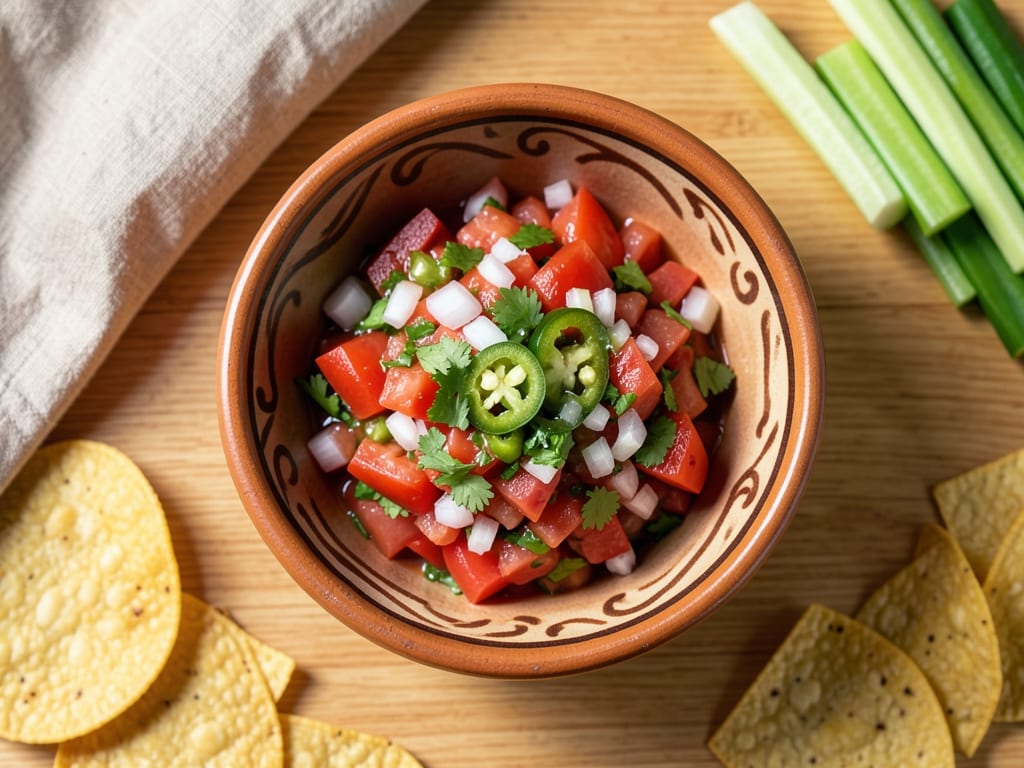
A vibrant, fresh Mexican salsa made with ripe tomatoes, white onion, cilantro, jalapeño, and lime juice. This no-cook salsa is best served within a few hours of making, when the flavors are bright and the texture is crisp. Perfectly balanced heat, acidity, and herbaceous notes make it ideal for chips, tacos, or any Mexican dish.
Steps
Before you start
- Choose ripe, unblemished tomatoes that smell fragrant at the stem
- Wash all produce thoroughly before cutting
- Have a lime ready to juice just before serving to prevent oxidation
- Chill serving bowl or salsa container if you prefer cold salsa
Prepare the tomatoes
- Place tomatoes on a cutting board.
- Using a sharp chef's knife, core each tomato by cutting out the stem end at a slight angle.
- Cut tomatoes in half lengthwise, then cut each half into ¼-inch (6 mm) dice.
- As you cut, let some of the excess liquid and seeds fall into a small bowl; you'll use about half of this liquid in the final salsa.
- Transfer diced tomatoes to a medium mixing bowl.
+ Show details− Hide details
Ready when: Tomatoes are uniformly diced into small pieces
Tip: Don't mince the tomatoes in a food processor—you'll release too much juice and break down the flesh. Hand-cutting preserves texture and prevents the salsa from becoming watery.
Dice the onion and jalapeño
- Cut the white onion in half and peel away the papery skin and first layer.
- Place cut-side down on the cutting board.
- Slice thinly, then rotate and dice into ¼-inch (6 mm) pieces.
- For the jalapeño, slice lengthwise and use a small knife to scrape away the seeds and white ribs (this controls the heat level).
- Finely mince the jalapeño flesh into small pieces about ⅛ inch (3 mm).
- Add both to the bowl with tomatoes.
+ Show details− Hide details
Ready when: Onion and jalapeño are finely and evenly diced
Tip: Remove all the white ribs and seeds from the jalapeño unless you like very spicy salsa. These parts hold most of the heat. Wear gloves or wash your hands immediately after handling raw jalapeños to avoid irritation.
Add cilantro and seasonings
- Roughly chop the cilantro leaves and tender stems into ¼-inch (6 mm) pieces—don't over-chop or it will bruise.
- Add cilantro to the bowl along with sea salt.
- Stir gently to combine all ingredients.
+ Show details− Hide details
Ready when: Cilantro is evenly distributed throughout
Tip: Chop cilantro by hand rather than with a processor to keep it fresh-tasting and prevent it from becoming a paste. Add it at the end to preserve its bright color and flavor.
Finish with lime and seasoning
- Squeeze the lime juice directly into the bowl.
- Add about 1 tablespoon (15 ml) of the reserved tomato liquid from step 1.
- Stir gently but thoroughly to combine.
- Taste and adjust: add another squeeze of lime if you want more acidity, more salt if needed for brightness, or cracked black pepper if desired.
- Let the salsa rest for 5 minutes at room temperature so the flavors meld.
+ Show details− Hide details
Ready when: Salsa is bright, fragrant, and flavors are balanced
Tip: Add lime juice at the very end to preserve the bright flavor and prevent the cilantro from darkening. If making salsa more than an hour ahead, wait to add lime and cilantro until just before serving.
Serve
- Transfer salsa to a serving bowl.
- Serve immediately with tortilla chips, or alongside tacos, enchiladas, or grilled fish.
- The salsa is best served within a few hours of making, while the vegetables are still crisp and the flavors are bright.
+ Show details− Hide details
Tip: Fresh salsa is best enjoyed the day it's made. If serving later, keep cilantro and lime juice separate and stir in just before serving to prevent browning and sogginess.
Good to know
Tips
- Choose tomatoes that yield slightly to pressure and smell fragrant at the stem—these are perfectly ripe and full of flavor. Tomatoes from a farmers' market or garden will have far superior taste to supermarket varieties.
- Cut all ingredients to roughly the same size (about ¼ inch / 6 mm dice) so the salsa is balanced in every bite and looks appealing.
- For a chunkier salsa, dice ingredients larger (about ½ inch / 12 mm). For a finer consistency, mince everything into ⅛-inch (3 mm) pieces.
- If you prefer a smoother salsa with more liquid, use a blender or food processor on the pulse setting. Start with just the tomatoes and onion, pulse briefly, then add cilantro and jalapeño for just one or two pulses.
Make ahead
Prepare all ingredients (dice tomatoes, onion, and jalapeño; chop cilantro; juice lime) separately and store in airtight containers in the refrigerator for up to 8 hours. Combine and finish with lime juice just before serving to prevent the cilantro from browning and the salsa from becoming watery.
Storage & reheating
Refrigerator: Cover and refrigerate for up to 3 days, though flavor and texture are best within 4 hours. The salsa will gradually release more liquid as it sits. Freezer: Not recommended—the fresh texture and bright flavors are lost when frozen. Room temperature: Serve fresh and consume within 2 hours of making. Do not reheat.
Substitutions
- white onion → Red onion or sweet white onion. Red onion adds a milder, slightly sweet flavor; sweet white onion (like Maui) reduces the sharp bite. Use the same quantity.
- fresh jalapeño → Serrano pepper (for more heat) or poblano pepper (for less heat and more mild flavor). Serrano is about twice as spicy; use ½ pepper. Poblano is milder and earthier; use ½ of one pepper.
- fresh cilantro leaves and tender stems → Fresh parsley or omitted entirely. Flat-leaf parsley provides herbaceous flavor without cilantro's distinctive taste. Use the same amount. If omitting, increase lime juice to 3 tablespoons (45 ml) for brightness.
- ripe Roma or plum tomatoes → Cherry or grape tomatoes (halved, not diced), or a mix of red and yellow tomatoes. Cherry tomatoes are sweeter and require halving rather than dicing. Yellow tomatoes add visual interest and slightly less acidity. Use the same total weight.