Saffron Vegetable Noodle Soup with Pomegranate
A warming, aromatic noodle soup infused with saffron and pomegranate molasses. This Persian-inspired one-pot dish combines tender vegetables, delicate thin noodles, and bright pomegranate seeds in a fragrant vegetable broth. The saffron adds earthy elegance while pomegranate molasses provides a subtle sweet-tart depth. Simple, vegetarian, and deeply satisfying.
- Prep
- 20 min
- Cook
- 25 min
- Wait
- 5 min
- Total
- 50 min
- Makes
- 4 servings (about 2 cups per bowl)
Steps
Before you start
- Measure out the saffron threads and prepare them for blooming
- Have all vegetables prepped and ready before you begin cooking
- Check that your vegetable broth is at hand—homemade or quality store-bought works well
Bloom the saffron
- Place the saffron threads in a small bowl and pour the ¼ cup (60 ml) of hot water over them.
- Let sit for 5 minutes, stirring occasionally.
- The water will turn a deep golden-amber color and the saffron will release its flavor and aroma.
+ Show details− Hide details
Ready when: Water becomes deep golden amber, saffron is soft
Tip: Blooming saffron in hot water before adding to the soup ensures even distribution of its subtle flavor and bright color throughout the broth.
Sauté aromatics
- Heat the olive oil in a large 6–8 quart pot over medium heat.
- Add the diced onion and cook, stirring occasionally, for 3–4 minutes until softened and translucent.
- Add the minced garlic and stir for 30 seconds until fragrant.
- Do not let the garlic brown.
+ Show details− Hide details
Ready when: Onion is translucent and soft, garlic is fragrant
Tip: Keep the heat at medium to prevent the garlic from burning, which would make the soup bitter.
Add carrots and celery
- Add the matchstick carrots and diced celery to the pot.
- Stir well to coat in the oil.
- Cook for 2 minutes, stirring occasionally, until the vegetables begin to soften slightly and the pot becomes fragrant.
+ Show details− Hide details
Ready when: Vegetables are slightly softened and aromatic
Tip: Cutting the carrots and celery into thin, uniform pieces ensures they cook at the same rate and remain tender in the finished soup.
Add zucchini
- Stir in the zucchini half-moons and cook for 1 minute, stirring constantly.
+ Show details− Hide details
Ready when: Zucchini is lightly coated in oil
Pour in broth and saffron water
- Add the vegetable broth to the pot, scraping up any browned bits from the bottom with your wooden spoon.
- Pour in the entire saffron infusion, including the bloomed threads.
- Bring to a boil over medium-high heat, then reduce the heat to medium-low and gently simmer.
+ Show details− Hide details
Ready when: Broth comes to a rolling boil, then is reduced to a gentle simmer
Tip: The saffron threads will sink to the bottom and distribute evenly; if you prefer a smoother texture without visible threads, strain the saffron infusion before adding it.
Simmer vegetables
- Maintain a gentle simmer and cook uncovered for 8–10 minutes until the carrots, celery, and zucchini are mostly tender but still have a slight bite.
+ Show details− Hide details
Ready when: Carrots and celery are fork-tender, zucchini is soft but not mushy
Tip: A gentle simmer, not a vigorous boil, prevents the vegetables from falling apart and breaking down into mush.
Add noodles
- Stir in the broken noodles, distributing them evenly throughout the pot.
- Bring the soup back to a gentle boil and cook for 5–7 minutes, stirring occasionally, until the noodles are just tender but still have a slight firmness to the bite (al dente).
+ Show details− Hide details
Ready when: Noodles are tender but firm, not soft or mushy
Tip: Break the noodles into shorter pieces so they're easier to eat with a spoon and distribute evenly throughout the soup. Stir occasionally to prevent them from clumping.
Wilt spinach
- Reduce the heat to medium-low and stir in the chopped spinach.
- Cook for 1–2 minutes, stirring gently, until the spinach is completely wilted and the bright green color deepens slightly.
+ Show details− Hide details
Ready when: Spinach is fully wilted and tender, no raw leaves remain
Tip: Add the spinach near the end of cooking to preserve its fresh flavor and vibrant color; prolonged cooking can make it dull and bitter.
Season the soup
- Remove the pot from the heat.
- Stir in the pomegranate molasses, which adds a subtle sweet-tart depth without making the soup overtly sour.
- Taste the soup and adjust the seasoning with salt and freshly ground black pepper to your preference.
- Start with ½ teaspoon of salt and add more as needed.
+ Show details− Hide details
Ready when: Soup is seasoned to taste, pomegranate molasses is fully incorporated
Tip: Taste before seasoning fully—the broth and saffron will have contributed their own flavors, and adding salt gradually prevents over-salting. Pomegranate molasses should add brightness, not tartness.
Ladle and garnish
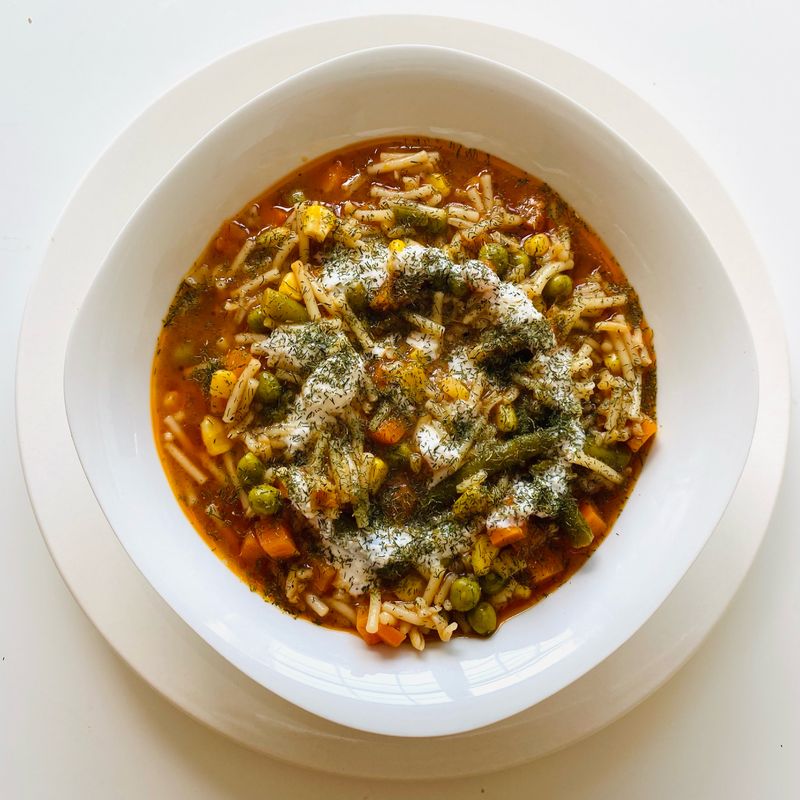
- Ladle the soup into four bowls, ensuring each serving has an equal portion of noodles and vegetables.
- Top each bowl with a generous handful of pomegranate seeds and, if using, a pinch of torn fresh mint and chopped dill.
- The pomegranate seeds will burst slightly when eaten, adding bursts of sweet tartness and textural contrast.
+ Show details− Hide details
Ready when: Soup is portioned and topped with garnish
Tip: Add pomegranate seeds and fresh herbs just before serving so they stay fresh and don't become limp or discolored. The pomegranate arils especially should stay cool and crisp for the best eating experience.
Good to know
Tips
- The saffron is the signature ingredient here—don't skip it. It adds an earthy, slightly floral note and beautiful color that makes this soup special.
- Pomegranate molasses is a staple in Persian cooking and adds complexity without tartness. It's available at most grocery stores or online; if you can't find it, the substitution works well.
- This soup is vegetarian as written, but you can add 4 oz (115 g) of diced cooked chicken breast or crumbled tofu in step 6 for extra protein.
- Serve the soup warm with warm pita bread, lavash, or naan for a complete meal. The herbs and pomegranate garnish are essential—they add brightness and prevent the soup from feeling heavy.
Make ahead
The soup can be made completely up to 2 days ahead and stored in an airtight container in the refrigerator. Reheat gently on the stovetop over medium-low heat, adding a splash of broth or water if the soup has thickened. Do not add the pomegranate seeds and fresh herbs until just before serving.
Storage & reheating
Room temperature: Not recommended; refrigerate within 1 hour. Refrigerator: Up to 3 days in an airtight container. Freezer: Up to 1 month; thaw overnight in the fridge. To reheat, warm gently on the stovetop over medium-low heat, stirring occasionally and adding a splash of broth or water if the soup has become too thick.
Substitutions
- pomegranate molasses → 1 tbsp (15 ml) pomegranate juice mixed with 1 tsp (5 ml) balsamic vinegar. This mimics the sweet-tart flavor of pomegranate molasses if you don't have it on hand. Add gradually and adjust to taste.
- thin dried noodles (angel hair or vermicelli) → Angel hair pasta, cappellini, or fideo noodles. Any thin pasta that cooks in 5–7 minutes will work. Avoid thick, tubular pastas as they'll take longer and overcook the vegetables.
- fresh spinach, loosely packed → Fresh kale, chard, or arugula, roughly chopped. Kale and chard will take 2–3 minutes to wilt; arugula is more delicate and should be added in the last minute.
- pomegranate seeds (arils) → Dried cranberries, dried barberries, or pomegranate juice drizzle. Pomegranate seeds provide color, flavor, and texture; if unavailable, dried cranberries or barberries give tartness, or drizzle a little pomegranate juice over each bowl.