Roasted Pumpkin and Crispy Sage Oil Dip
A silky, rustic Italian-inspired dip made from roasted pumpkin purée, finished with a fragrant sage-infused olive oil that crisps the leaves. Nutty from the roasted flesh, aromatic from sage and garlic, and rich without cream. Serve warm or at room temperature with toasted bread, crudités, or crackers.
- Prep
- 15 min
- Cook
- 45 min
- Wait
- 10 min
- Total
- 1 hr 10 min
- Makes
- About 1¾ cups (420 ml) dip
Steps
Before you start
- Preheat the oven to 400°F (200°C)
- Have a fine-mesh sieve or food mill ready to purée the pumpkin
- Measure out the sage leaves fresh from the herb garden or a fresh bunch from the market
Prepare pumpkin for roasting
- Pat the pumpkin halves dry with paper towels.
- Brush the cut faces with 3 tablespoons (45 ml) of olive oil and season with ½ teaspoon (3 g) of fine sea salt and ¼ teaspoon (0.5 g) of black pepper.
- Place the halves cut-side down on a rimmed baking sheet.
+ Show details− Hide details
Tip: Patting the pumpkin dry helps it caramelize rather than steam during roasting.
Roast pumpkin until tenderOven 400°F / 205°C
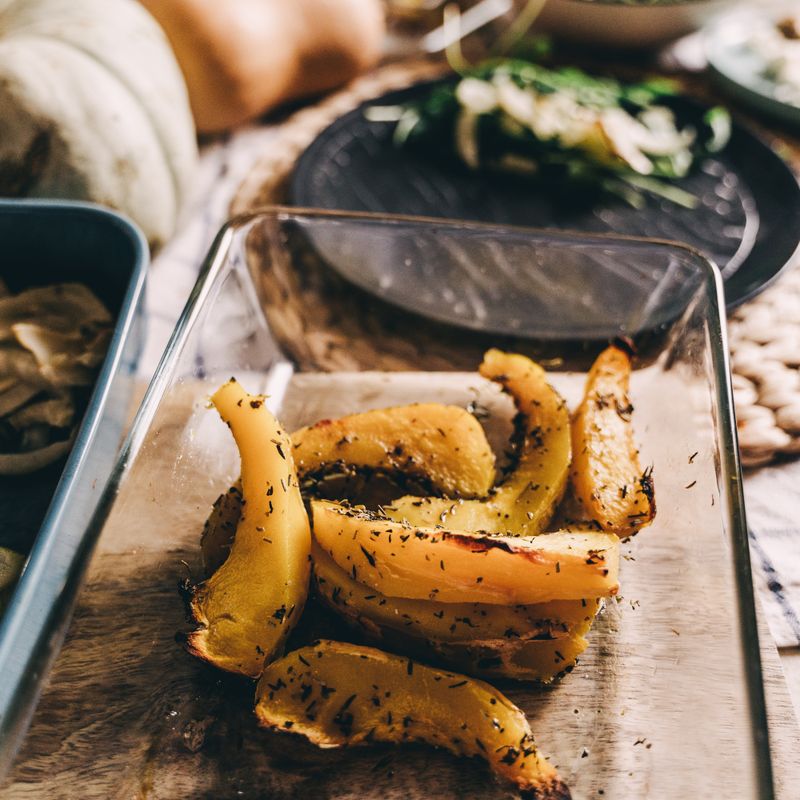
- Roast at 400°F (200°C) for 40–45 minutes, until the flesh is very tender and a fork pierces it easily.
- The skin may begin to collapse slightly and the cut edges may brown.
- The pumpkin is done when a knife blade slides through the flesh with no resistance.
+ Show details− Hide details
Ready when: Flesh is very soft, a fork or knife slides through with no resistance, skin may collapse slightly
Tip: Don't rush this step—pumpkin roasted until deeply tender will purée more smoothly and develop deeper, nuttier flavor.
Cool and scoop pumpkin
- Remove the baking sheet from the oven and let the pumpkin cool for 10 minutes until it is cool enough to handle.
- Using a spoon or melon baller, scoop the soft flesh away from the skin into a medium bowl.
- Discard the skin.
- You should have about 1¾ cups (about 400 g) of cooked pumpkin.
+ Show details− Hide details
Ready when: Pumpkin is cool enough to handle without burning your fingers
Tip: A melon baller makes this easier, but any sturdy spoon works fine. Don't leave the pumpkin in the skin too long or it will stick.
Purée pumpkin until silky
- Pass the scooped pumpkin through a food mill fitted with the fine blade, or press it through a fine-mesh sieve using the back of a spoon.
- Work in batches if needed, pushing firmly to extract all the flesh.
- You should end up with a completely smooth purée with no lumps or strings.
- If the purée seems watery, let it sit in a small colander lined with cheesecloth for 5 minutes to drain excess liquid.
+ Show details− Hide details
Ready when: Purée is completely smooth, no lumps or fibrous strings visible
Tip: Using a food mill gives a much silkier texture than a blender, which can incorporate too much air and make the dip foamy. If you only have a blender, pulse very briefly.
Make sage oil infusion
- In a small heavy-bottomed saucepan or skillet, combine ⅓ cup (80 ml) of olive oil, 2 thinly sliced garlic cloves, and ½ cup (10 g) of whole fresh sage leaves.
- Set the pan over medium-low heat.
- Warm gently, stirring occasionally, until the sage leaves darken and become fragrant and crispy and the garlic turns pale golden, about 4–5 minutes.
- Do not let the garlic brown deeply or it will taste bitter.
+ Show details− Hide details
Ready when: Sage leaves are darkened and crispy, garlic is pale golden (not brown), oil is fragrant
Tip: Watch carefully—this step happens quickly. The moment the sage darkens and the kitchen smells herbaceous, remove it from heat. Overcooked sage tastes bitter and burned garlic ruins the whole dip.
Combine pumpkin with sage oil
- Pour the warm sage oil with all the leaves and garlic into the pumpkin purée.
- Add 1 tablespoon (15 ml) of fresh lemon juice.
- Stir gently but thoroughly until the oil is fully incorporated and the dip has a glossy, loose consistency.
- Taste and adjust seasoning with a pinch more sea salt if needed.
+ Show details− Hide details
Ready when: Oil is fully incorporated, dip is glossy and uniform, sage leaves and garlic pieces are visible throughout
Tip: Stir the dip while the oil is still warm so it emulsifies and coats the pumpkin evenly. The warmth helps the flavors meld.
Serve warm or at room temperature
- Transfer the dip to a serving bowl.
- It is best served warm or at room temperature, when the sage leaves are still crispy and the flavors are most vibrant.
- Drizzle with any extra oil from the bottom of the bowl if desired.
- Serve with toasted bread, crackers, crudités, or grilled vegetables.
+ Show details− Hide details
Tip: If the dip cools completely and the sage softens, you can reheat it gently in a low oven (300°F / 150°C) for 10 minutes to restore crispness to the sage.
Good to know
Tips
- Roast the pumpkin until very tender—this develops the sweet, caramelized flavor and ensures a smooth purée without lumps.
- A food mill is the secret to silky texture; a blender can incorporate too much air and make the dip foamy or grainy.
- Watch the sage oil step carefully—it takes only minutes for sage and garlic to go from fragrant to burned. Set a timer if you tend to get distracted.
- Serve the dip warm or within an hour of making it, while the sage leaves are still crispy. Once it cools, the leaves soften, but the flavor is still excellent if you reheat it gently.
Storage & reheating
Room temperature: up to 4 hours. Refrigerator: up to 5 days in an airtight container; the sage will soften but the dip tastes good cold. Reheat gently in a 300°F (150°C) oven for 8–10 minutes until warm. Freezer: not recommended, as the texture and crispness of the sage oil will not survive thawing well.
Substitutions
- sugar pumpkin (small, 2–2.5 pounds) → butternut squash or kabocha squash. Use equal weight. Both roast to a similarly silky texture and pair beautifully with sage oil. Butternut squash will be slightly sweeter; kabocha slightly earthier.
- fresh sage leaves, packed → fresh rosemary or thyme. Use the same weight. Rosemary is more peppery; thyme is lighter and more delicate. Both become wonderfully crispy in oil.
- fresh lemon juice → fresh lime juice or white wine vinegar (1 teaspoon / 5 ml). Lime adds a subtle tropical note; vinegar adds brightness and a slight tang that plays against the roasted pumpkin sweetness.
- garlic clove → omit entirely or use ¼ teaspoon (0.5 g) of garlic powder stirred into the finished dip. For a milder, less assertive flavor, especially if serving to those who prefer subtle garlic.