Roasted Plantain and Garlic Dip
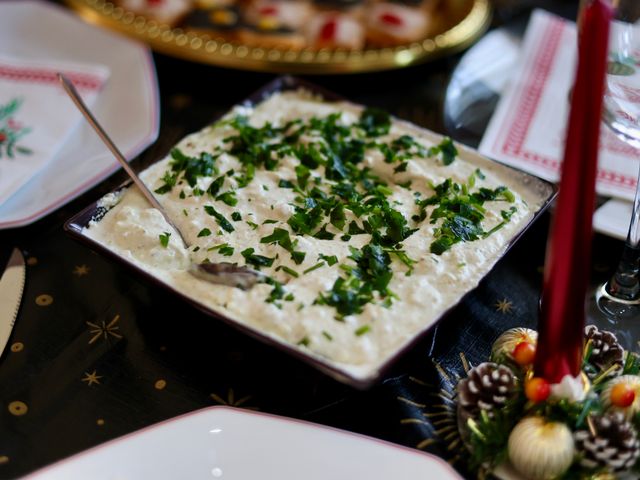
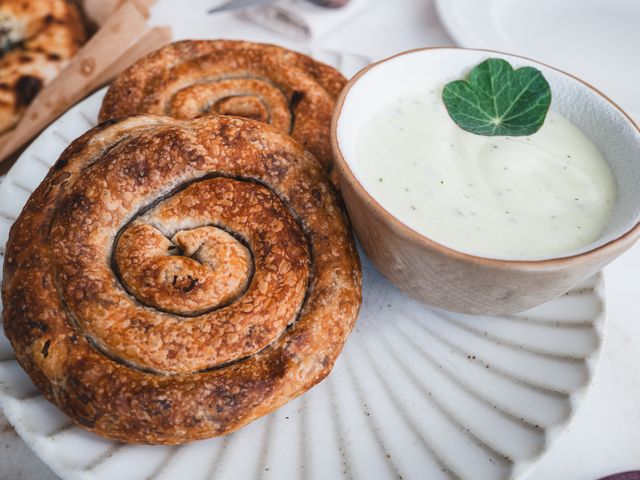
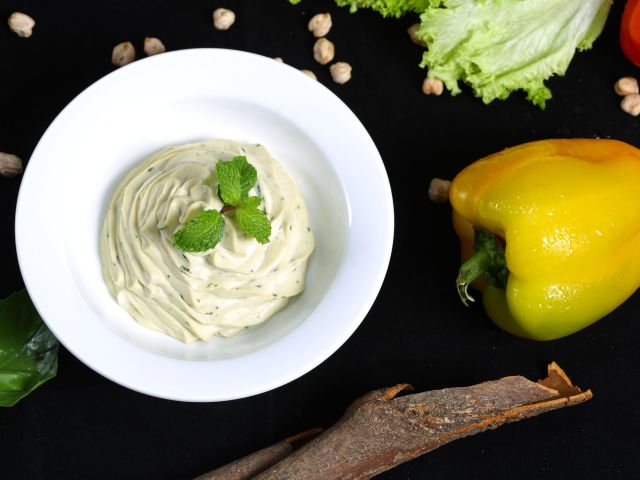
A creamy, savory Caribbean dip made from roasted plantains and caramelized garlic, finished with tangy crema and lime juice. The plantains become naturally sweet and tender when roasted, balancing beautifully with the deep, mellow garlic. Serve warm or at room temperature with crispy plantain chips, cassava crisps, or fresh vegetables.
- Prep
- 15 min
- Cook
- 50 min
- Wait
- 10 min
- Total
- 1 hr 15 min
- Makes
- About 2 cups dip
Steps
Before you start
- Preheat oven to 400°F (200°C)
- Choose plantains that are yellow with some black spots—ripe enough to be sweet but firm enough to handle
- Have a baking sheet and heavy knife ready
- Read through the recipe to understand the roasting and blending steps
Prepare plantains and garlic
- Cut each plantain lengthwise down the middle, piercing the skin but stopping at the flesh.
- Place on a foil-lined baking sheet with the skin side down.
- Brush the cut flesh lightly with 1 tablespoon of olive oil.
- Cut the top off the garlic head and drizzle the exposed cloves with 1 tablespoon of olive oil, then wrap loosely in foil.
- Place the foil packet next to the plantains on the same baking sheet.
+ Show details− Hide details
Tip: Cutting the plantain lengthwise makes it easier to scoop the cooked flesh later, and the exposed surface area allows it to caramelize.
Roast plantains and garlicOven 400°F / 205°C
- Roast at 400°F (200°C) for 40–45 minutes.
- The plantain flesh should be very soft and golden at the edges, and the garlic cloves should be completely tender and creamy when squeezed.
- Pierce the thickest part of the plantain with a fork—it should yield immediately with no resistance.
+ Show details− Hide details
Ready when: Plantain flesh is very soft and edges are golden brown; garlic cloves are creamy
Tip: Don't roast at a lower temperature—high heat brings out the natural sweetness and develops a caramelized edge.
Cool and scoop
- Remove the baking sheet from the oven and let cool for 10 minutes until you can handle the vegetables comfortably.
- Scoop the plantain flesh from the skin using a spoon, discarding any bits of skin.
- Squeeze the garlic cloves out of their skins into a separate bowl, discarding the papery skins.
+ Show details− Hide details
Ready when: Plantain and garlic can be handled without burning your fingers
Tip: The flesh will come away from the skin easily once fully roasted—don't try to separate it while it's piping hot.
Blend to smooth dip
- Add the roasted plantain flesh and garlic cloves to a blender or food processor.
- Add the crema, remaining 1 tablespoon of olive oil, and juice from 1 lime.
- Blend on medium-high speed until completely smooth and creamy, about 1–2 minutes.
- Scrape down the sides as needed with a rubber spatula.
- If the dip seems too thick, add lime juice (up to ½ lime more) 1 tablespoon at a time until you reach a spreadable consistency.
+ Show details− Hide details
Ready when: Mixture is completely smooth with no visible chunks or texture
Tip: Start with juice from 1 lime and adjust at the end—the acidity brightens the dip but too much will make it taste sharp.
Season to taste
- Taste the dip and season with sea salt and freshly ground black pepper.
- Start with a ¼ teaspoon of salt and adjust upward—the roasted vegetables already have depth, so you're balancing rather than seasoning from scratch.
- Stir in the fresh cilantro and red pepper flakes if using.
+ Show details− Hide details
Ready when: Dip is well-seasoned and tastes balanced—no single flavor dominates
Tip: Taste it cold and at room temperature if serving later; flavors mute slightly as food cools, so season slightly more than you think you need.
Transfer and serveOven 200°F / 95°C
- Transfer the dip to a serving bowl.
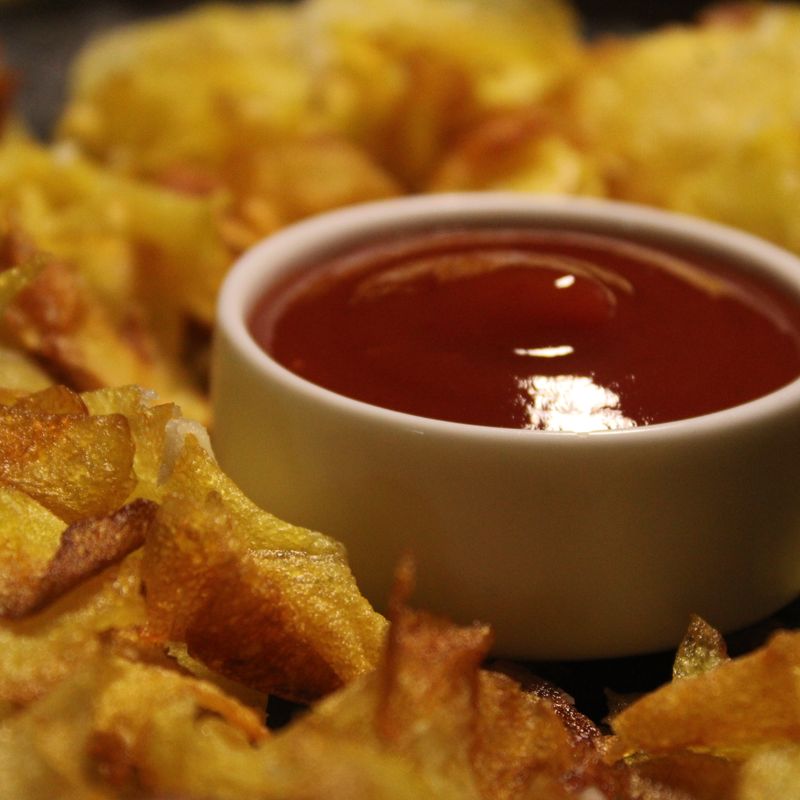
- Serve warm or at room temperature with plantain chips, cassava crisps, crispy tortilla chips, or fresh vegetables like bell pepper strips, cucumber slices, or jicama batons.
- If serving warm, place the dip in an oven-safe bowl and keep it at 200°F (93°C) for up to 1 hour.
+ Show details− Hide details
Tip: This dip is best served within 2 hours of making, while the flavors are fresh and the texture is creamiest.
Good to know
Tips
- Choose plantains that are mostly yellow with dark patches—they should yield slightly to pressure. Overly green ones won't be sweet enough; completely black ones may be mushy.
- Roasting at high temperature is key to developing caramel and depth. Low-temperature baking produces a bland, watery dip.
- If the blended dip breaks (looks grainy or separated), the crema was likely too cold. Blend in 1–2 tablespoons of warm water and blend again until smooth.
- For a spicier dip, stir in ½ teaspoon of minced fresh Scotch bonnet or habanero pepper instead of red pepper flakes, or serve with hot sauce on the side for guests to adjust to taste.
Make ahead
Roast the plantains and garlic up to 1 day ahead; store in the refrigerator in an airtight container. Complete the blending and seasoning no more than 4 hours before serving so the lime juice doesn't break down the crema texture.
Storage & reheating
Room temperature (up to 2 hours in a covered bowl). Refrigerate in an airtight container for up to 4 days; reheat gently in a saucepan over low heat, stirring occasionally, or serve cold as a spread. Do not freeze—the crema's texture will separate when thawed.
Substitutions
- crema or sour cream → Greek yogurt or Mexican crema (if available locally). Greek yogurt makes the dip slightly tangier and less rich; Mexican crema is less acidic than sour cream and more authentic to the Caribbean flavor profile.
- ripe plantains (yellow with dark spots) → ripe bananas (about 3 medium). Bananas are softer and sweeter; use only if plantains are unavailable. The dip will be less substantial and more dessert-like.
- fresh lime → fresh lemon juice. Lemon is more acidic and less aromatic; use the same amount but the flavor will be sharper and less tropical.
- cilantro → fresh parsley or scallion greens, finely chopped. Parsley is milder; scallions add a subtle onion bite. Both are good alternatives if cilantro is unavailable or disliked.