Roasted Carrot Curry Powder
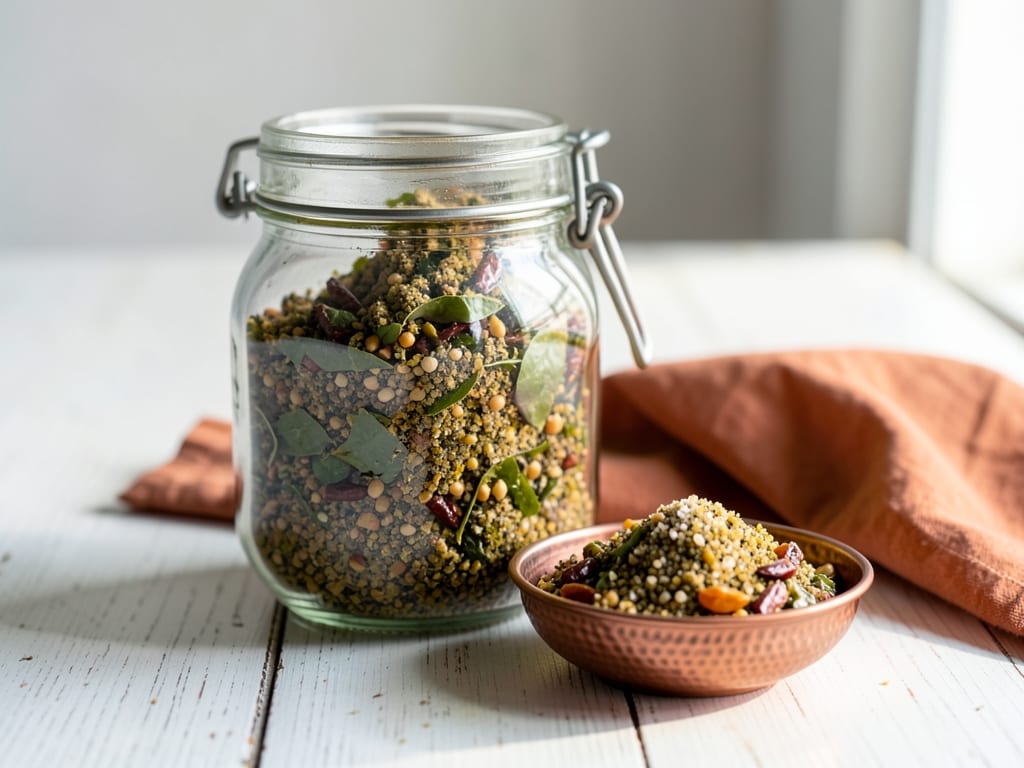
A homemade Indian-inspired curry powder that combines aromatic toasted spices with roasted carrot powder for depth and natural sweetness. This blend is warmer and earthier than store-bought versions, with coriander, cumin, and fenugreek as the backbone. Perfect for seasoning roasted vegetables, lentil dishes, rice, and curries. Makes enough to fill a spice jar and keeps for up to 3 months.
- Prep
- 10 min
- Cook
- 25 min
- Wait
- 30 min
- Total
- 1 hr 5 min
- Makes
- ¾ cup (90 g), about 24 teaspoons
Steps
Before you start
- Preheat the oven to 350°F (175°C)
- Line a baking sheet with parchment paper
- Have a spice grinder or mortar and pestle ready
- Use a small, dry skillet for toasting spices
Roast the carrotsOven 350°F / 175°C
- Spread the carrot coins in a single layer on the parchment-lined baking sheet.
- Roast at 350°F (175°C) for 18–20 minutes, stirring halfway through, until they are completely dry and beginning to caramelize at the edges.
- They should feel brittle when broken.
+ Show details− Hide details
Ready when: Carrots are completely dry, slightly darker, and brittle
Tip: Thin slices are essential so the carrots dry fully and develop flavor without burning.
Toast the whole spices
- Place the dry skillet over medium heat.
- Add the coriander seeds and cumin seeds.
- Toast, stirring constantly, for 2–3 minutes until fragrant and lightly browned.
- Add the fenugreek seeds and toast for another 30 seconds—they burn easily, so watch carefully.
- Transfer to a plate to cool for 5 minutes.
+ Show details− Hide details
Ready when: Seeds are fragrant and lightly browned; fenugreek adds sweet aroma
Tip: Constant stirring prevents burning. Don't skip cooling—hot spices release too much moisture when ground.
Cool the roasted carrots
- Remove the baking sheet from the oven and let the carrots rest at room temperature for 5–10 minutes until completely cooled.
- Break a piece—it should snap cleanly.
+ Show details− Hide details
Ready when: Carrots are cool to the touch and completely brittle
Tip: Warm carrots won't grind evenly and may clump from residual moisture.
Grind the spices
- Working in two batches to avoid overcrowding, add the toasted coriander, cumin, and fenugreek seeds to the spice grinder.
- Grind for 30–45 seconds until fine powder forms (not paste).
- Transfer to a clean, dry bowl.
- Do not clean the grinder between batches.
+ Show details− Hide details
Ready when: Mixture is uniformly powdered with no visible seed pieces
Tip: Pulsing rather than continuous grinding gives better texture and prevents the oils from heating up and clumping.
Grind the roasted carrots
- Add the cooled roasted carrot pieces to the grinder (no need to clean it first).
- Grind for 20–30 seconds until fine powder forms.
- The carrot powder will be denser than the spices and may require extra grinding time.
+ Show details− Hide details
Ready when: Carrot pieces are completely ground into fine powder with no large fragments
Tip: If carrot pieces resist grinding, roast them a bit longer next time—they weren't dry enough.
Combine and finish
- Add the ground spice mixture and ground carrot powder to a clean, dry bowl.
- Add the turmeric and black peppercorns.
- Pulse in the grinder once more (5–10 seconds) to combine and finish grinding the peppercorns, then transfer to the bowl.
- Stir well with a spoon or small whisk for 1 minute to ensure even distribution of the turmeric throughout.
+ Show details− Hide details
Ready when: Blend is uniform in color with no yellow turmeric streaks or unground peppercorns visible
Tip: Thorough mixing prevents turmeric from settling, which would give you inconsistent color and flavor in each teaspoon.
Store in an airtight jar
- Transfer the finished curry powder to a clean, completely dry glass jar with a tight-fitting lid.
- Store in a cool, dark place away from heat and moisture.
+ Show details− Hide details
Ready when: Curry powder is sealed in jar with no air gaps
Tip: Any moisture in the jar will cause clumping and reduce shelf life. Wipe the jar dry before filling.
Good to know
Tips
- Use this curry powder to season roasted vegetables (cauliflower, potatoes, Brussels sprouts), add to lentil soups, sprinkle over rice pilaf, or mix into yogurt dips. Start with ½ teaspoon per serving and adjust to taste.
- The roasted carrot component is what makes this blend distinctive—it adds warmth and subtle sweetness that balances the earthiness of the spices. Don't skip this step or substitute with raw carrot powder.
- For maximum freshness and aroma, buy whole spices in small quantities from a spice merchant if possible. Pre-ground spices lose potency within weeks.
- If your spice grinder is small, work in three batches: toasted seeds, carrots, then turmeric and pepper. Mixing in the bowl works just as well for the final blend.
Make ahead
This recipe is meant to be made ahead. Store the finished blend and use within 3 months for best flavor. The blend actually improves slightly over the first week as flavors meld."
Storage & reheating
Room temperature: Up to 3 months in an airtight glass jar away from light, heat, and moisture. The blend is at its most aromatic for the first 4–6 weeks. Refrigerator: Not necessary, but you may extend shelf life by 1 month if stored in an airtight container. Freezer: Not recommended—condensation will damage the blend. To revive fading flavor after 2 months, lightly toast 1 tablespoon of the blend in a dry skillet for 30 seconds to reawaken aromatic oils.
Substitutions
- fenugreek seeds → dried curry leaves (¼ tsp crushed). Adds a leafy, slightly bitter note instead of fenugreek's maple sweetness. Use half the amount as curry leaves are more potent.
- ground turmeric → additional ground coriander (½ tsp more). Skip turmeric if unavailable, but the blend will lose its golden color and warm earthiness. Additional coriander adds brightness instead.
- carrots, medium, peeled and cut into ¼-inch (6 mm) coins → parsnip or sweet potato (same weight). Parsnips add slightly spicier notes; sweet potato adds more sweetness. Both must be cut into thin coins and roasted fully until crisp.
- black peppercorns → white peppercorns (same amount). White pepper is milder and doesn't create dark flecks in the blend, useful if you prefer a more refined appearance or milder bite.