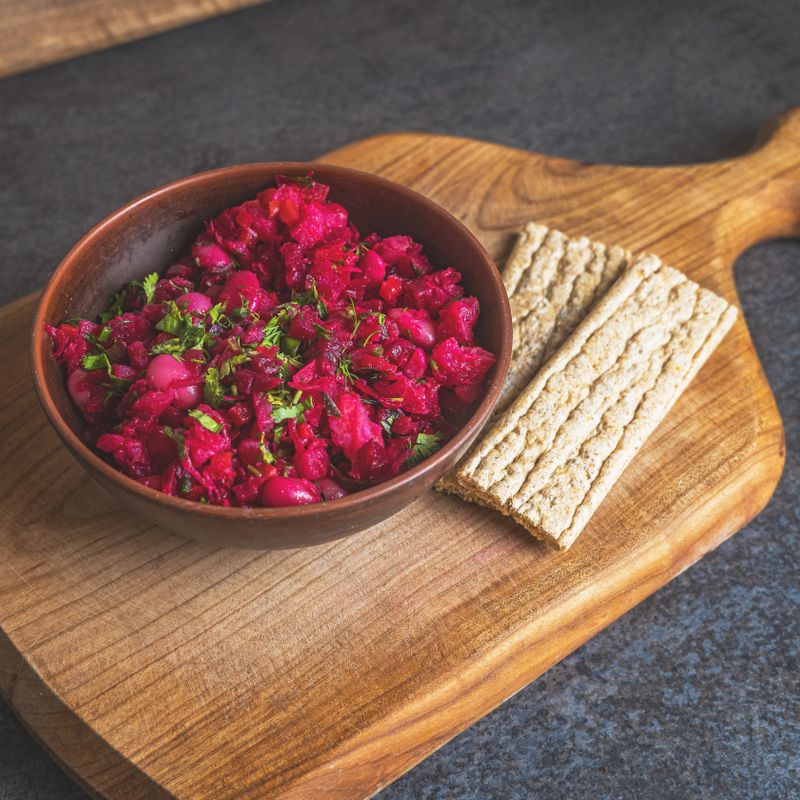
Roasted Beet Labneh Bowl with Crispy Dukkah
A bright, nourishing breakfast or light lunch bowl built on a base of tangy labneh (strained yogurt), topped with warm roasted beets, a crunchy homemade dukkah spice blend, and finished with olive oil, fresh herbs, and a squeeze of lemon. The combination of creamy, earthy, and nutty flavors makes this bowl both satisfying and elegant.
Steps
Before you start
- Have labneh at room temperature for better spreading and creaminess
- Preheat your oven to 400°F (200°C) for roasting the beets
- Toast the dukkah components in a dry skillet to maximize their flavor and crispness
Preheat and prepare beetsOven 400°F / 205°C
- Preheat your oven to 400°F (200°C).
- Peel the beets and cut them into ½-inch (1.25 cm) wedges.
- Toss them with 3 tablespoons (45 ml) of olive oil, ½ teaspoon (3 g) of kosher salt, and ¼ teaspoon (0.5 g) of black pepper on a small 9×13-inch (23×33 cm) baking sheet, spreading them in a single layer.
+ Show details− Hide details
Tip: Cut beets evenly so they roast at the same rate and caramelize without drying out.
Roast the beetsOven 400°F / 205°C
- Place the baking sheet in the preheated 400°F (200°C) oven and roast for 30–35 minutes, stirring once halfway through, until the beet wedges are tender inside and the edges are lightly caramelized and crispy.
+ Show details− Hide details
Ready when: Beets are fork-tender and edges are lightly browned and crispy
Toast dukkah components
- While the beets roast, heat a small skillet over medium heat.
- Add the ¼ cup (35 g) chopped hazelnuts and ¼ cup (35 g) sunflower seeds, stirring constantly for 2–3 minutes until fragrant and lightly golden.
- Transfer to a small plate to cool.
- In the same skillet, toast the 3 tablespoons (27 g) sesame seeds for 1–2 minutes until pale gold and aromatic, then set aside.
- Toast the 1 teaspoon (5 g) coriander seeds and ¾ teaspoon (4 g) cumin seeds together for 1 minute until fragrant, stirring to prevent burning.
+ Show details− Hide details
Ready when: Nuts and seeds are fragrant and lightly golden; do not brown
Tip: Toast each component separately to control browning and prevent smaller seeds from burning while waiting for nuts to color.
Grind dukkah spice blend
- Once the toasted coriander and cumin seeds have cooled for 1 minute, coarsely grind them in a spice grinder or mortar and pestle.
- In a small bowl, combine the ground seeds with the toasted hazelnuts, sunflower seeds, sesame seeds, ½ teaspoon (1 g) dried thyme, ¼ teaspoon (1.5 g) kosher salt, and ⅛ teaspoon (0.25 g) black pepper.
- Pulse or stir gently to combine without reducing to a powder; the dukkah should remain chunky and crispy.
+ Show details− Hide details
Ready when: Dukkah is chunky and well combined, not powdery
Tip: Keep the dukkah coarse—you want texture and crunch in every bite.
Assemble the bowls
- Divide the 1 cup (240 ml) of room-temperature labneh between two shallow bowls (8–10 inches / 20–25 cm), spreading it in a thin layer using the back of a spoon.
- Create a gentle well in the center with the back of a spoon.
+ Show details− Hide details
Tip: Room-temperature labneh spreads more easily and feels creamier on the palate.
Top with warm beets and dukkah
- Divide the warm roasted beets between the two bowls, arranging them in the well of the labneh.
- Drizzle 1 tablespoon (15 ml) of extra-virgin olive oil over each bowl.
- Sprinkle 2 tablespoons (20 g) of the dukkah spice blend generously over the beets and labneh in each bowl.
+ Show details− Hide details
Tip: Pour olive oil just before serving so it doesn't soak into the labneh.
Garnish and serve
- Squeeze a generous wedge of lemon over each bowl.
- Top with the torn fresh mint leaves and chopped dill if using, and scatter the pomegranate arils across the top for bright pops of color and tartness.
- Serve immediately while the beets are still warm and the dukkah is crispy.
+ Show details− Hide details
Tip: Add fresh herbs and pomegranate arils last so they don't wilt or weep into the labneh.
Good to know
Tips
- Labneh keeps the bowl grounded and creamy—buy it from a Middle Eastern grocery store or make it at home by straining thick Greek yogurt through cheesecloth overnight.
- The dukkah works just as well on hummus, roasted vegetables, or as a rim on a rimmed glass for savory cocktails; make a double batch and store for quick bowls throughout the week.
- If pomegranate arils are not in season, you can swap them for fresh pomegranate juice drizzled over the bowl for tartness, or skip them entirely and finish with a squeeze of lemon.
- For a more substantial meal, serve this bowl alongside crusty bread, warm pita, or a soft-boiled egg on the side.
Make ahead
You can make the dukkah spice blend up to 5 days ahead; store it in an airtight container at room temperature. Roast the beets up to 1 day ahead and store in the refrigerator; warm them gently in the oven or on the stovetop before serving.
Storage & reheating
Labneh bowl is best eaten fresh and warm. Leftover dukkah keeps in an airtight container at room temperature for up to 5 days. Store leftover roasted beets in an airtight container in the refrigerator for up to 4 days; reheat gently before serving.
Substitutions
- raw hazelnuts → Raw almonds or walnuts. Use an equal amount; almonds and walnuts will toast slightly faster, so watch carefully. Both offer a slightly different but equally delicious nutty base for the dukkah.
- labneh (strained yogurt) → Greek yogurt mixed with 2 tablespoons crème fraîche per cup. This adds a tangy, creamy richness similar to labneh, though it will be slightly less thick. Whisk to combine before spreading.
- medium red beets → Baby carrots or golden beets. Roast carrots for 25–30 minutes; they will be slightly sweeter. Golden beets will lack the deep earthiness of red beets but are milder in flavor.
- fresh dill fronds → Fresh cilantro or parsley. These offer different flavor notes—cilantro adds brightness, parsley is more subtle. Both work beautifully with the warm beets.
More rice bowls
See all →
Find more like this
- Meal
- Lunch
- Cuisine
- Middle Eastern
- Method
- Oven
- Quick & Easy
- Easy