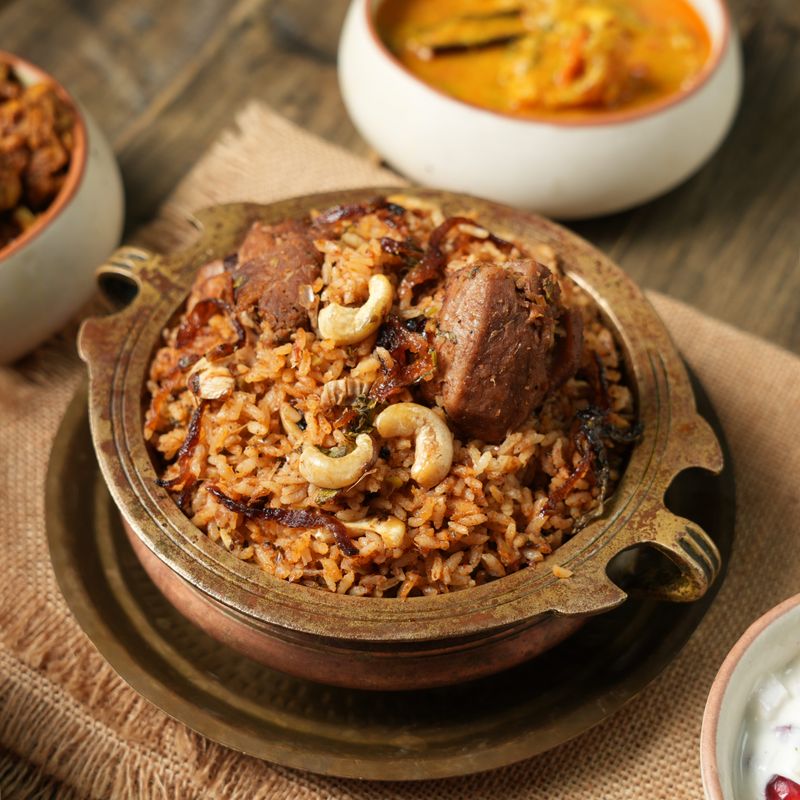
Plain Rice and Bean Family Biryani
A warm, aromatic one-pot biryani layered with basmati rice, kidney beans, caramelized onions, and fragrant whole spices. This family-style vegetarian biryani is cooked on the stovetop using the dum pukht (steam-cooking) method, where each grain absorbs the flavors of ginger, garlic, and a blend of cardamom, cinnamon, and bay leaves. Tender beans add heartiness and protein, while crispy fried onions and fresh cilantro finish each serving.
- Prep
- 25 min
- Cook
- 35 min
- Wait
- 25 min
- Total
- 1 hr 25 min
- Makes
- 6 servings (about 1½ cups per person)
Steps
Before you start
- Rinse basmati rice under cold water until the water runs clear to remove excess starch
- Have all spices measured and ready before you begin cooking
- If using canned beans, drain and rinse them thoroughly; if using dried beans, soak overnight and cook until just tender
- Use a heavy-bottomed pot with a tight-fitting lid for proper steam cooking
Fry the onions
- Heat 4 tablespoons (60 ml) of ghee in a large heavy-bottomed pot over medium-high heat.
- Once shimmering, add the sliced onions in a single layer, stirring occasionally.
- Fry for 12–15 minutes until the onions turn deep golden brown and crispy, stirring more frequently as they darken to prevent burning.
- The onions should be caramelized and fragrant.
- Transfer half the crispy onions to a shallow bowl and set aside for garnish; leave the remaining onions in the pot.
+ Show details− Hide details
Ready when: Onions are deep golden brown and crispy
Tip: Stir constantly toward the end of cooking to prevent the onions from burning on the bottom
Toast the spices
- Reduce the heat to medium.
- Add the cardamom pods, cinnamon stick, bay leaves, peppercorns, cumin seeds, and cloves directly to the pot with the remaining onions and ghee.
- Stir constantly for 1–2 minutes until the spices become fragrant and release their essential oils.
- You'll smell the warm aroma of cardamom and cinnamon.
+ Show details− Hide details
Ready when: Spices are fragrant and oils are visible
Tip: Toasting whole spices prevents them from tasting raw and bitter in the final dish
Add aromatics
- Add the ginger-garlic paste to the pot and stir constantly for 1 minute, cooking until the raw garlic smell disappears and the paste becomes fragrant and slightly darkened.
+ Show details− Hide details
Ready when: Paste is fragrant and lightly browned
Tip: Cook the paste long enough to remove the raw garlic flavor, but not so long that it burns
Add rice and beans
- Add the rinsed rice and drained kidney beans to the pot.
- Stir gently for 2 minutes, coating the grains evenly with the ghee and spice mixture.
- Be careful not to break the rice grains.
+ Show details− Hide details
Ready when: Rice grains are coated and evenly distributed
Tip: Gentle stirring prevents the rice from becoming mushy or broken
Add water and season
- Pour in the 4 cups (950 ml) of water.
- Taste the liquid and season with fine sea salt to your preference—it should taste lightly salted, like seasoned broth.
- Stir well to distribute the salt and spices evenly throughout the pot.
- Increase the heat to high and bring the mixture to a boil, stirring occasionally.
+ Show details− Hide details
Ready when: Liquid is at a rolling boil
Tip: Taste the broth before sealing the pot; you cannot adjust seasoning once the lid is on
Begin steam cooking (dum)
- Once the water is boiling, reduce the heat to low.
- Place the lid on the pot, making sure it sits securely and creates a seal.
- The biryani will now cook using the dum pukht (steam-cooking) method, where steam trapped inside cooks the rice and beans gently and evenly.
- Maintain a low heat level—you should see only occasional small wisps of steam escaping from the lid edges.
+ Show details− Hide details
Ready when: Rice is tender and all liquid is absorbed
Tip: Do not lift the lid during cooking; opening it releases steam and disrupts the cooking process
Rest the biryani
- Turn off the heat and let the pot sit, covered, for 5 minutes.
- During this rest, the residual steam finishes cooking any remaining grains and allows the flavors to settle.
+ Show details− Hide details
Ready when: Biryani has finished cooking and steam has subsided
Tip: This rest period is crucial for fluffy, well-separated grains
Fluff and serve
- Remove the lid carefully, tilting it away from you to avoid steam burns.
- Using a fork, gently fluff the rice by stirring from the bottom of the pot upward, breaking up any clumps and folding in the remaining ghee (if any).
- The rice should be light and each grain separate.
- Transfer the biryani to a serving platter or bowl.
- Top with the reserved crispy fried onions and scatter the chopped fresh cilantro and mint over the top, if using.
+ Show details− Hide details
Ready when: Rice is fluffy and grains are separate
Tip: Fluff gently with a fork to avoid breaking the delicate rice grains; a spoon will mash them
Good to know
Tips
- The key to perfect biryani is not lifting the lid during the dum cooking phase. Resist the urge to check on it; the steam trapped inside is doing the work.
- Caramelizing the onions deeply is essential for the biryani's rich flavor. Take your time with this step—rushing will result in pale, undercooked onions.
- For best results, use whole spices rather than ground spices. Whole spices infuse the rice with more nuanced flavor and can be eaten around during the meal.
- If you have leftover crispy onions from frying, store them in an airtight container at room temperature for up to 2 days and use them as a garnish for soups, curries, or rice dishes.
Storage & reheating
Store leftover biryani in an airtight container in the refrigerator for up to 3 days. Reheat gently on the stovetop over medium-low heat with a splash of water, covered, for 5–7 minutes until warmed through. Do not microwave, as this can make the rice dry and rubbery. The biryani does not freeze well due to the texture of the cooked rice.
Substitutions
- canned kidney beans, drained and rinsed → chickpeas or black beans. Use the same quantity. Chickpeas add a nuttier flavor, while black beans provide an earthier taste.
- ghee or vegetable oil → unsalted butter or vegetable oil. Ghee has a higher smoke point and richer flavor, but butter and oil work well as alternatives.
- basmati rice → jasmine rice or long-grain white rice. Basmati rice is ideal for biryani due to its long grains and aromatic quality, but these alternatives will yield a similar result.
- ginger-garlic paste → 2 tablespoons fresh ginger, minced, plus 3 cloves garlic, minced. Freshly minced ginger and garlic will work if paste is unavailable; mix them together before adding to the pot.
More biryani
See all →


Find more like this
- Meal
- Dinner
- Cuisine
- Indian
- Main ingredient
- Basmati RiceKidney Beans
- Method
- Stovetop
- Quick & Easy
- One-Pot