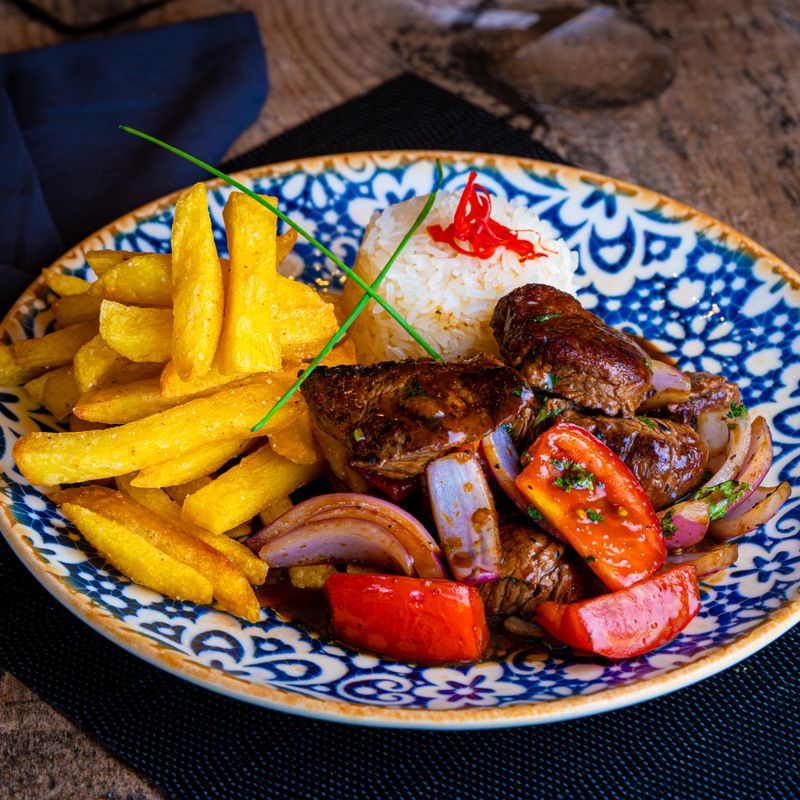
Peruvian Yellow Rice with Turmeric
A fragrant, golden side dish infused with turmeric, cumin, and garlic. This stovetop rice is a staple in Peruvian cuisine, traditionally served alongside ceviche, grilled meats, and stews. The spices bloom in oil before the rice is added, creating layers of warm, earthy flavor throughout each grain.
- Prep
- 10 min
- Cook
- 20 min
- Wait
- 10 min
- Total
- 40 min
- Makes
- 4 servings (about 3 cups)
Steps
Before you start
- Measure all ingredients before you start cooking
- Use white long-grain rice (jasmine or basmati work well)
- Have your broth at room temperature or slightly warm
- Don't skip toasting the rice—it prevents mushiness
Toast the rice
- Heat olive oil in a medium saucepan (3-quart) over medium heat.
- Once shimmering, add the uncooked rice and stir constantly for 2–3 minutes.
- The rice should turn slightly translucent at the edges and smell nutty.
- This step prevents the rice from becoming mushy and adds a subtle depth of flavor.
+ Show details− Hide details
Ready when: Rice grains look slightly translucent at the edges and smell toasted
Tip: Keep stirring constantly so the rice doesn't burn on the bottom. Lower heat slightly if it begins to color too quickly.
Bloom the spices
- Add minced garlic, ground turmeric, and ground cumin to the rice.
- Stir for about 30 seconds until fragrant.
- The spices will coat each grain and release their essential oils.
+ Show details− Hide details
Ready when: Mixture is fragrant and the turmeric coats the rice grains
Tip: Don't let the spices burn. If the pan is too hot, the turmeric will turn bitter.
Add broth and season
- Pour the chicken broth into the saucepan, then add salt and black pepper.
- Stir once to combine.
- Bring to a boil over medium-high heat, stirring occasionally.
+ Show details− Hide details
Ready when: Liquid is at a rolling boil
Tip: Don't stir too much once the broth is added—this can make the rice starchy and sticky.
Simmer covered
- Once boiling, reduce heat to low, cover the saucepan with a tight-fitting lid, and simmer for 16–18 minutes.
- The rice is done when all the liquid is absorbed and grains are tender but still hold their shape.
+ Show details− Hide details
Ready when: No liquid remains in the saucepan and grains are tender when bitten
Tip: Resist lifting the lid to peek—letting steam escape will extend cooking time. If you must check after 15 minutes, do so quickly.
Rest the rice
- Remove from heat and let the rice rest, covered, for 5–10 minutes.
- This allows the grains to firm up slightly and absorb any remaining moisture.
+ Show details− Hide details
Ready when: Rice is fluffy and grains separate easily when fluffed with a fork
Tip: Keep the lid on so the rice stays warm and doesn't dry out.
Fluff and finish
- Fluff the rice gently with a fork, breaking up any clumps.
- Taste and adjust seasoning if needed.
- Fold in fresh cilantro if using.
- Transfer to a serving dish.
+ Show details− Hide details
Ready when: Rice is light and fluffy; grains are separate and evenly golden
Tip: Cilantro is optional but traditional in Peru. Add it just before serving so it stays bright green.
Good to know
Tips
- Toast the rice before adding liquid—this is the key to preventing mushy, sticky rice and adds nutty flavor.
- Never skip blooming the spices in oil. This releases their essential oils and distributes flavor evenly throughout the dish.
- Use a saucepan with a tight-fitting lid so steam doesn't escape and the rice cooks evenly.
- Serve warm alongside ceviche, grilled chicken, or fish for an authentic Peruvian meal.
Make ahead
This rice is best served warm but can be made up to 1 day ahead. Store covered in the refrigerator. Reheat gently on the stovetop with a splash of broth or water, stirring often, until warmed through (about 5 minutes on medium heat).
Storage & reheating
Room temperature: up to 2 hours in a covered container. Refrigerator: up to 3 days in an airtight container. Freezer: up to 2 months in a freezer bag (thaw overnight in the refrigerator, then reheat on the stovetop).
Substitutions
- low-sodium chicken broth → vegetable broth or water. Use vegetable broth for a vegetarian version, or water for a lighter flavor. Increase salt to 1 teaspoon if using water.
- olive oil → vegetable oil or butter. Vegetable oil works equally well; butter adds a richer flavor but will brown slightly more quickly.
- ground turmeric → saffron (0.25 teaspoon steeped in 2 tablespoons warm broth). Saffron is more traditional in some Peruvian regions but is expensive. Turmeric is the everyday choice and more affordable.
- fresh cilantro, finely chopped → fresh parsley or omit. Parsley is milder and less traditional but works well for those who dislike cilantro's flavor.