
Pastel de Nata Tropical with Mango
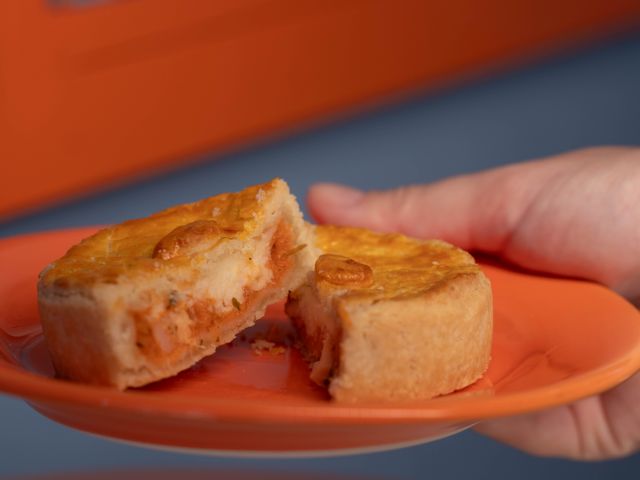
A vibrant twist on the iconic Portuguese custard tart, this tropical version layers buttery puff pastry with silky mango-infused custard and a touch of cinnamon. The bright, fruity custard filling contrasts beautifully with the pastry's crisp exterior and caramelized edges, while a dusting of cinnamon and a mango glaze finish each tart with elegance.
Steps
Before you start
- Preheat oven to 425°F (220°C) and position rack to upper-middle position
- Chill a standard muffin tin in the freezer for 10 minutes
- Have all custard ingredients at room temperature before mixing
Prepare pastry shells
- On a lightly floured surface, gently unfold the thawed puff pastry sheet.
- Using a 3-inch (7.5 cm) round cutter or the rim of a glass, cut out 12 circles.
- Press each circle into a cup of the chilled muffin tin, allowing the pastry to rise slightly above the rim.
- Prick the bottom of each shell twice with a fork to prevent puffing.
- Chill in the freezer for 10 minutes while you prepare the custard.
+ Show details− Hide details
Ready when: Pastry is cut into 12 circles and fitted snugly in tin
Tip: Keep pastry cold; warm pastry will shrink and tear. If it becomes too soft while working, refrigerate for 5 minutes.
Make custard baseOven 160°F / 70°C
- In a small saucepan, combine the whole milk and heavy cream.
- Heat over medium heat until steaming (about 160°F / 71°C), stirring occasionally—do not boil.
- Meanwhile, in a medium bowl, whisk together the egg yolks, granulated sugar, cornstarch, and sea salt until pale and thick, about 1 minute.
- Slowly pour the hot milk mixture into the egg mixture while whisking constantly to temper the yolks, then whisk in the vanilla extract and lime zest if using.
+ Show details− Hide details
Ready when: Milk is steaming and custard base is pale and ribbon-like
Tip: Temper the eggs slowly to avoid scrambling—whisk continuously and pour the milk in a thin stream.
Fold in mango and spice
- Strain the custard mixture through a fine-mesh sieve into a clean bowl to remove any lumps or cooked egg bits.
- This step is crucial for a silky texture.
- Gently fold in the mango purée and ground cinnamon using a rubber spatula until no streaks remain.
- The custard should be pale orange with a smooth, pourable consistency.
+ Show details− Hide details
Ready when: Custard is smooth, uniform color, no lumps visible
Tip: Straining prevents grainy custard from cooked egg. Don't overmix after adding mango, or you'll incorporate unwanted air.
Fill tarts
- Remove the muffin tin from the freezer.
- Divide the custard mixture evenly among the 12 pastry shells, filling each about three-quarters full (approximately 2 tablespoons / 30 ml per tart).
- The custard will rise slightly during baking.
+ Show details− Hide details
Ready when: All 12 shells are filled evenly and custard nearly reaches rim
Tip: Use a small ladle or ice cream scoop to distribute custard evenly so all tarts bake uniformly.
Bake pastelsOven 425°F / 220°C
- Place the muffin tin on the upper-middle rack of the oven preheated to 425°F (220°C).
- Bake for 22–25 minutes, until the pastry is deeply golden brown and caramelized at the edges, and the custard is set but still has a slight jiggle in the very center when gently shaken.
- The top of the custard will be lightly browned.
- Do not overbake, or the custard will become rubbery.
+ Show details− Hide details
Ready when: Pastry is deep golden, edges caramelized, custard jiggles only slightly at center
Tip: Position the tin on the upper-middle rack so the pastry bottoms brown before the custard edges burn. Check at 20 minutes; ovens vary.
Cool and set
- Remove the muffin tin from the oven and let the pastels cool in the tin for 5 minutes—they will firm up slightly as they cool.
- Using a small offset spatula or thin knife, gently pry each pastel from the cup and transfer to a wire rack to cool completely, about 10 minutes.
- The custard will continue to set as it cools to room temperature.
+ Show details− Hide details
Ready when: Pastels slide out of tin easily and are warm but not hot
Tip: Don't cool in the tin too long or the pastry will stick. Work gently to avoid cracking the pastry.
Glaze and finish
- Once the pastels are completely cool, gently brush or spoon a small amount of warmed mango jam or curd (about 1 teaspoon per tart) onto the center of each custard top.
- A light dusting of ground cinnamon over the glaze adds visual appeal and a subtle spice note.
- Allow the glaze to set for 2–3 minutes before serving.
+ Show details− Hide details
Ready when: Glaze is applied evenly and begins to set
Tip: Warm glaze brushes on more smoothly than cold jam. A light hand prevents glaze from dripping onto the pastry.
Good to know
Tips
- Fresh mango purée is essential for the best flavor; frozen mango can work but must be thawed and drained to remove excess liquid, which would thin the custard.
- Do not skip straining the custard; it ensures a silky, lump-free filling. If lumps do form, pour through a sieve before filling the pastry.
- The slight jiggle in the center of the custard when the pastels come out is crucial—they continue cooking as they cool, and a firm center indicates overbaking.
- Cinnamon on top is traditional for Portuguese custard tarts; apply it after glazing so it adheres to the sticky mango layer.
Make ahead
Pastry shells can be cut and fitted into the muffin tin up to 24 hours ahead; wrap tightly in plastic wrap and freeze. Bake directly from frozen, adding 2–3 minutes to bake time. Unbaked custard can be made up to 4 hours ahead and refrigerated; bring to room temperature before filling.
Storage & reheating
Store cooled pastels in an airtight container at room temperature for up to 2 days, or cover and refrigerate for up to 4 days. Reheat gently in a 300°F (150°C) oven for 5–7 minutes to restore crispness. Do not freeze after baking (the pastry becomes soggy upon thawing). Unbaked filled shells can be frozen for up to 1 month; bake from frozen without thawing, adding 3–4 minutes to bake time.
Substitutions
- fresh mango purée (from ripe mango) → passion fruit purée or peach purée. Reduces the tropical citrus character but keeps the fruit-forward custard. Passion fruit adds tartness; peach is milder and more delicate.
- ground cinnamon → ground cardamom or a pinch of turmeric. Cardamom brings warm, floral notes; turmeric adds earthy golden color. Both pair beautifully with mango but use only ¼ teaspoon to avoid overpowering.
- heavy cream → whole milk (use ¾ cup / 180 ml total milk). Makes a slightly lighter custard with less richness, but reduces the overall creaminess. The tart will still be delicious.
- frozen puff pastry (thawed but still cold) → phyllo sheets (3–4 sheets, brushed with melted butter and layered). Creates a more delicate, crisp shell but requires more careful handling. Trim to fit the muffin tin cups.
More pies & tarts
See all →



Find more like this
- Meal
- Dessert
- Cuisine
- Mediterranean
- Main ingredient
- Mangoes
- Diet
- VegetarianHalal
- Method
- Oven