Party Seared Scallop and Crispy Sage Tartine
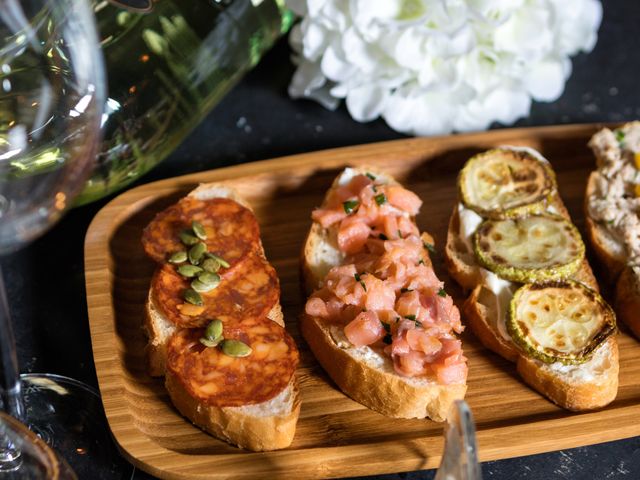
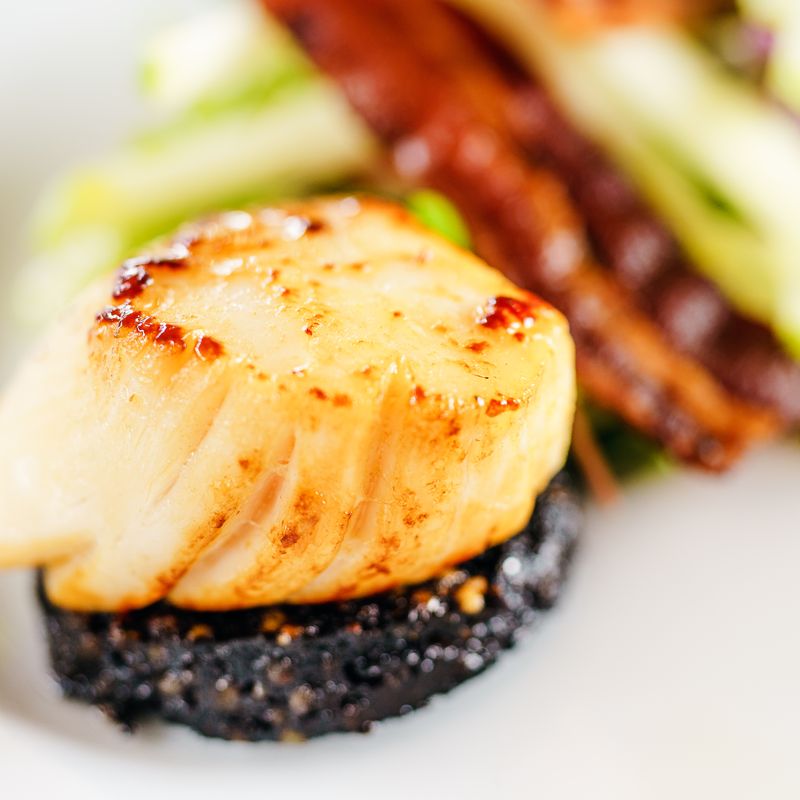
Elegant canapés built on crispy sourdough discard toasts, topped with seared sea scallops and garnished with sage leaves crisped in brown butter. The contrast of tender scallops, crunchy toast, and fragrant sage makes these sophisticated enough for entertaining yet simple enough to prepare last-minute. Each tartine is finished with fleur de sel and a drizzle of sage-infused brown butter.
- Prep
- 20 min
- Cook
- 15 min
- Wait
- 5 min
- Total
- 40 min
- Makes
- 12 tartines (2 per person)
Steps
Before you start
- Pat scallops dry with paper towels at least 30 minutes before searing (crucial for a golden crust)
- Ensure your skillet is very hot before adding scallops
- Have a small bowl of fleur de sel and a serving platter ready near the stove
- Read through the method so you can sear scallops while the sage crisps
Make crispy sourdough toastsOven 400°F / 205°C
- Preheat the oven to 400°F (200°C).
- Spread the sourdough discard on a baking sheet in a thin, even layer (about ¼ inch/6 mm thick—it won't be uniform, and that's fine).
- Drizzle with olive oil and sprinkle lightly with fleur de sel.
- Bake for 8–10 minutes, stirring once at the 5-minute mark, until the pieces are deeply golden and crispy throughout.
- The discard will puff slightly and crisp as the edges brown.
- Remove from the oven and let cool for 2 minutes on the sheet so they firm up completely.
- You should have roughly 12 irregular crisps, each 2–3 inches (5–7.5 cm) across.
+ Show details− Hide details
Ready when: Golden brown, crispy throughout, no soft centers
Tip: Don't crowd the sheet—spread the discard so pieces can crisp on all sides. Stir halfway through to ensure even browning.
Prepare scallops for searing
- While the toasts cool, pat the scallops very dry with paper towels—this is essential for browning.
- Blot all surfaces, pressing gently.
- Season both sides with a pinch of fleur de sel and freshly ground black pepper just before they hit the pan (seasoning them too early draws out moisture and prevents browning).
+ Show details− Hide details
Ready when: Scallops are surface-dry with no visible moisture
Tip: Damp scallops will steam rather than sear. If they release liquid while sitting, pat them dry again right before cooking.
Crisp sage in brown butter
- In a small saucepan over medium heat, melt the butter.
- Once melted, reduce the heat to medium-low and let the butter bubble gently.
- Watch carefully—after about 3–4 minutes, the milk solids at the bottom will begin to brown and smell nutty.
- At this point (you'll see little brown specks), add all 24 sage leaves.
- They will sizzle and crisp immediately (15–20 seconds).
- Using a slotted spoon or small strainer, transfer the sage to a plate lined with a paper towel.
- Reserve the brown butter in the pan.
+ Show details− Hide details
Ready when: Sage leaves are dark green and papery-crisp; brown butter smells nutty and is amber
Tip: Brown butter can go from nutty to burnt in seconds. If the sage goes beyond dark green (toward black), discard and start over. The butter will continue to cook on residual heat, so remove from heat as soon as the sage crisps.
Sear the scallops
- Heat a large cast-iron or stainless steel skillet over medium-high heat until it's very hot (at least 2 minutes).
- You should be able to hold your hand 2 inches above the pan for only 2–3 seconds.
- Add a thin film of neutral oil (about ½ tsp) if the pan is very dry.
- Working carefully, place half the scallops in the pan in a single layer, leaving ½ inch (1 cm) between each.
- Do not move them for 2–3 minutes—this allows a golden crust to form.
- Flip each scallop once and cook the other side for another 1–2 minutes until the flesh is just opaque and springy to a gentle touch (center should register 120–125°F/49–52°C on a meat thermometer).
- The scallop should feel tender, not rubbery.
- Transfer to a warm plate and repeat with the remaining scallops.
+ Show details− Hide details
Ready when: Golden-brown crust on both sides; flesh is opaque and springy, not translucent or mushy
Tip: Scallops cook very quickly—overcooking makes them rubbery. A light touch confirms doneness: the scallop should feel firm but still give a little when pressed. If you're unsure, err on the side of slightly underdone; carryover heat will continue cooking them as you build the tartines.
Assemble the tartines
- Arrange the cooled sourdough crisps on a serving platter.
- Top each crisp with one warm seared scallop, positioning it slightly off-center.
- Drizzle a few drops of the reserved brown butter over each scallop, then crown each with a crispy sage leaf.
- Finish with a tiny pinch of fleur de sel on the scallop and, if desired, a whisper of lemon zest.
+ Show details− Hide details
Ready when: All tartines are topped and plated
Tip: Assemble just before serving so the toasts stay crisp and the scallops stay warm. If you must hold them a few minutes, keep the platter in a warm (200°F/93°C) oven.
Good to know
Tips
- Scallops are best bought the day you plan to cook them. Request dry-pack scallops (not wet-pack), as they won't have added moisture that prevents browning. Ask the fishmonger to pat them dry if possible.
- The brown butter can be made up to 2 hours ahead, strained into a small bowl, and reheated gently just before serving. Store it covered at room temperature.
- For a prettier presentation, line your platter with a thin smear of brown butter or a light herb oil (basil or chervil infused in oil) before arranging the tartines.
- If your sourdough discard is very thick, thin it slightly with water (1 tbsp at a time) to get a spreadable, pancake-batter-like consistency so it bakes evenly and crisps well.
Make ahead
"The sourdough toasts can be made up to 4 hours ahead and stored in an airtight container at room temperature. Reheat briefly in a 300°F (150°C) oven for 2 minutes to re-crisp if needed. Do not prepare the complete tartines ahead; assemble right before serving for best texture and temperature."
Storage & reheating
"These tartines are best served immediately. Leftover sourdough crisps can be stored in an airtight container at room temperature for up to 3 days and re-crisped in a warm oven. Seared scallops do not reheat well; leftovers can be refrigerated for 1 day and eaten cold (they will be less tender) or gently warmed in a low oven."
Substitutions
- fresh sage leaves, whole → fresh thyme or rosemary leaves (use about half the amount—8–12 leaves—as these are more potent). Thyme crisps faster than sage; add it only in the last 5 seconds of browning the butter. Rosemary is more assertive; taste as you go.
- large dry-pack sea scallops (about 1½ inches/4 cm diameter) → Large shrimp (16–20 count) or diced fish fillet (halibut or cod), cubed and briefly pan-seared. Shrimp will take 1–2 minutes per side. Fish cubes cook in 1–1½ minutes total and are more delicate; handle gently.
- sourdough discard, fed and active (room temperature) → Thinly sliced rustic bread (baguette, ciabatta, or country loaf) toasted with olive oil at 400°F (200°C) for 6–8 minutes. This is faster but less rustic. The sourdough discard gives a tangier flavor and rustically irregular shape.
- extra-virgin olive oil → Clarified butter (ghee) for toasting the sourdough. Ghee will brown the toasts more deeply and add a richer flavor. Use the same amount by weight (30 g).