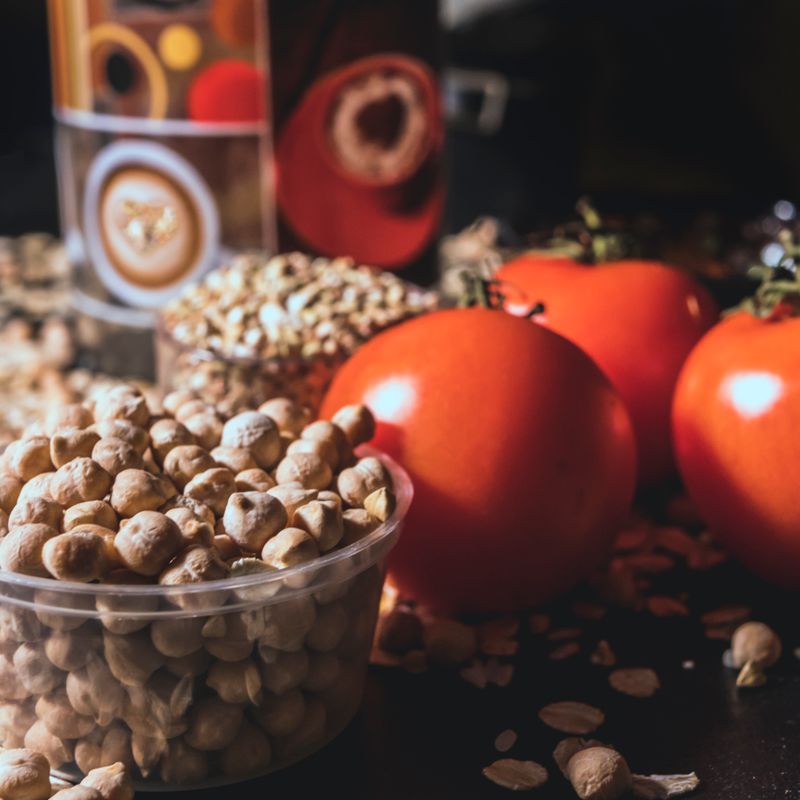
One-Pot Spiced Red Bean and Roasted Walnut Dip
A savory-spicy Korean-inspired dip that combines creamy cooked red beans with toasted walnuts, gochujang heat, and roasted sesame oil. The beans and nuts simmer together in a single pot, then are hand-blended to a chunky-smooth consistency with umami-rich aromatics. Serve warm or at room temperature with crackers, vegetables, or rice cakes for a crowd-pleasing appetizer that's naturally vegan and packed with protein.
- Prep
- 15 min
- Cook
- 25 min
- Wait
- 10 min
- Total
- 50 min
- Makes
- About 1¾ cups (420 ml), 6 servings
Steps
Before you start
- Toast the walnuts first so they're fragrant and slightly darkened before adding to the pot.
- Have all aromatics (garlic, ginger, scallions) prepped and ready since the simmering time is short.
- If using canned beans, drain and rinse them well to remove excess sodium and starch.
Toast the walnuts
- Heat a small dry skillet over medium heat.
- Add the chopped walnuts and toast, stirring frequently, for 3–4 minutes until fragrant and beginning to brown.
- Transfer to a plate to cool slightly, then roughly chop into bite-sized pieces.
- Set aside.
+ Show details− Hide details
Ready when: Walnuts smell nutty and are light brown
Tip: Don't skip toasting—it deepens the walnut flavor and prevents them tasting raw or bitter in the finished dip.
Sauté aromatics
- In a medium saucepan over medium heat, add the sesame oil.
- Once shimmering, add the minced garlic, ginger, and the white parts of the scallions.
- Stir constantly for 1–2 minutes until fragrant, being careful not to burn the garlic.
+ Show details− Hide details
Ready when: Garlic is fragrant and just beginning to soften
Tip: Keep the heat at medium so the garlic doesn't scorch and turn bitter.
Add gochujang and beans
- Stir in the gochujang until well combined with the aromatics, coating the pan for about 30 seconds.
- Add the drained and rinsed red beans and the water.
- Stir well to break up any lumps of gochujang.
+ Show details− Hide details
Ready when: Gochujang is fully incorporated and beans are evenly distributed
Tip: Stir the gochujang thoroughly so it dissolves evenly rather than clumping into the beans.
Simmer the mixture
- Bring the mixture to a gentle simmer over medium heat, then reduce heat to medium-low.
- Simmer uncovered for 15–18 minutes, stirring occasionally, until the beans break down slightly and the liquid reduces by about half.
- The mixture should look loose but thickened.
+ Show details− Hide details
Ready when: Liquid is reduced by about half and beans appear partially broken down; mixture moves slowly on the spoon
Tip: Don't let it scorch on the bottom—stir every 3–4 minutes to keep everything moving and heating evenly.
Season and fold in walnuts
- Remove the pan from heat and stir in the soy sauce and sugar.
- Taste and adjust with salt and freshly ground black pepper to your preference.
- Fold in the cooled toasted walnuts, leaving some visible for texture.
+ Show details− Hide details
Ready when: Flavors are balanced and walnuts are distributed throughout
Tip: Taste before adding salt—the soy sauce and gochujang are already salty, so you may need less than you'd expect.
Blend to desired texture
- Using a potato masher or immersion blender, gently mash or pulse the dip 4–6 times until it reaches your preferred consistency.
- Some prefer it chunky with whole beans visible; others like it creamier with fewer pieces.
- Aim for a spread-like texture, not completely smooth.
- If it seems too thick, add water 1 tablespoon at a time.
+ Show details− Hide details
Ready when: Dip is chunky-smooth and holds its shape on a spoon but spreads easily
Tip: Don't over-blend—stop while you still see some bean and walnut pieces, or you'll lose the appealing texture and structure.
Cool and serve
- Transfer the dip to a serving bowl and let it cool for 5–10 minutes at room temperature.
- Garnish with the reserved green parts of the scallions and toasted sesame seeds if desired.
- Serve warm or at room temperature with rice crackers, vegetable crudités, or thinly sliced bread.
+ Show details− Hide details
Ready when: Dip has cooled slightly and is ready to serve
Tip: The dip thickens as it cools, so it may seem slightly looser than you'd like when still hot—this is normal and desired.
Good to know
Tips
- For extra richness and a smoother texture, stir in 2 tablespoons of tahini or roasted peanut butter after seasoning and before blending—it adds creaminess without cream.
- If serving cold, thin the dip with a little more sesame oil or water just before serving, as it firms up significantly in the refrigerator.
- Toast your own sesame seeds in a dry skillet over medium heat for 2 minutes to intensify their nuttiness before garnishing.
- This dip pairs beautifully with Korean rice cakes (tteok), cucumber slices, radish, or crispy bread—anything that can scoop or dip works well.
Make ahead
Make this dip up to 3 days ahead. Store it in an airtight container in the refrigerator. To serve, gently warm it in a saucepan over low heat, stirring occasionally, and thin with a splash of water if needed. It can also be served cold straight from the fridge if you prefer.
Storage & reheating
Room temperature: up to 2 hours (best freshly made). Refrigerator: up to 5 days in an airtight container. Freezer: up to 3 months in a freezer-safe container. Thaw in the refrigerator overnight and warm gently on the stovetop before serving.
Substitutions
- gochujang (Korean red chili paste) → sriracha or other red chili paste (adjust to taste). Use about 2 tablespoons sriracha for milder heat, or 2–3 tablespoons for similar spice. Gochujang has more umami and fermented depth, so the flavor will shift slightly.
- raw walnut halves → roasted peanuts, pecans, or sunflower seeds. Keep the same weight. Peanuts will make it earthier; pecans add sweetness; sunflower seeds keep it lighter. All work well.
- roasted sesame oil → neutral oil with 1 teaspoon toasted sesame oil mixed in. If you don't have roasted sesame oil, use a mild neutral oil and stir in a small amount of sesame oil at the end to preserve its delicate flavor.
- canned red beans, drained and rinsed → black beans or pinto beans (canned and drained). Black beans will darken the dip and shift the flavor slightly earthier. Pinto beans add a milder, creamier texture. Both are equally successful.
More dips & spreads
See all →



Find more like this
- Meal
- Snack
- Cuisine
- Korean
- Main ingredient
- Beans & Lentils
- Method
- Stovetop