One-Pot Sourdough Tunisian Merguez and Roasted Vegetable Braise
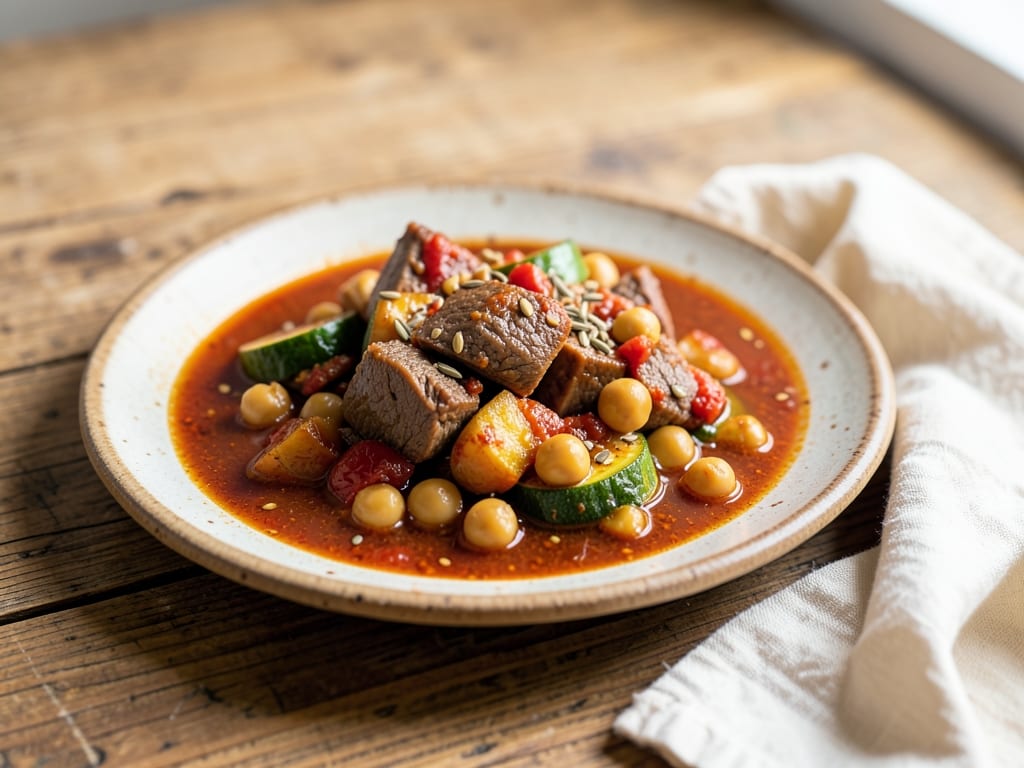
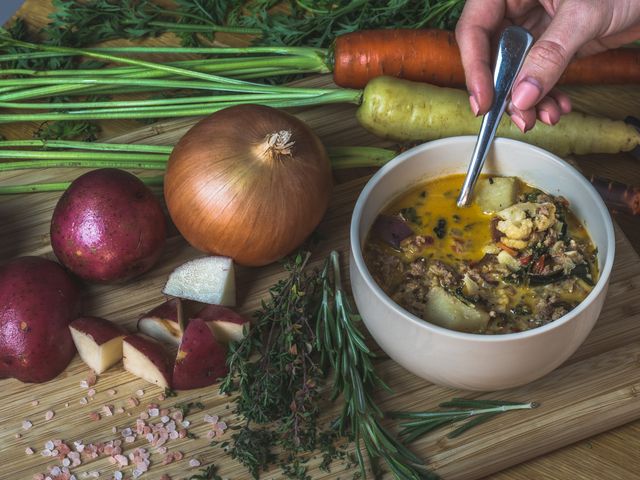
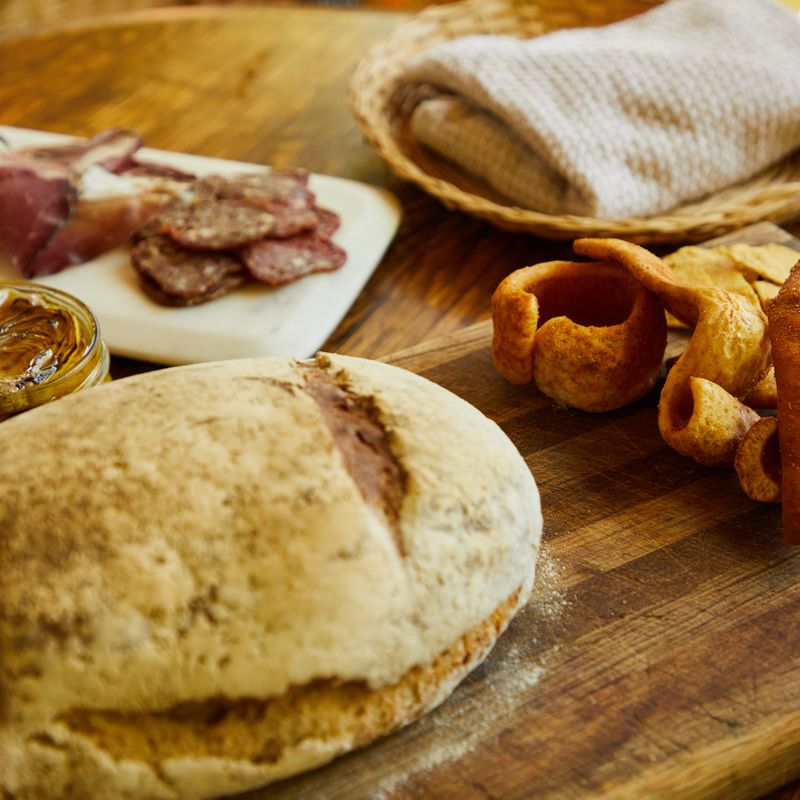
A rustic Tunisian braise built on warm harissa spices, merguez sausage, and tender roasted vegetables simmered together in a savory stock, finished by tearing chunks of sourdough bread into the pot to soak up the deeply flavored sauce. The bread both absorbs the braise and adds body to it, creating a dish that is part stew, part open-faced sandwich.
- Prep
- 20 min
- Cook
- 50 min
- Wait
- 15 min
- Total
- 1 hr 25 min
- Makes
- 4 generous servings (about 2 cups each)
Steps
Before you start
- Cut all vegetables to roughly the same size so they cook evenly.
- Choose a 5–6 quart (5–6 L) Dutch oven or heavy-bottomed pot with a lid.
- Have your sourdough bread (day-old works best—it won't fall apart) sliced or torn into 2–3 inch pieces, ready to add at the end.
- Read through the timing: the braise simmers unattended for 30 minutes while you let flavors meld.
Sear the merguez
- Heat olive oil in a 5–6 quart (5–6 L) Dutch oven or heavy pot over medium-high heat until shimmering, about 1 minute.
- Place merguez sausages in a single layer and sear undisturbed for 3–4 minutes until deeply golden brown on the bottom, then turn and sear the other side for 2–3 minutes more.
- The sausages should be partially cooked but still slightly raw in the center.
- Transfer to a plate.
+ Show details− Hide details
Ready when: Sausages are golden-brown all over but not cooked through
Tip: Don't move the sausages for the first 3–4 minutes—this develops a flavorful crust. Merguez can spit, so cover the pot loosely with a lid if it spatters.
Build the spice base
- In the same pot, reduce heat to medium and add the onion wedges.
- Sauté for 3 minutes until softened and lightly golden.
- Add minced garlic and cook for 30 seconds until fragrant.
- Stir in harissa paste, ground cumin, and ground coriander, stirring constantly for about 1 minute so the spices bloom and the harissa releases its flavor and color into the oil.
- The mixture should smell deeply aromatic and turn a rich russet-red.
+ Show details− Hide details
Ready when: Spices are fragrant and harissa is evenly dispersed through the oil
Tip: Cooking the harissa and spices for a full minute ensures they lose any raw, bitter edge and become rich and full-bodied.
Deglaze and add tomato
- Pour in the warmed stock slowly, stirring and scraping the bottom of the pot with a wooden spoon to loosen any browned bits stuck to the pan.
- Stir in tomato paste until smooth.
- Bring the mixture to a gentle simmer over medium heat, then add the carrot pieces, red bell pepper, zucchini, and fennel (if using).
+ Show details− Hide details
Ready when: Liquid is simmering gently and vegetables are just beginning to soften
Tip: Adding warmed stock prevents temperature shock and keeps the braise at a steady simmer.
Return sausage and simmer
- Nestle the seared merguez sausages back into the pot among the vegetables.
- The liquid should come about three-quarters of the way up the sausages; they don't need to be fully submerged.
- Reduce heat to medium-low, cover the pot with the lid, and simmer gently for 30 minutes.
- The vegetables will soften and the sausage will finish cooking gently in the residual heat and steam.
+ Show details− Hide details
Ready when: Carrots are tender when pierced with a fork, sausage is cooked through (internal temp 160°F/71°C if checking)
Tip: Keep the braise at a gentle simmer, not a hard boil—high heat can make vegetables mushy and cause them to break apart.
Season and finish
- Remove the pot from heat and uncover.
- Squeeze lemon juice over the braise and stir gently.
- Taste a spoonful of the liquid and adjust seasoning with salt and freshly ground black pepper.
- The braise should taste bright, savory, and balanced between heat and acidity.
+ Show details− Hide details
Ready when: Liquid tastes balanced and flavorful
Tip: Add salt and pepper gradually—it's easier to add more than to remove. The lemon should not dominate but brighten the spices.
Tear in the bread and rest
- Increase heat to medium and bring the braise to a gentle simmer again.
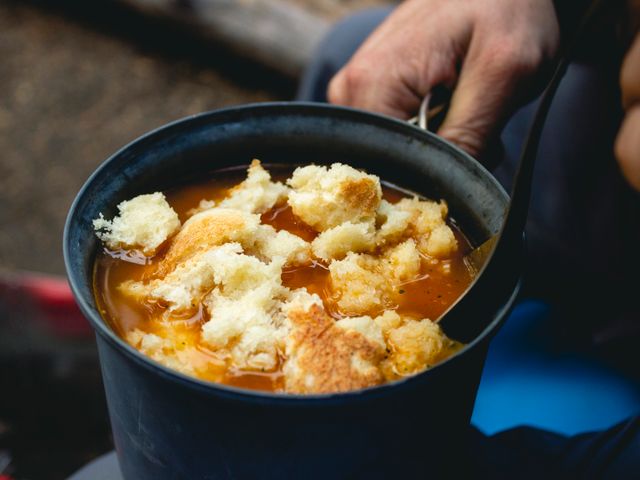
- Tear or cut the sourdough bread into 2–3 inch pieces and scatter them over the surface of the braise.
- Stir gently with a wooden spoon, breaking some of the bread into smaller pieces as you do so.
- Some pieces will sink and absorb liquid; others will float and soften on top.
- Continue stirring occasionally for 3–4 minutes until the bread is mostly soft but still has some structure and hasn't completely dissolved into mush.
+ Show details− Hide details
Ready when: Bread is soft and has absorbed liquid but still retains some texture and structure
Tip: Day-old or slightly stale sourdough works best here—fresh bread falls apart instantly. Stir gently so pieces integrate without breaking into paste.
Rest and serve
- Remove the pot from heat.
- Let the braise rest, covered, for 5 minutes so the flavors settle and the bread absorbs any remaining liquid.
- Ladle into wide, shallow bowls, making sure each serving gets sausage, vegetables, bread, and plenty of the braise liquid.
- Scatter fresh cilantro or parsley over the top and serve with lemon wedges on the side for squeezing.
+ Show details− Hide details
Ready when: Braise looks cohesive and is ready to serve
Tip: This dish is best served hot, straight from the pot. The bread is most tender and flavorful right after this rest period.
Good to know
Tips
- Use day-old or slightly stale sourdough—it has better structure and won't turn to mush when stirred into the hot braise. Fresh bread will fall apart instantly.
- Merguez sausage is often sold fully cooked in some regions. If yours is pre-cooked, reduce the searing time to 2 minutes per side and the simmering time to 15–20 minutes just to warm through.
- This is a loose, brothly braise, not a thick stew. The sourdough bread adds body without the need for flour or cream. If it seems too thin, add bread—if too thick, add a splash of warm stock.
- Harissa varies in heat level by brand. Start with 2 tbsp and taste as you go; you can always stir in more for extra spice, but you can't reduce it once it's in.
Make ahead
You can prepare all vegetables and aromatics up to 8 hours ahead (store covered in the refrigerator), and keep the merguez chilled until cooking. The braise itself does not reheat well because the bread will continue to absorb liquid and become overly soft. Make it just before serving.
Storage & reheating
Eat immediately or within 2 hours of making. Leftovers can be refrigerated in an airtight container for up to 1 day, but the bread will continue to soften and the texture will deteriorate. To reheat, gently warm in a pot over medium-low heat, stirring occasionally, adding a splash of stock if needed. Do not freeze—the bread and vegetables will not recover their texture. Merguez sausage alone (if leftover) keeps refrigerated for 3–4 days and can be sliced and reheated in a skillet.
Substitutions
- merguez sausage, fresh or fully cooked → spicy Italian sausage or Chorizo, seared the same way. Merguez is traditional for its North African spices, but any good-quality spiced fresh sausage will work. Use 1.25 lb (565 g) and cook to an internal temp of 160°F (71°C).
- harissa paste (Tunisian red chili paste) → 2 tbsp (20 g) Aleppo pepper flakes or Turkish red pepper flakes mixed into the oil, or 1–2 tbsp (15–30 g) of a milder paste like muhammara. Harissa is key to the Tunisian flavor; milder alternatives will shift the profile. If using pepper flakes, cook them in oil for 30 seconds before adding the stock to avoid grittiness.
- small fennel bulb → 1 can (14 oz / 400 g) chickpeas, drained and rinsed, or 1 cup (150 g) diced celery root. Fennel adds anise undertones typical to Tunisian cooking. Chickpeas add body; celery root adds earthy sweetness.
- sourdough bread, crusty artisan loaf → day-old ciabatta, focaccia, or country white bread with a crisp crust. Choose bread with a good structure and slightly dry texture so it softens without dissolving. Avoid very soft sandwich bread.