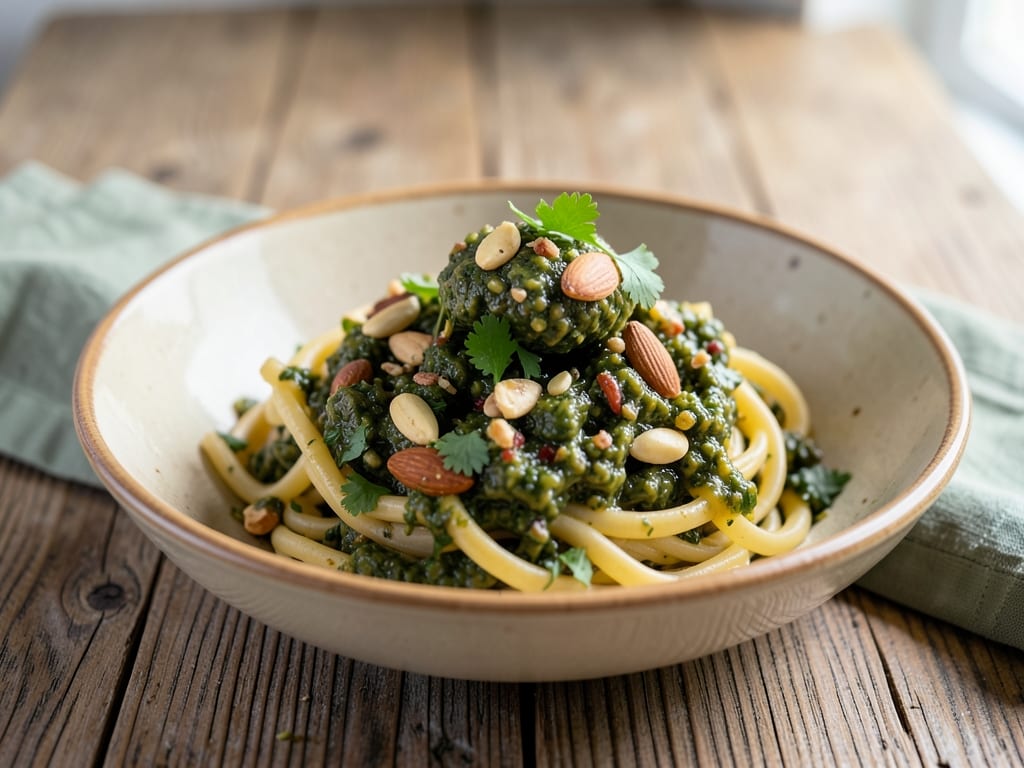
Moroccan Chermoula Pesto
A bright, herb-packed pesto that swaps basil and pine nuts for cilantro, parsley, toasted almonds, cumin, paprika and preserved-style lemon zing. Toss it with pasta, spoon over grilled fish or roasted vegetables, or spread on sandwiches.
- Prep
- 15 min
- Cook
- 8 min
- Total
- 23 min
- Makes
- About 1 cup (240 ml) pesto, enough to sauce 1 lb (450 g) pasta
Steps
Before you start
- Wash the cilantro and parsley and dry them thoroughly in a salad spinner or with towels; wet herbs make a watery, dull pesto.
- Bring a large pot of water to a boil while you make the pesto if you plan to serve it with pasta.
- Reserve about 1 cup (240 ml) of pasta cooking water before draining; you will use it to loosen the sauce.
Boil pasta water
- Fill a 6-quart (5.7 L) pot with about 4 quarts (4 L) of water, add the 2 tablespoons salt and bring to a rolling boil over high heat.
- Leave it covered until you are ready to cook the pasta.
+ Show details− Hide details
Ready when: Large, rolling bubbles break the surface
Tip: Salt the water generously; it is the only chance to season the pasta itself.
Toast almonds and cumin
- Put the almonds in a dry 8-inch (20 cm) skillet over medium heat.
- Toast, shaking the pan often, for 4 to 5 minutes.
- Add the cumin seeds and toast 30 seconds more.
- Tip everything onto a plate.
+ Show details− Hide details
Ready when: Almonds smell nutty and are lightly golden inside when one is broken; cumin is fragrant and a shade darker
Tip: Cumin burns in seconds; pull the pan off the heat as soon as it smells strong.
Cool the nuts
- Let the almonds and cumin cool on the plate for 5 minutes so the warm nuts do not wilt the herbs or turn the oil bitter.
+ Show details− Hide details
Ready when: Almonds are barely warm to the touch
Grind nuts and spices
- In a food processor, pulse the cooled almonds, cumin, garlic, paprika, red pepper flakes (if using) and salt 10 to 12 times, scraping the bowl once.
+ Show details− Hide details
Ready when: Almonds are chopped into coarse crumbs about the size of small lentils and the garlic is minced
Tip: Don't over-process into almond butter; keep some texture.
Add the herbs
- Add the cilantro, parsley, lemon zest and lemon juice.
- Pulse 8 to 10 times, scraping down the sides, until the herbs are finely chopped.
+ Show details− Hide details
Ready when: Herbs form a coarse, damp paste with no large leaf pieces
Stream in oil
- With the machine running, pour the olive oil through the feed tube in a slow, steady stream over about 20 seconds.
- Stop as soon as the pesto looks glossy and spoonable.
+ Show details− Hide details
Ready when: Pesto is thick, glossy and slightly textured, like loose wet sand held together with oil
Tip: Over-blending warms the herbs and dulls their color; run the machine no more than 30 seconds total.
Taste and adjust
- Scrape the pesto into a large serving bowl.
- Taste a spoonful and add more salt, lemon juice or pepper flakes if needed.
- It should taste bright, salty and warmly spiced.
+ Show details− Hide details
Ready when: Flavor is balanced, with lemon noticeable but not sharp
Tip: The pesto will taste less intense once tossed with pasta, so season it slightly boldly.
Cook the pasta
- Add the pasta to the boiling water and stir.
- Cook according to package directions, usually 9 to 11 minutes, until al dente.
- Scoop out 1 cup (240 ml) of cooking water, then drain the pasta.
+ Show details− Hide details
Ready when: Pasta is tender but still has a slight firm bite at the center
Tip: Scoop out the cooking water before draining; it's easy to forget.
Toss and serve
- Add the hot drained pasta to the bowl with the pesto.
- Add ¼ cup (60 ml) pasta water and toss vigorously for 1 minute, adding more water a tablespoon at a time until the sauce coats every strand in a silky layer.
- Serve right away.
+ Show details− Hide details
Ready when: Sauce clings to the pasta and looks glossy, not oily or dry
Tip: Don't put the pesto in a hot pan; direct heat turns the herbs brown and bitter.
Good to know
Tips
- Use the tender stems of the cilantro and parsley; they carry a lot of flavor and save prep time, but trim off any thick, woody ends.
- For a vivid green pesto, keep the machine time short and use cold herbs straight from the fridge.
- Leftover pesto is excellent on grilled fish, chicken, roasted carrots or cauliflower, or stirred into yogurt as a dip.
- Spice varies by brand: start with the lesser amount of red pepper flakes and add more after tasting.
Make ahead
"Make the pesto up to 3 days ahead and refrigerate in a jar with a thin layer of olive oil on top to keep it green. Bring to room temperature for 20 minutes before tossing with hot pasta."
Storage & reheating
"Pesto: refrigerate in an airtight jar, covered with a thin film of olive oil, up to 5 days. Freeze in ice cube trays, then transfer to a freezer bag, up to 3 months; thaw overnight in the fridge. Dressed pasta keeps 2 days in the fridge; reheat in a skillet over low heat with a splash of water. Don't leave at room temperature more than 2 hours."
Substitutions
- whole raw almonds → Blanched almonds, walnuts or pistachios. Use the same weight; pistachios give a greener color, walnuts a slightly bitter edge.
- whole cumin seeds → ¾ teaspoon ground cumin. Add it with the paprika in the food processor, not to the skillet, or toast it for just 15 seconds.
- fresh lemon juice → 1 tablespoon finely minced preserved lemon rind plus 2 tablespoons lemon juice. Gives the authentic Moroccan tang; reduce the salt to ½ teaspoon.
- dried pasta such as spaghetti, linguine or fusilli → Gluten-free pasta, couscous or roasted vegetables. Reserve some cooking liquid to loosen the sauce as with regular pasta.