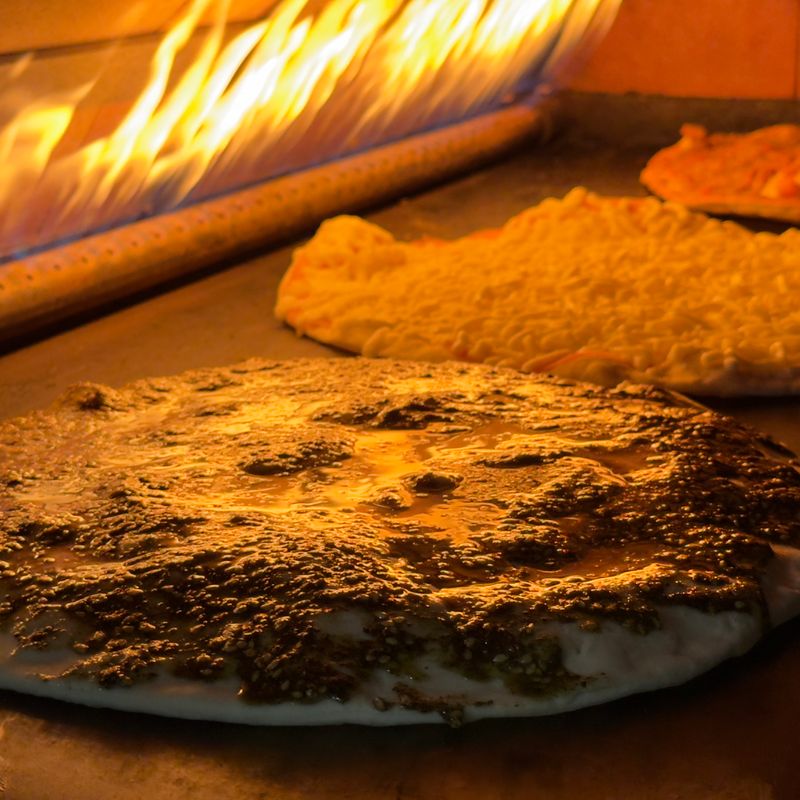
Lebanese Pizza-Style Manakish with Fresh Veggies
Soft, chewy flatbreads brushed with a fragrant za'atar and olive oil paste, baked until golden, then piled with juicy tomato, crisp cucumber and fresh mint. It's a lighter, pizza-style take on the classic Lebanese breakfast.
- Prep
- 1 hr 6 min
- Cook
- 20 min
- Wait
- 1 hr 20 min
- Total
- 2 hr 46 min
- Makes
- 8 manakish (about 7-inch / 18 cm), serves 4
Steps
Before you start
- Read the timing: the dough needs about 1 hour to rise and 20 minutes to rest, so start at least 3 hours before you want to eat.
- Measure the flour by weight if you can. Spooned and leveled, 1 cup is about 125 g. Too much flour makes dry, tough bread.
- Warm the water to 105–110°F (40–43°C). It should feel comfortably warm, not hot, because hot water kills yeast.
- Check that your za'atar blend is fresh and fragrant. Old za'atar tastes dusty and flat.
- Make sure two large rimless baking sheets (or inverted rimmed sheets) fit in your oven at the same time.
Mix the dough
- In a large bowl, whisk the flour, instant yeast, sugar and salt.
- Add the warm water and 2 tablespoons (30 ml) of the olive oil from the dough oil.
- Stir with a wooden spoon or your hand until no dry flour remains and a shaggy, sticky dough forms, about 2 minutes.
+ Show details− Hide details
Ready when: No dry flour left in the bowl and the dough looks rough and shaggy.
Tip: If your yeast is not instant, stir it into the warm water with the sugar and let it foam for 5 minutes first.
Knead until smooth
- Turn the dough onto a clean counter dusted lightly with some of the dusting flour.
- Knead by pushing it away with the heel of your hand, folding it back and turning it, for 8 minutes.
- Add only a sprinkle of flour at a time if it sticks heavily to your hands.
+ Show details− Hide details
Ready when: The dough is smooth, soft and springs back slowly when you poke it with a finger. It should feel tacky but not stick to clean hands.
Tip: A slightly tacky dough gives a softer bread. Resist adding lots of extra flour.
Let the dough rise
- Brush a large bowl with the remaining 1 tablespoon (15 ml) olive oil.
- Shape the dough into a ball, turn it in the bowl to coat, and cover with a towel or plastic wrap.
- Leave in a warm spot (75–80°F / 24–27°C) for 60 minutes.
+ Show details− Hide details
Ready when: The dough has doubled and a floured finger pressed in 1 inch leaves a dent that fills back in slowly.
Tip: In a cool kitchen, set the bowl in the oven with only the light on.
Divide, rest and preheatOven 475°F / 245°C
- Place a large baking sheet on each of two oven racks (upper-middle and lower-middle) and preheat the oven to 475°F (245°C) for the whole rest.
- Gently deflate the dough, divide it into 8 equal pieces of about 110 g each, and roll each into a smooth ball.
- Place the balls on a floured counter, cover with a towel, and rest 20 minutes.
+ Show details− Hide details
Ready when: Balls look puffy and relaxed and flatten slightly when touched.
Tip: Use a scale to weigh the pieces so they all bake at the same pace.
Make the za'atar paste
- In a small bowl, stir the za'atar and the 6 tablespoons (90 ml) olive oil from the topping oil until it forms a loose, spreadable paste, like wet sand.
- Let it sit while you shape the dough so the spices soften.
+ Show details− Hide details
Ready when: The paste is glossy and spoonable, with no dry pockets of za'atar.
Tip: Stir again right before using, because the spices settle and the oil rises to the top.
Shape and top the rounds
- Cut 2 sheets of parchment to fit your baking sheets.
- On a lightly floured counter, roll 4 dough balls into 7-inch (18 cm) rounds about ¼ inch (6 mm) thick.
- Press your fingertips all over the surface to make dimples.
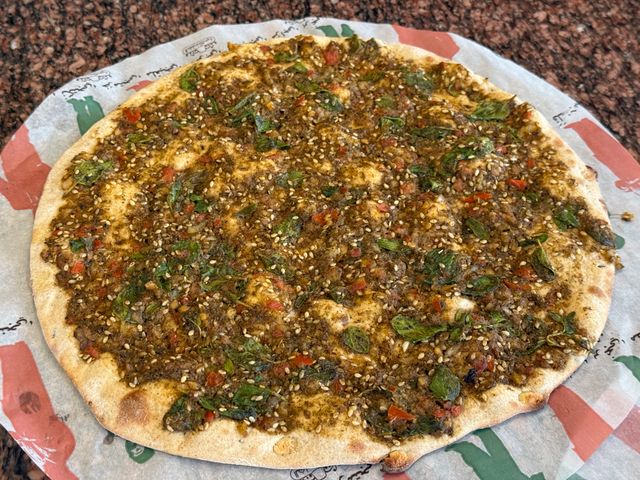
- Transfer to the parchment, spread each with about 1 tablespoon of za'atar paste, leaving a ½-inch (1 cm) border bare.
+ Show details− Hide details
Ready when: Rounds are evenly thin with deep dimples, and the paste covers the center with a clean border.
Tip: Do not spread the paste to the edge, or the oil will run off and the crust will turn greasy. Keep the remaining 4 balls covered.
Bake the manakishOven 475°F / 245°C
- Carefully slide the parchment with the first 4 rounds onto the hot baking sheets in the oven (2 on each sheet).
- Bake at 475°F (245°C) for 8 to 10 minutes.
- Swap the sheets between racks halfway through.
- Remove, then shape, top and bake the remaining 4 rounds the same way.
+ Show details− Hide details
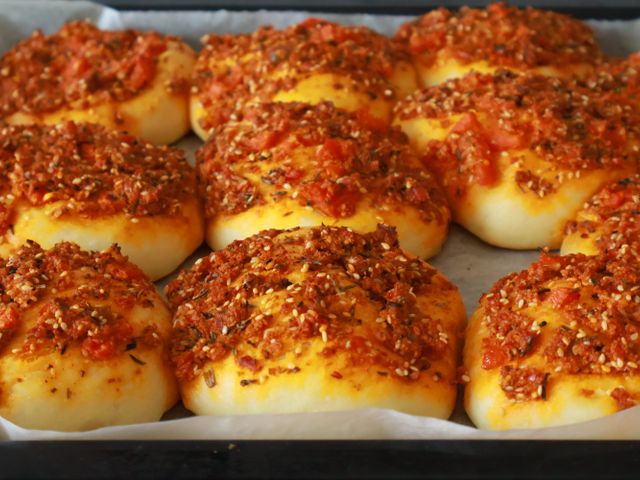
Ready when: The edges are puffed and golden brown, the bottoms are lightly browned, and the za'atar smells toasty and the surface bubbles slightly.
Tip: Watch from minute 7. Za'atar can turn bitter if it scorches.
Slice the veggies
- While the second batch bakes, slice the tomatoes into thin half-moons and the cucumbers into thin rounds.
- Slice the onion very thinly if using.
- In a bowl, gently toss the tomatoes, cucumbers, onion, olives (if using) and mint with the lemon juice and a small pinch of flaky salt.
+ Show details− Hide details
Ready when: The vegetables are glossy and lightly dressed, not watery.
Tip: Salt just before serving. Early salting pulls water out of the tomatoes and makes the bread soggy.
Top and serve
- Let the baked manakish cool on the pan for 2 minutes while still warm.
- Pile the veggie mixture onto each one, or serve it on the side so people can fold the bread around it.
- Eat right away while the bread is soft and warm.
+ Show details− Hide details
Ready when: The bread is warm and pliable, and the vegetables are fresh and crisp on top.
Tip: For picnics or lunchboxes, keep the veggies separate and add them at the last minute.
Good to know
Tips
- Bake on very hot baking sheets for the best bottom crust: the burst of heat makes the dough puff and keeps it soft.
- Dimple the dough well. It stops large bubbles forming and holds pockets of oil and za'atar.
- Roll the dough no thinner than ¼ inch (6 mm). Too thin and the bread turns crisp like a cracker instead of soft and chewy.
- Add labneh or sliced white cheese on the side for a more filling meal.
Make ahead
"The dough can be made through step 3, then refrigerated in the oiled covered bowl for up to 24 hours. Bring it to room temperature for 45 minutes before dividing. The za'atar paste can be mixed up to 3 days ahead and kept covered at room temperature."
Storage & reheating
"Store baked manakish without the veggie topping in an airtight container for up to 1 day at room temperature or 4 days in the fridge. Freeze for up to 2 months, wrapped well. Reheat from fridge or frozen in a 350°F (175°C) oven for 5 to 8 minutes until warm and slightly crisp at the edges. Fresh veggies are best eaten the day they are cut and should not be stored on the bread."
Substitutions
- all-purpose flour → Bread flour, or half whole wheat and half all-purpose. Bread flour gives a chewier crumb. With whole wheat, add 1 to 2 tablespoons more water.
- za'atar spice blend → Mix 3 tbsp dried thyme, 2 tbsp toasted sesame seeds, 1 tbsp sumac and ½ tsp salt. Homemade blend about equal in amount to 6 tbsp store-bought za'atar. Check the salt level before using.
- fresh mint leaves → Fresh flat-leaf parsley or fresh basil. Parsley is earthy; basil is sweeter. Use the same amount.
- instant yeast → Active dry yeast, 2¼ tsp (7 g). Dissolve it in the warm water with the sugar for 5 to 10 minutes until foamy before adding to the flour.