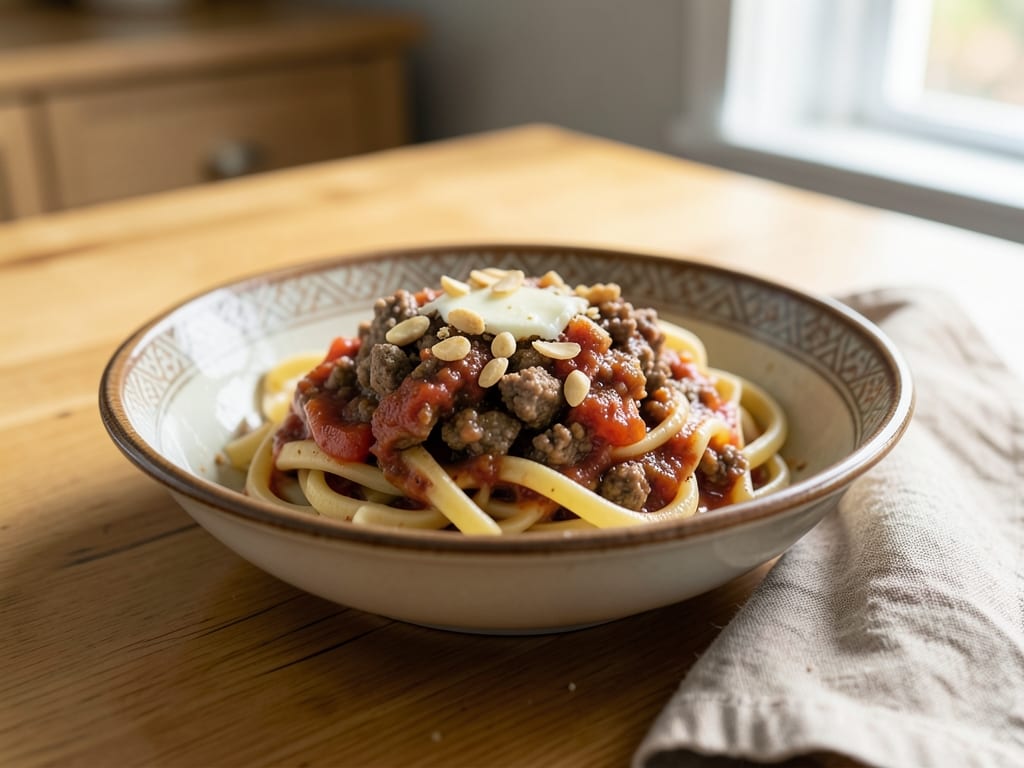
Lebanese Lamb and Cinnamon Tomato Pasta Sauce
A slow-simmered lamb ragu scented with cinnamon and allspice, inspired by Lebanese flavors. Sweet onion, rich tomato and buttery toasted pine nuts coat the pasta in a deeply savory sauce with warm spice and a bright lemon finish.
- Prep
- 20 min
- Cook
- 1 hr 40 min
- Total
- 2 hr
- Makes
- About 5 cups (1.2 L) sauce, enough for 1 lb (450 g) pasta, serving 6
Steps
Before you start
- Use ground lamb with about 15–20% fat for the best flavor; very lean lamb turns dry and gritty.
- Measure the garlic, cinnamon, allspice and pepper into one small bowl before you start so they can go into the pot together.
- Plan on about 2 hours total. Most of it is gentle, unattended simmering on the stovetop.
- Bring a large pot of water to a boil during the last 20 minutes of simmering so the pasta and sauce finish together.
Soften the onions
- Heat the olive oil in the large heavy-bottomed pot over medium heat for 1 minute until it shimmers.
- Add the chopped onions and ½ tsp of the salt.
- Cook, stirring every minute or so, for 8–10 minutes.
+ Show details− Hide details
Ready when: Onions are soft, translucent and just starting to turn pale golden at the edges.
Tip: Don't rush with high heat; browned bitter onions will overpower the delicate spices.
Brown the lamb
- Raise the heat to medium-high and add the lamb in an even layer.
- Let it sit undisturbed for 2 minutes, then break it into small crumbles with the spoon.
- Cook 6–8 minutes, stirring occasionally.
+ Show details− Hide details
Ready when: No pink remains and the meat is lightly browned, with fat pooling in the pot.
Tip: If there is more than about 3 tbsp of fat, spoon off the excess.
Bloom garlic and spices
- Reduce heat to medium.
- Add the garlic, cinnamon, allspice and black pepper.
- Stir constantly for 1 minute.
+ Show details− Hide details
Ready when: The mixture smells strongly warm and fragrant, and the garlic is not browned.
Tip: Ground spices scorch quickly; move straight to the next step after 1 minute.
Caramelize the tomato paste
- Push the meat to the sides, add the tomato paste to the center and cook, stirring it into the meat, for 2 minutes.
+ Show details− Hide details
Ready when: The paste darkens from bright red to brick red and sticks slightly to the bottom of the pot.
Add tomatoes and stock
- Pour in the crushed tomatoes with their juices, the stock and the remaining 1 tsp salt.
- Scrape up any browned bits from the bottom.
- Bring to a bubbling simmer.
+ Show details− Hide details
Ready when: The sauce bubbles steadily around the edges and the pot bottom is clean of stuck bits.
Simmer slowly
- Reduce the heat to low so the sauce barely bubbles.
- Partially cover with the lid slightly ajar.
- Simmer for 1 hour 15 minutes, stirring every 15–20 minutes and adding a splash of water if it looks dry.
+ Show details− Hide details
Ready when: The sauce is thick and glossy, the oil has risen to the surface in orange pools, and a spoon dragged across the bottom leaves a clear trail.
Tip: Start heating the pasta water during the last 20 minutes.
Toast the pine nuts
- While the sauce finishes, add the pine nuts to a dry skillet over medium heat.
- Toast, shaking the pan often, for 3–4 minutes.
- Add the butter and swirl for 30 seconds until melted and foamy, then tip into a bowl.
+ Show details− Hide details
Ready when: Nuts are golden brown and smell nutty.
Tip: Pine nuts go from golden to burnt in seconds; remove them from the pan as soon as they color.
Cook the pasta
- Bring 5 quarts (5 L) water to a boil with the 2 tbsp pasta salt.
- Cook the pasta 1 minute less than the package directions.
- Reserve 1 cup (240 ml) pasta water, then drain.
+ Show details− Hide details
Ready when: Pasta is flexible and tender outside with a slight firm bite in the center.
Finish the sauce
- Stir the lemon zest and lemon juice into the sauce.
- Taste and add salt if needed; it should taste warm, savory and slightly bright.
+ Show details− Hide details
Ready when: The sauce tastes balanced, with the tomato acidity softened and the cinnamon present but not sweet.
Tip: Add the lemon at the end; long cooking dulls its brightness.
Toss and serve
- Add the drained pasta to the sauce with ½ cup (120 ml) of the reserved pasta water.
- Toss over medium-low heat for 1–2 minutes, adding more water by the tablespoon if needed.
- Divide among bowls and top with the buttery pine nuts and parsley.
+ Show details− Hide details
Ready when: The sauce clings to the pasta in a glossy coat without pooling in the bowl.
Tip: Serve immediately; the pasta keeps absorbing sauce as it sits.
Good to know
Tips
- Keep the cinnamon to 1½ tsp; it should add warmth, not taste like dessert.
- Finish with a spoonful of plain yogurt on top for a traditional Levantine contrast.
- Reserved pasta water's starch helps the sauce cling; don't skip it.
- A pinch of Aleppo pepper or red pepper flakes added with the spices gives gentle heat.
Make ahead
The sauce (through step 6, before adding lemon) can be made up to 3 days ahead. Cool, refrigerate, then reheat gently, adding a splash of water, and finish with lemon, nuts and pasta.
Storage & reheating
Room temperature: no more than 2 hours. Refrigerator: sauce keeps up to 4 days in an airtight container; tossed pasta up to 3 days. Freezer: sauce freezes up to 3 months; thaw overnight in the fridge. Reheat in a covered saucepan over low heat, adding a splash of water or stock, until steaming hot (165°F / 74°C). Store pine nuts separately.
Substitutions
- ground lamb → ground beef (80/20). Gives a milder flavor; the spices still work well.
- pine nuts → sliced almonds or chopped walnuts. Toast the same way; they are less buttery but still crunchy.
- whole peeled tomatoes → one 28 oz (794 g) can crushed tomatoes. Saves the hand-crushing step; use a good-quality brand.
- ground allspice → ½ tsp ground cloves plus ½ tsp ground nutmeg. Approximates allspice's warm, peppery notes; do not use more or the cloves will dominate.