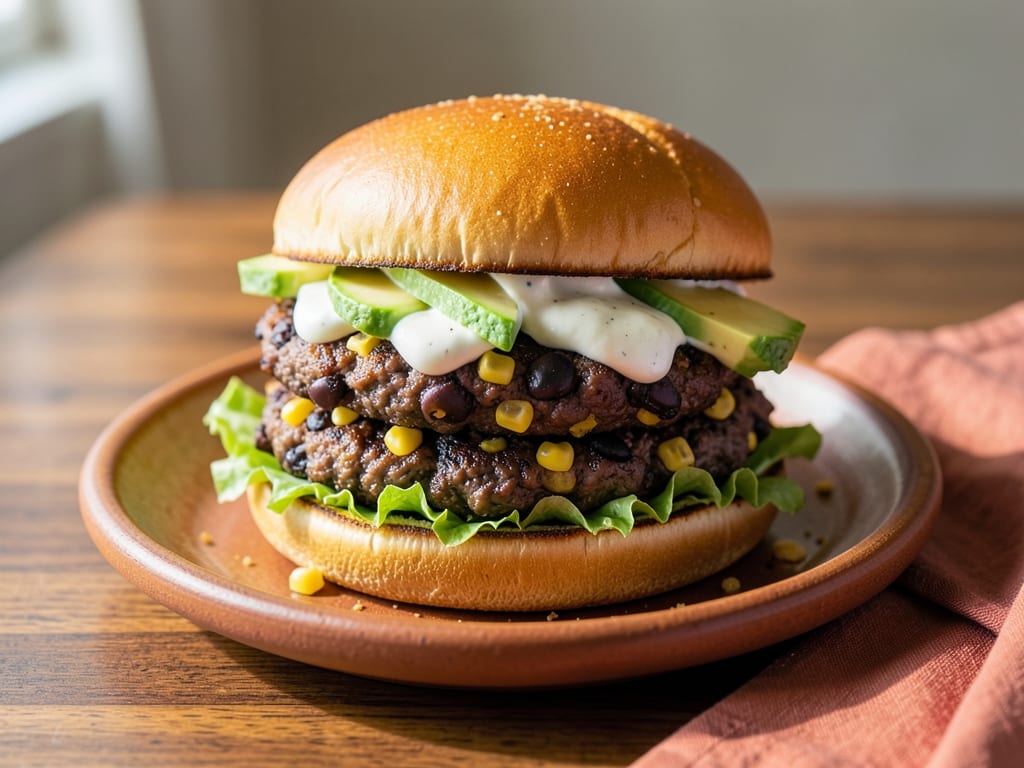
Korean Soybean Paste and Corn Burgers
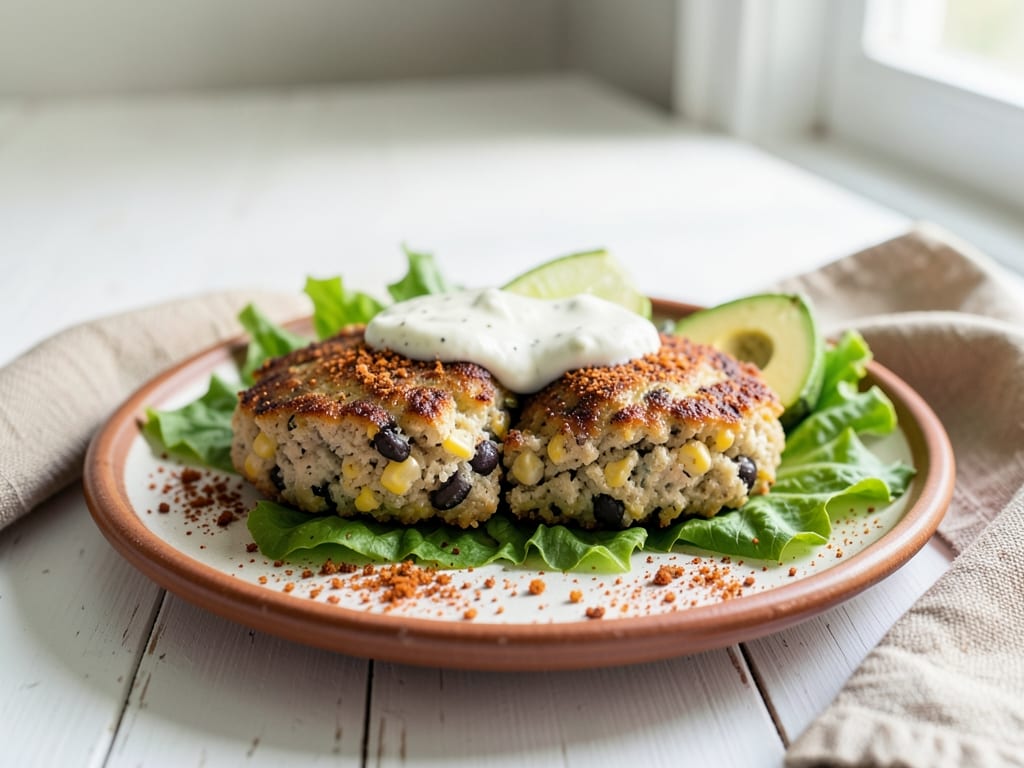
Pan-fried veggie burgers with sweet corn, savory soybean paste, and barley malt flour, infused with garlic and sesame. These golden, crispy-edged patties are naturally vegetarian, packed with umami depth, and serve equally well as a standalone dinner or tucked into buns with pickled vegetables and gochujang mayo.
Steps
Before you start
- Thaw frozen corn if using frozen; pat dry with paper towels
- Have all ingredients measured and prepped before mixing
- Chill the patties for at least 20 minutes so they hold together when cooking
Mix wet and flavor base
- In a large mixing bowl, combine the soybean paste, soy sauce, mirin, and minced garlic.
- Stir until well blended, breaking down any lumps in the paste.
- This creates the umami-rich foundation for the burgers.
+ Show details− Hide details
Tip: Don't skip mixing these together first—it distributes the flavors evenly and prevents dry patches in the patties.
Add corn and bind
- Add the dried corn kernels to the soybean paste mixture.
- Crack the egg into the bowl and beat it lightly with a fork.
- Fold everything together until the corn and other ingredients are evenly distributed.
- The egg acts as a binder to help hold the patties together.
+ Show details− Hide details
Tip: Mix gently—you want to preserve some corn texture; don't mash it into a paste.
Fold in dry ingredients
- Add the barley malt flour, panko, sesame seeds, and sliced scallions to the bowl.
- Fold gently until just combined.
- The mixture should be cohesive but still hold its shape when squeezed.
- Season with black pepper to taste.
+ Show details− Hide details
Ready when: Mixture holds together when pressed; no dry flour visible
Tip: If the mixture seems too wet and won't hold shape, add a tablespoon more barley flour. If too dry, add water 1 teaspoon at a time.
Shape the patties
- Divide the mixture into 4 equal portions (about 3½ ounces or 100 g each).
- Shape each into a patty roughly 3 inches (7.5 cm) wide and ½ inch (1.25 cm) thick.
- Use your hands, wetting them slightly if the mixture sticks, or place a portion between two pieces of plastic wrap and press with your palm.
+ Show details− Hide details
Ready when: Patties are uniform and hold together firmly
Tip: Uniform thickness ensures even cooking; these patties are more delicate than beef, so handle gently.
Chill to set
- Place the shaped patties on a small plate or parchment paper and refrigerate for at least 20 minutes.
- This resting time allows the barley flour and breadcrumbs to fully absorb moisture and helps the patties firm up, making them less likely to fall apart during cooking.
+ Show details− Hide details
Tip: You can refrigerate them up to 4 hours ahead; just let them sit at room temperature for 5 minutes before cooking.
Heat the skillet
- Heat a 12-inch (30 cm) non-stick or cast-iron skillet over medium-high heat.
- Add the vegetable oil and let it heat for 1 to 2 minutes until shimmering and just beginning to smoke lightly.
+ Show details− Hide details
Ready when: Oil shimmers and moves freely across the pan
Tip: Medium-high heat is key to getting a golden, crispy exterior without burning the interior. Don't skip the preheat.
Pan-fry the burgers
- Carefully place all 4 patties into the hot skillet, spacing them about 1 inch (2.5 cm) apart.
- Do not move them for 4 to 5 minutes—this develops a golden, slightly crispy crust on the bottom.
- You should hear a gentle sizzle and see the edges beginning to brown.
+ Show details− Hide details
Ready when: Bottom is deep golden brown, patties smell fragrant and toasted
Tip: Resist the urge to flip early. Patience here prevents them from breaking apart.
Flip and finish cooking
- Using a spatula, carefully flip each patty.
- Cook for another 3 to 4 minutes on the second side until that side is also golden brown and the patties are heated through.
- They should feel firm when gently pressed with the spatula but still have a slight give (like a cooked chicken breast).
+ Show details− Hide details
Ready when: Second side is golden brown; interior no longer has a raw soybean or raw corn taste; reaches approximately 165°F (74°C) if using a thermometer
Tip: If the burgers brown too quickly before cooking through, reduce heat to medium and cook a bit longer on the second side.
Rest and serve
- Transfer the cooked burgers to a warm plate and let them rest for 2 to 3 minutes.
- This allows the interior to set slightly and makes them less likely to crumble when you bite into them.
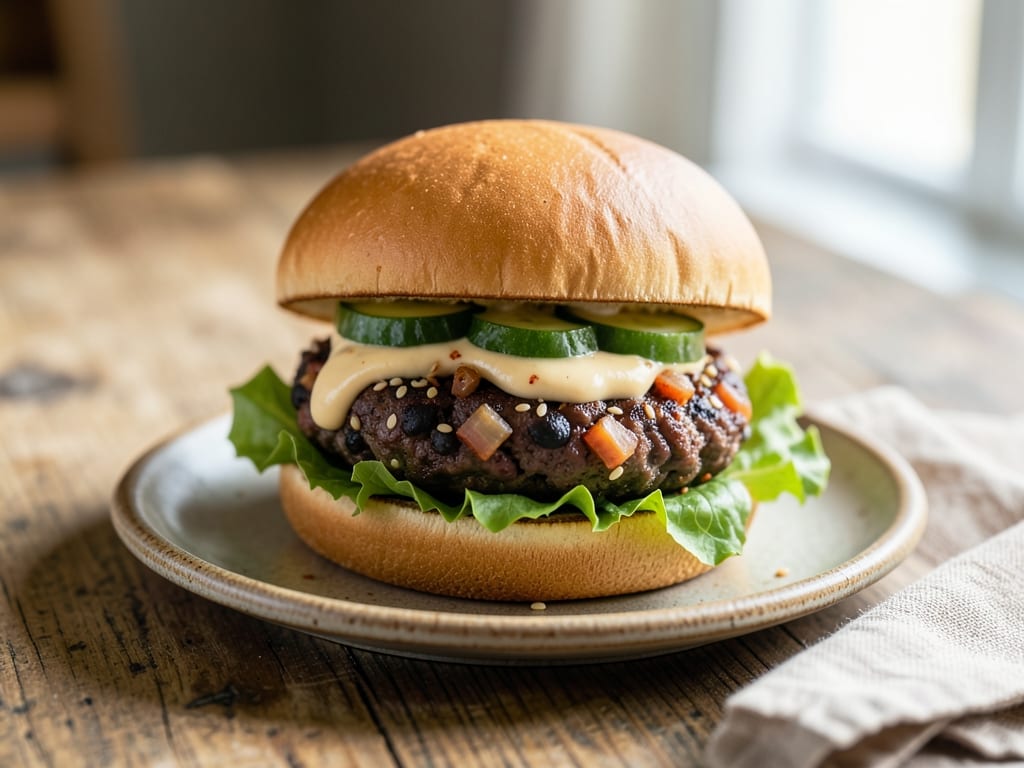
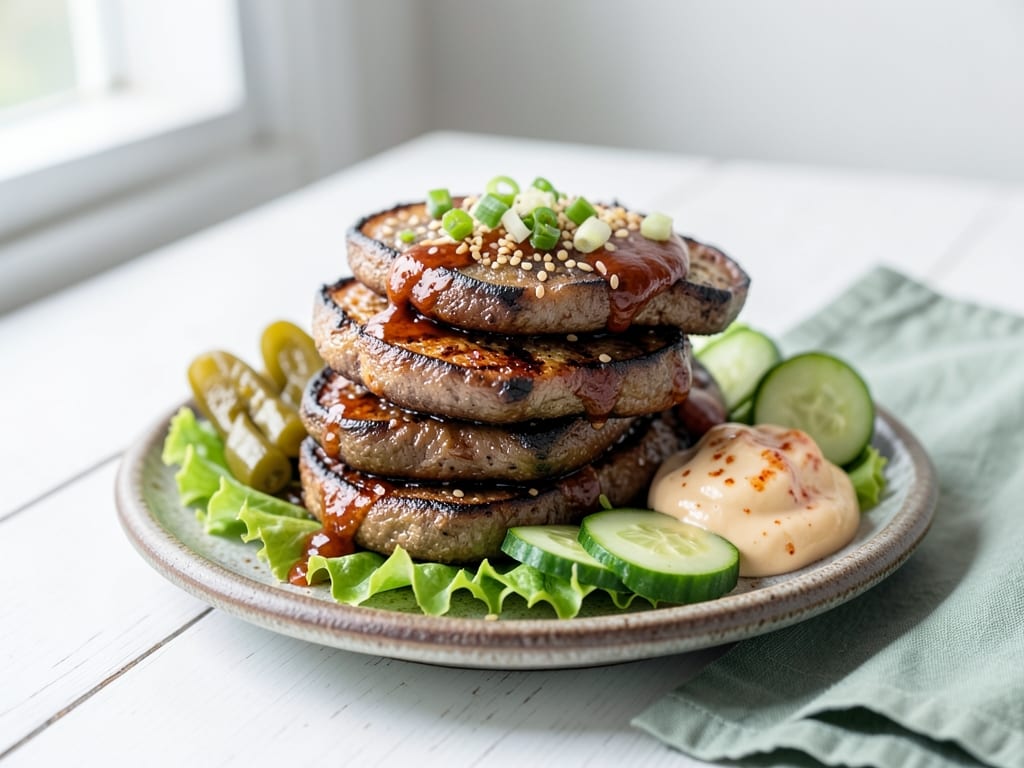
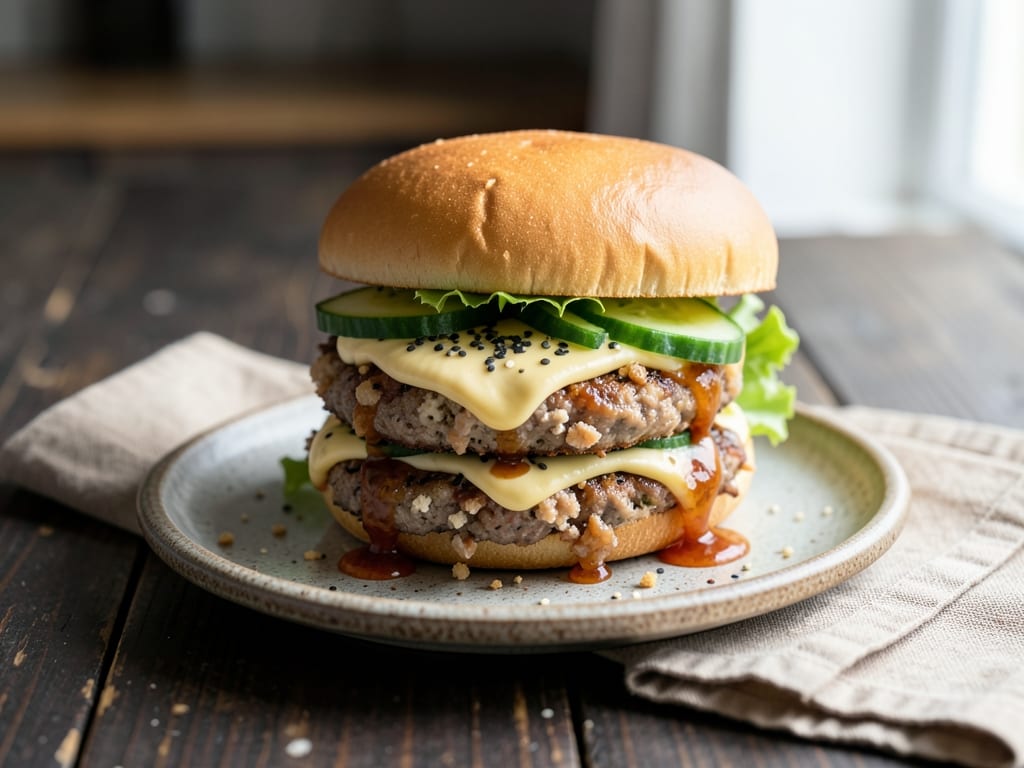
- Serve warm, optionally in burger buns with pickled radish (무), gochujang mayo, lettuce, and tomato, or on their own as a main course.
+ Show details− Hide details
Tip: These burgers are delicate; a sharp spatula helps you slide them onto a plate or bun without breaking.
Good to know
Tips
- Soybean paste (doenjang) has a funky, pungent aroma before cooking—this is normal and desirable. It mellow and becomes savory once cooked.
- If your corn kernels are very wet after thawing, pat them extra-dry with paper towels to prevent a mushy burger.
- For a crispier exterior, increase the panko breadcrumbs to ½ cup, reducing the barley flour proportionally.
- Serve with traditional Korean sides: pickled radish (무), a gochujang (Korean red chili paste) mayo, fresh lettuce, and ripe tomato slices for a classic Korean burger experience.
Make ahead
Shaped patties can be covered and refrigerated for up to 4 hours before cooking. Uncooked patties cannot be frozen successfully—the texture will become mushy upon thawing.
Storage & reheating
Store leftover cooked burgers in an airtight container in the refrigerator for up to 3 days. Reheat gently in a skillet over medium heat for 2 to 3 minutes per side, or wrapped in foil in a 350°F (175°C) oven for 8 to 10 minutes until warmed through. Do not microwave, as it will make them soggy.
Substitutions
- barley malt flour (boribap garu) → all-purpose flour or chickpea flour. Both work as binders, though they lack the slightly sweet, nutty flavor of barley malt. Use the same amount by weight. Chickpea flour adds a subtle earthiness; all-purpose flour is more neutral.
- Korean soybean paste (doenjang) → miso paste (white or red). Use the same amount. White miso is milder; red or brown miso is closer in saltiness to soybean paste. Both will work, though the flavor profile shifts slightly.
- toasted sesame seeds → crushed roasted peanuts or hemp seeds. Maintains texture and adds nuttiness. Use the same amount; both options are less delicate than sesame, so consider slightly reducing to 2½ tablespoons if you prefer a more subtle flavor.
- mirin (sweet rice wine) → honey or brown sugar. Use ½ tablespoon honey or ½ teaspoon brown sugar (less liquid required). Honey adds subtle sweetness; brown sugar gives a deeper molasses note. Omit if you prefer a more savory burger.