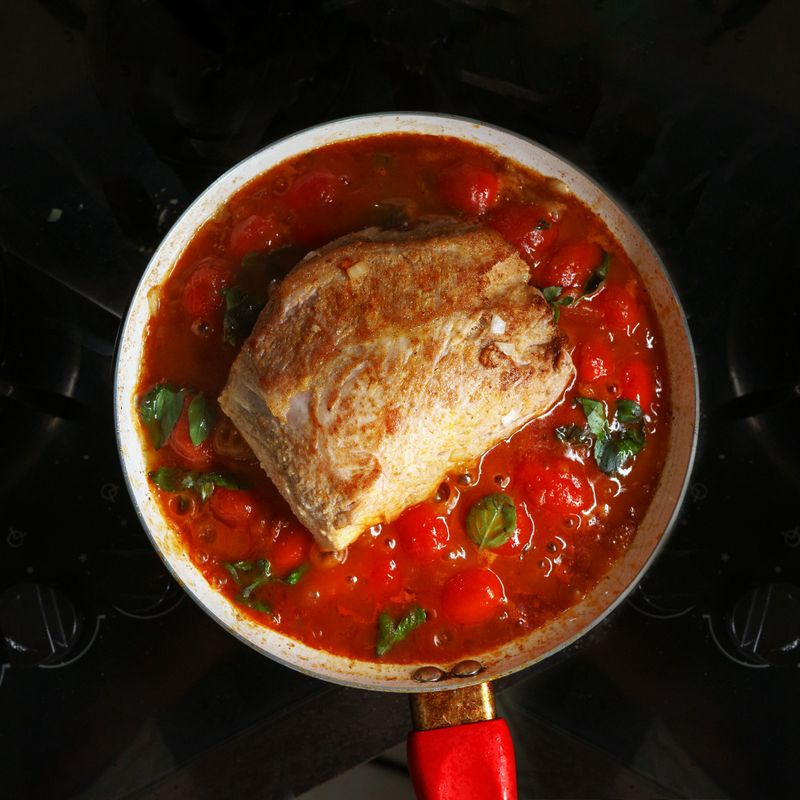
Korean Gochujang Braised Pork Burritos
Tender, spicy-sweet gochujang-braised pork shoulder wrapped in warm flour tortillas with sesame rice, tangy kimchi, and crispy toppings. This fusion dish brings Korean braising tradition to the beloved burrito format, combining deep umami from soy sauce and gochujang with fresh heat from ginger and the pleasant sourness of kimchi. Braise the pork low and slow for fall-apart tenderness.
- Prep
- 15 min
- Cook
- 20 min
- Wait
- 2 hr 40 min
- Total
- 3 hr 15 min
- Makes
- 4 burritos (1 per person)
Steps
Before you start
- Pat the pork shoulder completely dry with paper towels for better browning
- Preheat oven to 325°F (160°C)
- Prep all aromatics (garlic, ginger, onion) before you start searing
- Read the timeline: while pork braises, you'll cook rice and prep toppings in parallel
Prepare pork and preheat ovenOven 325°F / 165°C
- Pat the pork shoulder chunks very dry with paper towels; this is crucial for good browning.
- Season generously all over with salt and pepper.
- Position a rack in the lower third of the oven and preheat to 325°F (160°C).
+ Show details− Hide details
Ready when: Oven reaches 325°F (160°C)
Tip: Dry pork is essential for browning; moisture creates steam and prevents a good crust. Don't skip patting it dry.
Sear pork chunks
- Heat 1 tablespoon vegetable oil in a 5-6 quart Dutch oven over medium-high heat until shimmering, about 1 minute.
- Working in two batches to avoid crowding, sear the pork chunks on all sides until deeply browned, about 8-10 minutes total.
- Transfer browned pieces to a plate.
+ Show details− Hide details
Ready when: Pork is deeply browned on all sides, the color of dark caramel
Tip: Let meat sit 2-3 minutes per side before moving; crowding the pan causes steaming instead of searing. Pork does not need to be fully cooked inside.
Build braising liquid base
- Pour off all but 1 tablespoon of oil from the pot.
- Add the sliced onion and sauté over medium heat until softened and slightly caramelized, about 4 minutes.
- Add the minced garlic and ginger, cook for 1 minute until fragrant.
- Stir in the gochujang, soy sauce, and rice vinegar, cooking for 1 minute to bloom the spices and deepen the color.
+ Show details− Hide details
Ready when: Gochujang is darkened and fragrant, no raw garlic smell remains
Tip: Cooking the gochujang in fat for a minute deepens its flavor and removes any raw taste. If it sticks to the pot, add a splash of broth.
Return pork and add broth
- Return the seared pork and any accumulated juices to the pot.
- Pour in the chicken broth and bring to a bare simmer.
- The pork should be about three-quarters submerged; add more broth or water if needed.
- Cover the pot with the lid.
+ Show details− Hide details
Ready when: Liquid is just barely simmering with small bubbles at the edges, no rapid boiling
Tip: A gentle simmer is important; boiling too hard makes the meat tough. The low oven temperature will maintain a gentle cook throughout.
Braise pork in ovenOven 325°F / 165°C
- Transfer the covered Dutch oven to the preheated 325°F (160°C) oven and braise for 2.5 to 3 hours.
- The pork is done when a fork easily shreds a piece with minimal resistance and the meat falls apart naturally.
- Internal temperature should reach around 190°F (88°C), but tenderness is the true indicator of doneness.
+ Show details− Hide details
Ready when: Pork shreds easily with a fork; braising liquid has reduced to about two-thirds of original volume
Tip: Resist opening the lid frequently; each time you do, heat escapes and cooking time increases. One quick peek at the 2-hour mark is fine, but leave it mostly undisturbed.
Cook sesame rice (parallel step)
- While the pork braises, rinse the jasmine rice in a fine sieve under cool water until the water runs mostly clear, about 30 seconds.
- In a medium saucepan with a lid, combine the rinsed rice, 1.5 cups water, and ½ teaspoon salt.
- Bring to a boil over medium-high heat, then reduce to low, cover, and cook for 15-18 minutes until the water is absorbed and rice is tender.
- Remove from heat, let sit covered for 5 minutes, then fluff with a fork.
- Stir in 1 tablespoon sesame oil and taste for salt.
+ Show details− Hide details
Ready when: All water is absorbed, rice is fluffy and tender, individual grains separate easily
Tip: Don't lift the lid while the rice cooks; this releases steam and dries out the rice. A faint sizzling sound at the end is normal and signals the rice is done.
Shred pork and reduce sauce
- Remove the Dutch oven from the oven.
- Transfer the pork to a cutting board and discard any bones if present.
- Using two forks, shred the pork into bite-sized pieces; some larger, chunkier pieces add nice texture.
- Strain the braising liquid through a fine sieve into a bowl, pressing gently on the solids to extract as much liquid as possible.
- You should have about 1 cup of liquid.
- If you have more than 1 cup, return it to the pot and reduce over medium-high heat for 3-5 minutes until glossy and concentrated.
- Toss the shredded pork with the braising liquid and keep warm.
+ Show details− Hide details
Ready when: Pork is shredded into bite-sized pieces; braising liquid is glossy, concentrated, and coats the pork
Tip: If the liquid seems watery and pale, definitely reduce it to concentrate the gochujang and soy flavors. This step transforms the sauce from thin to glossy and flavorful.
Warm tortillas and assemble burritos
- Warm the flour tortillas one at a time in a dry skillet over medium heat for 10-15 seconds per side, or wrap them together in a damp paper towel and microwave for 20-30 seconds, until warm and pliable.
- Lay a warm tortilla on a work surface.
- Optionally spread ½ tablespoon mayo in the center.
- Add about ½ cup sesame rice, then 6 ounces shredded pork with sauce, ¼ cup chopped kimchi, 1 tablespoon sliced scallions, and a light sprinkle of sesame seeds.
- Fold in the shorter sides, then roll tightly from bottom to top, keeping the filling compressed.
- Repeat with remaining tortillas and filling.
- Serve immediately.
+ Show details− Hide details
Ready when: Tortillas are warm and pliable; burritos are tightly rolled and fully sealed
Tip: Warm tortillas are less likely to tear or crack when rolled. Maintain a 2:1 filling-to-tortilla ratio to avoid overstuffing; if you have extra filling, serve it on the side or as a rice bowl.
Good to know
Tips
- Browning the pork well before braising develops deep flavors through the Maillard reaction. Don't skip this step; it takes extra time but transforms the final dish.
- Gochujang paste can settle or separate; stir the jar before measuring. For best flavor, bloom the gochujang in hot fat (step 3) to mellow any raw heat and deepen the umami.
- If your burrito filling is leaking, the tortillas might be too thin or your filling ratio too high. Serve on a plate with extra sauce on the side, or make 5-6 smaller burritos next time instead of 4 large ones.
- This dish reheats beautifully and flavors deepen overnight. Braise the pork the day before and assemble fresh burritos the next day for best results.
Make ahead
The pork can be braised 1 day ahead. Cool completely, cover, and refrigerate. Reheat gently in a 325°F oven for 15-20 minutes before shredding, or shred cold and reheat on the stovetop with the sauce over medium heat, stirring occasionally, until heated through. The rice can be cooked the morning of serving and reheated gently in a microwave or on the stovetop with a splash of water.
Storage & reheating
Room temperature: Assembled burritos are best eaten within 2 hours. Refrigerator: Leftover shredded pork and braising liquid keep for up to 3 days covered; reheat gently on the stovetop over medium heat, stirring occasionally. Cooked rice keeps for 4 days; reheat in the microwave or with a splash of water on the stovetop. Freezer: Shredded pork and braising liquid (without rice or tortillas) freeze for up to 3 months in a freezer-safe container; thaw in the refrigerator and reheat gently on the stovetop.
Substitutions
- gochujang (Korean red chili paste) → 3 tablespoons Korean gochugaru (red pepper flakes) mixed with 2 tablespoons tomato paste and 1 tablespoon rice vinegar. This will be chunkier and spicier, with less smooth depth of flavor. Stir the mixture well into the fat to avoid clumping.
- kimchi → Sautéed napa cabbage with a pinch of sugar and soy sauce, or sliced pickled vegetables (radish, carrot, cucumber). The tanginess will be less pronounced, but the refreshing quality remains. Raw daikon or radish sprinkled with salt and rice vinegar works in a pinch.
- large flour tortillas → Large soft corn tortillas, butter lettuce leaves (use 2 per burrito), or rice paper wraps. Corn tortillas will add a different corn flavor and may be more fragile. Lettuce wraps are grain-free and lighter. Rice paper makes chewy wraps with a different texture.
- jasmine rice, uncooked → Short-grain sushi rice, white rice, or brown rice (increase cooking time to 35-40 minutes). Sushi rice is slightly stickier. Brown rice is nuttier and takes longer. Any variety works; adjust water ratio as needed per package directions.
More tacos & burritos
See all →
Find more like this
- Meal
- Dinner
- Cuisine
- Korean
- Main ingredient
- Pork ShoulderRice
- Quick & Easy
- Make Ahead