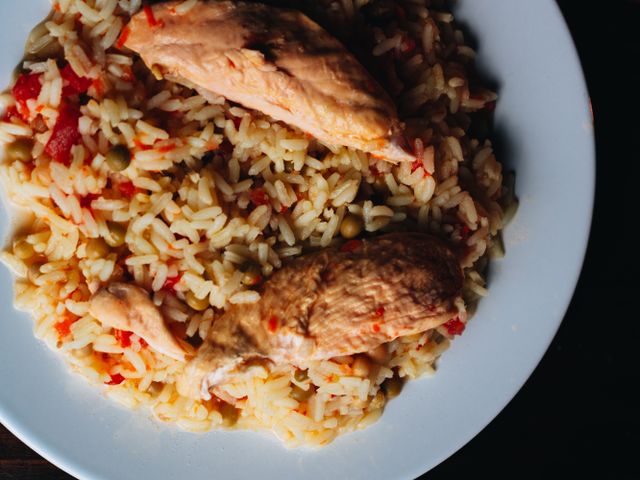
Jamaican Escallion Rice with Thyme
A fragrant, herbaceous rice dish inspired by Jamaican home cooking. Long-grain white rice is toasted briefly, then cooked in a coconut-enriched broth infused with fresh thyme, garlic, and scallions (called "escallion" in Jamaica). The result is fluffy, aromatic rice with flecks of green and a subtle sweetness from the coconut. Serve alongside curry, stew, or grilled fish.
- Prep
- 10 min
- Cook
- 25 min
- Wait
- 10 min
- Total
- 45 min
- Makes
- 6 servings (about 4 cups cooked rice)
Steps
Before you start
- Measure out all ingredients before you begin—rice cooking requires attention and timing.
- Use unsweetened coconut milk or a good-quality coconut broth; avoid sweetened coconut cream.
- Have a tight-fitting lid ready for the pot to trap steam effectively.
Rinse and toast the rice
- Place the rinsed rice in a medium 2-quart (2-liter) saucepan.
- Over medium heat, stir the rice constantly with a wooden spoon for 3–4 minutes.
- You'll hear a gentle crackling sound as the rice dries slightly and becomes warm.
- This toasting step releases the rice's nutty aroma and helps keep the grains separate.
+ Show details− Hide details
Ready when: Rice is warm to the touch and smells fragrant; no colored grains appear burned
Tip: Watch constantly so the rice doesn't scorch. If it starts to brown, reduce heat immediately.
Add broth and aromatics
- Pour in the coconut milk and water.
- Add the minced garlic, thyme sprigs, and the chopped scallion whites and light greens (reserve dark greens for garnish).
- Stir well to combine, making sure no rice sticks to the bottom of the pan.
- Taste and season with salt and pepper, keeping in mind that the liquid will reduce as the rice cooks.
+ Show details− Hide details
Ready when: All ingredients are incorporated; no dry rice visible
Tip: Don't add salt too heavily at this stage—you can adjust after the rice absorbs the liquid.
Bring to a boil
- Increase the heat to medium-high.
- Let the liquid come to a full rolling boil for 1–2 minutes, stirring occasionally.
- You'll see large bubbles breaking the surface and the rice beginning to move freely in the liquid.
+ Show details− Hide details
Ready when: Liquid boils vigorously; steam rises from the pan
Tip: Watch for a full boil—partial boiling won't cook the rice evenly from the start.
Reduce heat and cover
- Reduce the heat to low.
- Add the butter and stir once to distribute it.
- Place the lid on the saucepan, making sure it sits snugly.
- The rice will now cook gently in the steam trapped by the lid.
- Do not lift the lid or stir—this breaks the steam seal and disrupts cooking.
+ Show details− Hide details
Ready when: Lid is in place and steam is no longer escaping from around the edges
Tip: Resist the urge to peek—lifting the lid releases steam and can result in undercooked or unevenly cooked rice.
Simmer undisturbed
- Allow the rice to cook, covered, over low heat for 18–20 minutes.
- The liquid will be absorbed into the rice grains.
- Towards the end of cooking, you may hear occasional gentle crackling from the bottom of the pan—this indicates the rice is nearly done.
- Do not stir.
+ Show details− Hide details
Ready when: No liquid is visible when you carefully tip the pan; rice smells fragrant with thyme; gentle crackling from the bottom
Tip: If you hear loud popping or smell burning, the heat is too high—reduce it immediately and check for excess water.
Rest and fluff
- Remove the pan from heat and let it sit, covered, for 10 minutes.
- This allows the rice to fully firm up and makes it easier to fluff without breaking the grains.
- Do not uncover during this rest.
+ Show details− Hide details
Ready when: Pan is cool enough to handle safely; rice is set but still warm
Tip: This resting step is crucial for fluffy, separate grains—don't skip it.
Finish and serve
- Uncover the pan carefully (steam will rise).
- Use a wooden spoon or rice paddle to gently fluff the rice, breaking up any clumps and removing the thyme sprigs as you go.
- Transfer to a serving dish.
- Taste and adjust seasoning with salt and pepper if needed.
- Scatter the reserved dark green scallion tops over the rice for color and a fresh finish.
+ Show details− Hide details
Ready when: Rice is fluffy, warm, and evenly colored with green specks; no wet or sticky grains visible
Tip: Use gentle folding motions when fluffing to avoid mashing the cooked grains.
Good to know
Tips
- Rinsing the rice before cooking removes excess starch and helps the grains stay separate. Don't skip this step.
- Coconut milk naturally separates—shake the can or carton well before opening, or use a full-fat canned version and stir it into the water.
- For deeper garlic flavor, add a smashed garlic clove whole and remove it before serving; for sharper flavor, keep the minced garlic.
- This rice absorbs flavors beautifully—if you're serving it with a spicy curry or stew, the subtle thyme won't compete.
Make ahead
You can prepare the rice up to 2 hours ahead. Keep it warm in a covered pot over very low heat, or reheat gently in a covered pot with a splash of water over medium-low heat for 3–5 minutes, stirring occasionally.
Storage & reheating
Room temperature (covered, up to 4 hours; not recommended due to coconut content). Refrigerator: keep in an airtight container for up to 3 days. Reheat gently on the stovetop with a splash of water over medium-low heat, stirring occasionally, until warmed through (5–7 minutes). Freezer: not recommended, as the texture of rice suffers after thawing.
Substitutions
- unsweetened coconut milk or coconut broth → chicken or vegetable broth. Use 3 cups (720 ml) total liquid if substituting—omit the separate water measure. The rice will be less creamy but still flavorful with thyme and scallions.
- fresh thyme sprigs → dried thyme. Use 1 teaspoon (about 1 g) dried thyme. Add it with the broth; it will distribute evenly. Flavor will be slightly more concentrated.
- fresh scallions (escallion) → fresh cilantro and a pinch of allspice. Use 3 tablespoons (about 10 g) fresh cilantro, chopped, added at the end. This shifts the flavor profile but remains true to Caribbean cooking traditions.
- unsalted butter → coconut oil or neutral oil. Use the same amount. Coconut oil reinforces the coconut flavor; neutral oil (canola, grapeseed) is more subtle.