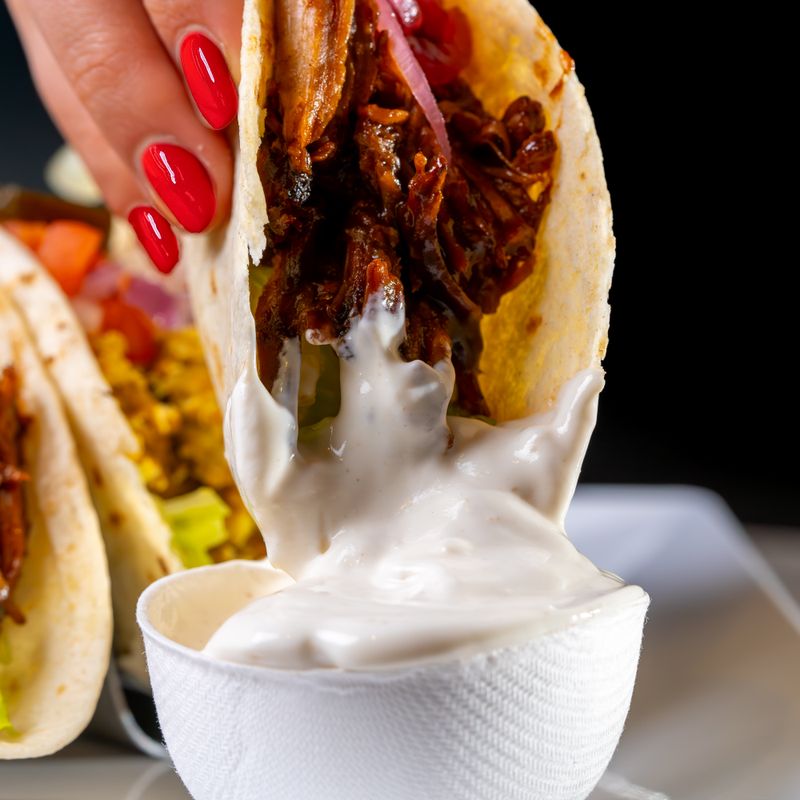
Italian Ragu Bolognese and Ricotta Cream Dip
A sophisticated two-part appetizer: a deeply flavored slow-cooker ragu Bolognese made with ground beef and pancetta, served alongside a silky ricotta and Parmesan cream dip. The ragu cooks low and slow to develop rich, savory notes, while the ricotta dip adds cool contrast. Serve with crusty bread, crostini, or vegetables for dipping.
- Prep
- 20 min
- Cook
- 4 hr
- Wait
- 10 min
- Total
- 4 hr 30 min
- Makes
- About 2 cups ragu and 1½ cups ricotta dip (8–10 servings as an appetizer)
Steps
Before you start
- Have all ingredients measured and prepped before starting the ragu—aromatics diced, meat broken up, tomatoes opened
- Use a slow cooker with at least 4-quart capacity
- Make sure you have crusty bread, crostini, or fresh vegetables ready for serving
Sear pancetta and beef
- Heat a 10-inch skillet over medium-high heat (about 6/10 heat).
- Add the diced pancetta and cook for 3–4 minutes, stirring occasionally, until it renders its fat and begins to brown at the edges.
- Add the ground beef, breaking it into small, bite-sized pieces with a wooden spoon as it cooks.
- Cook for 5–6 minutes until the beef is no longer pink and is lightly browned; do not overcook or it will become too dense during the long braise.
- Drain off excess fat if there is more than 2 tablespoons pooling in the pan.
+ Show details− Hide details
Ready when: Pancetta is browned and beef is no longer pink
Tip: Break the meat into small pieces so it distributes evenly and cooks into the sauce rather than forming large clumps.
Add aromatics and paste
- Reduce the heat to medium.
- Add the diced onion, carrot, celery, and minced garlic to the meat.
- Stir constantly for 3–4 minutes until the vegetables soften and become fragrant.
- Stir in the tomato paste and cook for 1–2 minutes more, stirring constantly, until the paste darkens slightly and caramelizes slightly—this deepens the flavor.
+ Show details− Hide details
Ready when: Vegetables are soft and paste is darkened
Tip: Cooking the tomato paste until it darkens adds depth; don't skip this step even though it seems fast.
Deglaze and add liquids
- Pour in the red wine and scrape the bottom of the skillet with a wooden spoon to release any browned bits stuck to it.
- Let the wine simmer for 2–3 minutes, then stir in the crushed canned tomatoes and beef stock.
- Pour the entire mixture into a 5-quart slow cooker.
+ Show details− Hide details
Ready when: Wine is mostly evaporated and pan is deglazed
Tip: Don't skip deglazing—those browned bits are concentrated flavor that will enrich the entire sauce.
Season and add bay leaves
- Season the mixture in the slow cooker with salt and black pepper to taste.
- Add the bay leaves.
- Stir well to combine.
+ Show details− Hide details
Tip: Taste and season now; you'll adjust again at the end, but starting with good seasoning helps develop flavor throughout cooking.
Slow cook the ragu
- Cover the slow cooker and cook on LOW for 4 hours.
- The ragu should simmer very gently—a bubble or two should break the surface every few seconds.
- After 4 hours, the ground beef will have reached a safe internal temperature of 160°F (71°C) through the gentle prolonged heat.
- Stir in the whole milk, which adds richness and rounds out the acidity of the tomatoes.
- Continue cooking on LOW, uncovered, for another 10 minutes to warm through.
+ Show details− Hide details
Ready when: Sauce is thick, dark, and glossy; flavors are deeply developed; meat is very tender and has reached 160°F (71°C)
Tip: Don't rush the cooking time—the long, gentle braise allows flavors to meld and the meat to become silky. If your slow cooker runs hot, check at 3.5 hours; the ragu is done when it coats a spoon and the meat is very tender.
Taste and finish ragu
- Remove the bay leaves.
- Taste the ragu and adjust seasoning with additional salt and black pepper as needed.
- The sauce should be rich, deeply savory, and balanced—neither too acidic nor overly salty.
+ Show details− Hide details
Tip: Always taste before serving and season to preference—slow-cooked sauces often benefit from a bit more salt than you'd expect to bring out the flavors.
Make ricotta dip
- While the ragu finishes cooking, make the ricotta dip.
- Place the room-temperature ricotta in a medium bowl and stir gently with a spoon until it is smooth and creamy, breaking up any lumps but being careful not to overwork it.
- Fold in the finely grated Parmesan, lemon zest, and chopped parsley.
- Season with salt and black pepper to taste.
- If the dip seems too thick, drizzle in a little of the optional olive oil and stir gently to combine.
- The dip should be spreadable and hold a slightly quivering shape.
+ Show details− Hide details
Ready when: Dip is smooth, creamy, and fully combined
Tip: Use room-temperature ricotta and fold gently—overworking breaks down the curds and makes the dip grainy rather than creamy.
Rest and serve
- Transfer the ragu to a serving bowl (or leave it warm in the slow cooker on the WARM setting).
- Transfer the ricotta dip to its own small serving bowl.
- Arrange crusty bread, crostini, or fresh vegetables (such as celery sticks, bell pepper strips, or snap peas) around the bowls.
- Let the ragu rest for 5 minutes before serving—this helps the flavors settle and allows it to thicken slightly.
+ Show details− Hide details
Tip: The ragu can be kept warm in the slow cooker on WARM for up to 1 hour. The ricotta dip is best served cold or at room temperature.
Good to know
Tips
- Slow cookers vary in temperature—if your sauce seems too thin after 4 hours, you can remove the lid for the final 10 minutes before adding milk to allow more liquid to evaporate and the ragu to thicken.
- For a smoother texture, you can pass the finished ragu through a food mill to break down the meat further, though this is entirely optional and not traditional.
- The ragu is excellent not only as a dip but also tossed with fresh pasta, spooned over polenta, or layered into lasagna—make a double batch if you plan to use it for multiple purposes.
- Serve with warm crusty bread (ciabatta, focaccia, or grissini breadsticks work beautifully) for the best experience; the ragu should be warm or at room temperature, while the ricotta dip is best chilled or at room temperature for contrast.
Make ahead
You can make the ragu up to 2 days ahead: cool it completely, cover, and refrigerate. Reheat gently in the slow cooker on LOW for about 45 minutes, or in a pot over medium-low heat, stirring often. The ricotta dip can be made up to 1 day ahead; cover and refrigerate, then bring to room temperature about 15 minutes before serving, and refresh with a light drizzle of olive oil if needed.
Storage & reheating
Ragu: Store in an airtight container in the refrigerator for up to 4 days, or freeze for up to 3 months. Thaw overnight in the refrigerator and reheat gently. Ricotta dip: Store in an airtight container in the refrigerator for up to 3 days. The dip is not recommended for freezing, as the texture can become grainy when thawed. Both components are best served at the temperatures listed above.
Substitutions
- dry red wine → dry white wine or additional beef stock. Red wine adds depth and color; white wine will lighten the sauce. If using stock instead, increase the amount to ¾ cup and add 1 tablespoon of balsamic vinegar to deepen flavor.
- pancetta → bacon (preferably thick-cut and smoked lightly). Bacon will add smokiness; use 3 ounces and cook until crisp before adding beef. The ragu will have a slightly different character but will still be delicious.
- whole-milk ricotta cheese → mascarpone (use 1 cup, about 250 g). Mascarpone is richer and slightly sweeter; reduce the lemon zest to ¼ teaspoon so it doesn't overpower. The dip will be more decadent.
- Parmigiano-Reggiano → Grana Padano or aged Pecorino Romano. Both add sharp, savory notes. Use the same amount; Pecorino is slightly saltier and more peppery than Parmesan, so taste and adjust salt accordingly.
More dips & spreads
See all →




Find more like this
- Meal
- Snack
- Cuisine
- Italian
- Main ingredient
- Ground Beef
- Method
- Slow Cooker
- Quick & Easy
- Make Ahead