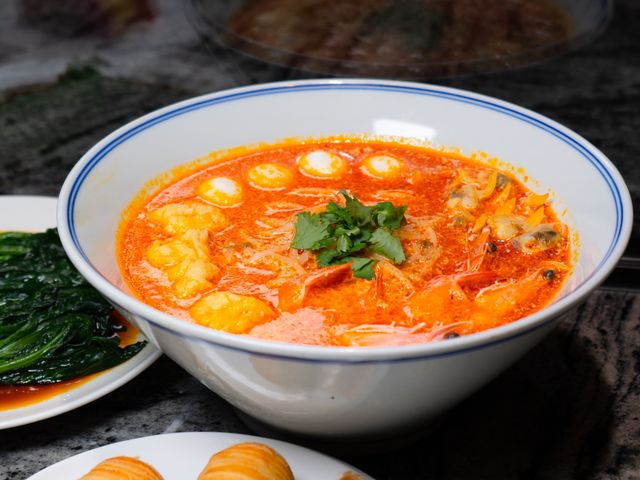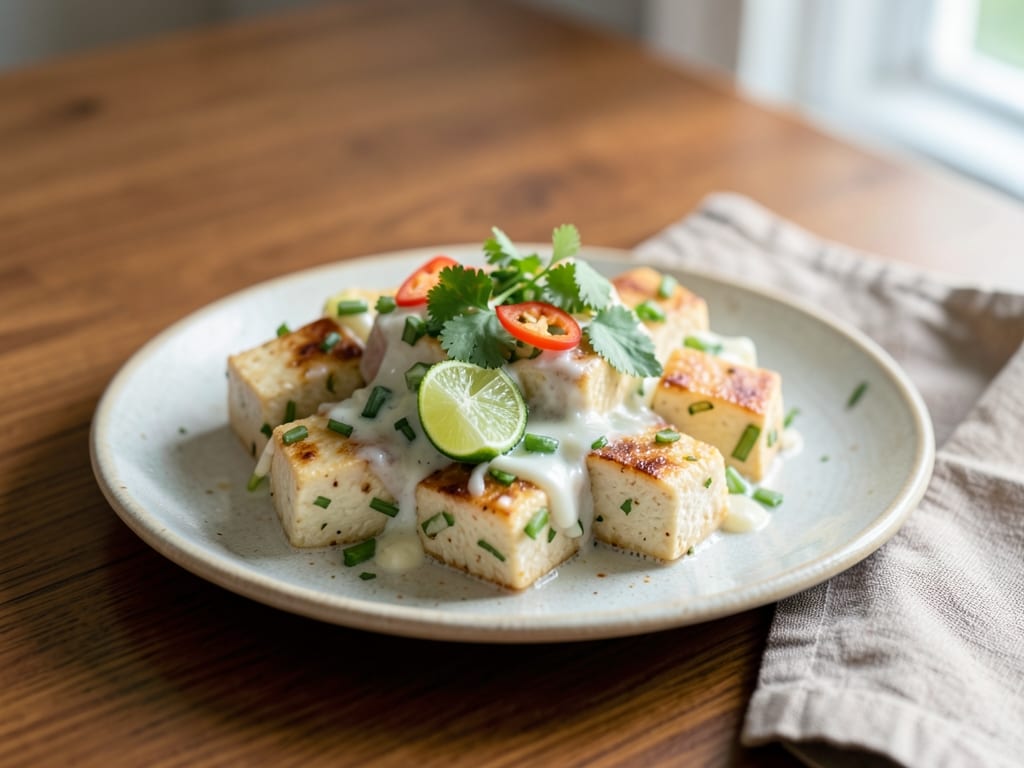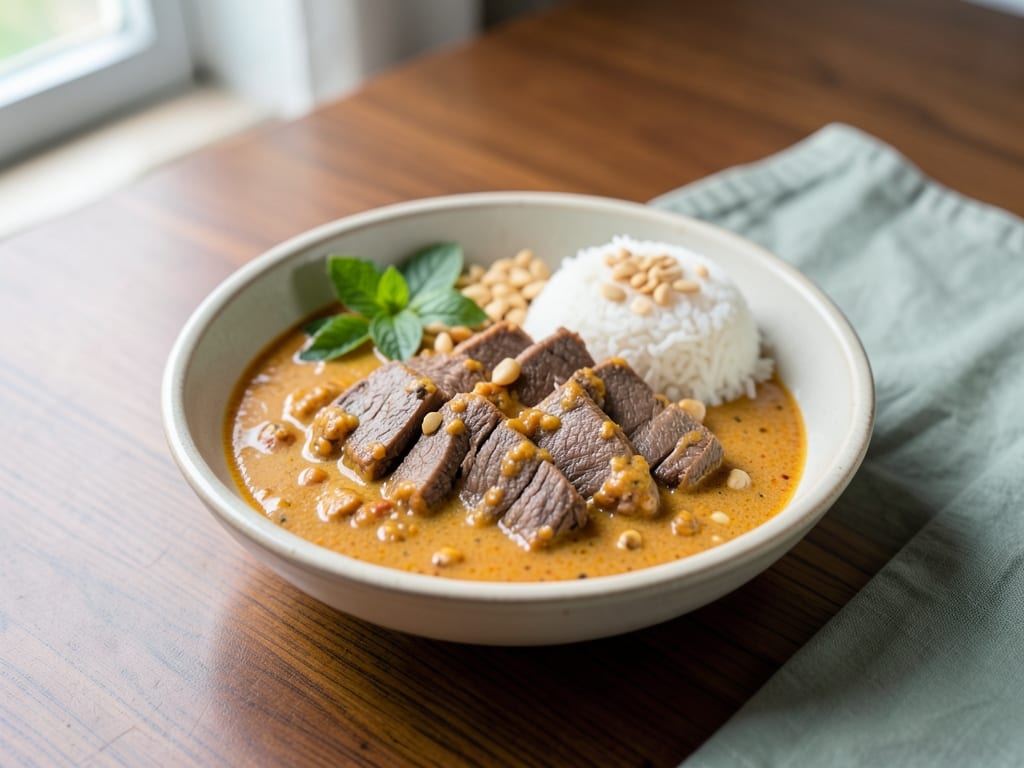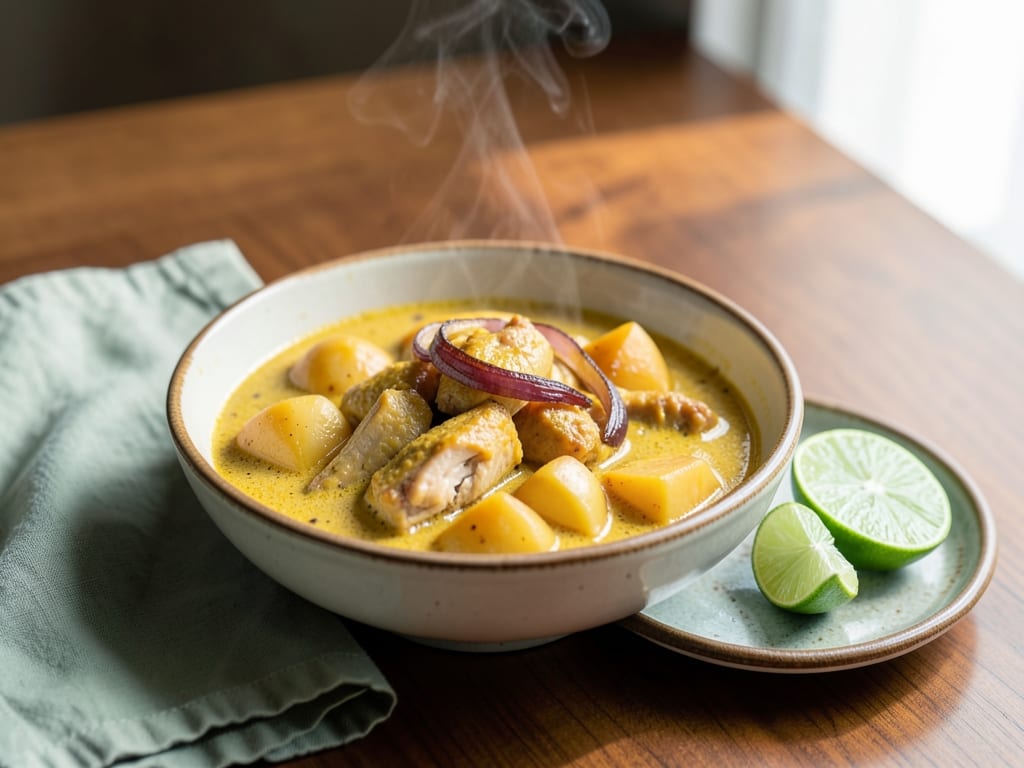
Holiday Seafood Coconut Curry with Scallops
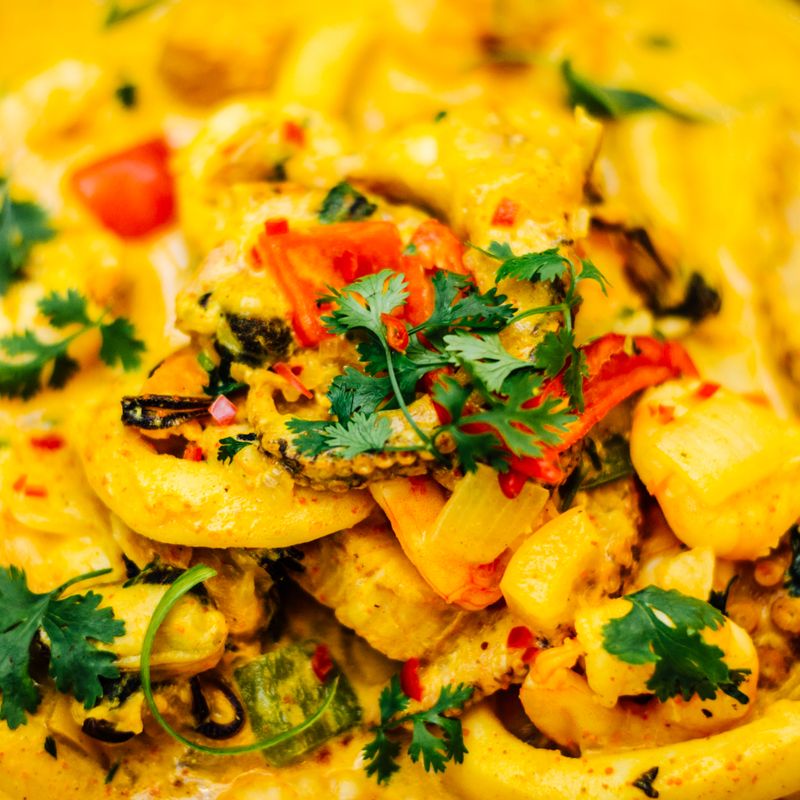
A vibrant, restaurant-quality curry featuring tender scallops in a silky coconut-lemongrass broth, infused with galangal, lime, and Thai chilies. Fresh herbs and a hint of fish sauce create authentic depth. Ready in under 30 minutes, it's elegant enough for the holidays yet simple enough for weeknight dinner. Serve over jasmine rice or noodles.
- Prep
- 15 min
- Cook
- 12 min
- Total
- 27 min
- Makes
- 4 servings (about 5 cups curry)
Steps
Before you start
- Pat scallops dry and bring to room temperature 15 minutes before cooking—this ensures a golden sear
- Prepare all aromatics and ingredients before you begin cooking; the curry comes together quickly
- Have jasmine rice or rice noodles cooked and ready to serve
- Use fresh lemongrass and galangal if possible; they make a significant difference in flavor
Sear the scallops
- Heat oil in a 14-inch (36 cm) wok or large skillet over medium-high heat until shimmering, about 1 minute.
- Working in two batches to avoid crowding, add scallops in a single layer.
- Sear without moving them for 2–3 minutes until the underside is golden and caramelized.
- Flip and sear the other side for another 1–2 minutes until just opaque at the center.
- Transfer to a plate and set aside.
+ Show details− Hide details
Ready when: Scallops are golden on both sides and opaque in the center (cut one to check)
Tip: Do not move scallops while searing; undisturbed contact creates the caramel crust. Resist the urge to fidget—patience rewards you here.
Build the curry base
- In the same wok, reduce heat to medium.
- Add shallots and sauté for 1–2 minutes until fragrant and beginning to soften.
- Add minced garlic and cook for another 30 seconds.
- Stir in the lemongrass pieces, galangal slices, and halved Thai chilies.
- Cook for 1–2 minutes, stirring occasionally, until the aromatics become very fragrant and the shallots are soft.
+ Show details− Hide details
Ready when: Aromatics are very fragrant and shallots are translucent
Tip: Toast the aromatics gently—the goal is fragrance and softening, not browning. High heat here burns the delicate galangal and chilies.
Add liquid and simmer
- Pour in the coconut milk and fish stock, stirring well to incorporate.
- Add fish sauce and palm sugar.
- Bring to a gentle simmer over medium heat and cook for 3–4 minutes, stirring occasionally, until the broth thickens slightly and the flavors meld.
- The lemongrass and galangal infuse the sauce with their essence.
+ Show details− Hide details
Ready when: Broth is gently bubbling and slightly thickened; lemongrass and galangal perfume the air
Tip: Keep the heat moderate to prevent the coconut milk from boiling vigorously, which can cause it to break and look curdled.
Return scallops and finish
- Gently add the seared scallops back into the curry, nestling them into the broth.
- Remove the wok from heat and stir in the lime juice.
- Taste and adjust seasoning with additional lime juice or fish sauce as needed.
- The curry should taste bright and balanced—not too sweet, salty, or spicy.
+ Show details− Hide details
Ready when: Curry is well-blended and seasoning is balanced on your palate
Tip: Add lime juice off the heat to preserve its fresh brightness. Taste cautiously—the heat of the curry can numb your perception of spice.
Plate and garnish
- Ladle the curry into shallow bowls, distributing scallops and broth evenly.
- Scatter half of the cilantro leaves and Thai basil over each bowl.
- Place a lime wedge on the rim of each bowl for squeezing at the table.
- Serve immediately over jasmine rice or with rice noodles on the side.
+ Show details− Hide details
Ready when: Bowls are filled, herbs are scattered, and lime wedges are in place
Tip: Fresh herbs should be added just before serving so they don't wilt or lose their aromatic punch. This is what transforms a good curry into an exceptional one.
Good to know
Tips
- Fresh lemongrass and galangal are crucial for authentic flavor. If you can only find frozen galangal, thaw it before slicing. Dried versions lack the vibrant, bright notes of fresh.
- The key to restaurant-quality scallops is a dry surface and high heat. Moisture on the scallop surface prevents a proper sear. Pat them very dry just before cooking.
- Coconut milk sometimes separates—the thick cream rises to the top. Stir the can well before opening, or scoop the cream off the top and reserve it to enrich the final curry.
- This curry is equally delicious served over jasmine rice, brown rice, or alongside rice noodles. Accompany with extra lime wedges, sliced chilies, and additional fresh herbs so guests can customize their bowls.
Storage & reheating
The curry is best served immediately. Leftover curry (without scallops) can be refrigerated in an airtight container for up to 2 days. Reheat gently over medium-low heat, stirring occasionally, until warmed through. Do not reheat scallops; instead, warm the curry base, sear fresh scallops, and fold them in just before serving.
Substitutions
- fish sauce → soy sauce or tamari. Use the same amount. Fish sauce is traditional and adds umami depth, but soy sauce offers a more approachable alternative with similar saltiness.
- fresh Thai basil leaves → regular basil or mint. Thai basil has an anise-like flavor that's distinctive, but regular basil or mint will work. Use the same amount; the curry will taste slightly different but still delicious.
- large sea scallops, side muscle removed → large shrimp (21–25 count) or monkfish chunks. Cook shrimp for 2–3 minutes per side until pink; monkfish takes about 3 minutes per side. Both are excellent in coconut curry.
- palm sugar or light brown sugar → light brown sugar or honey. Palm sugar adds a subtle caramel note. Brown sugar is close in flavor; honey is slightly floral but works. Use the same amount.