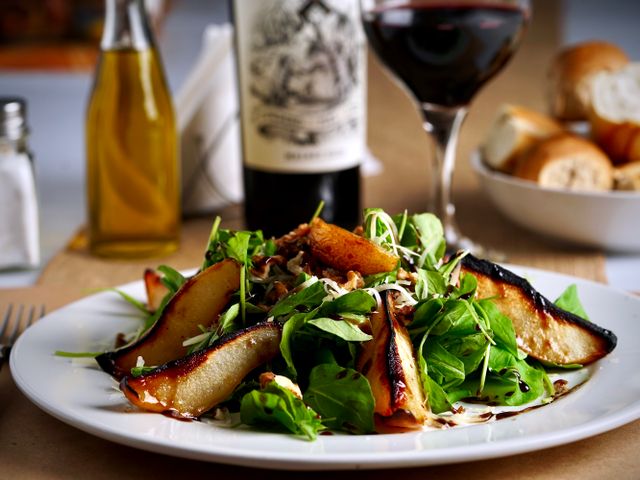
Greek Saganaki-Crusted Halloumi and Quinoa Bowl
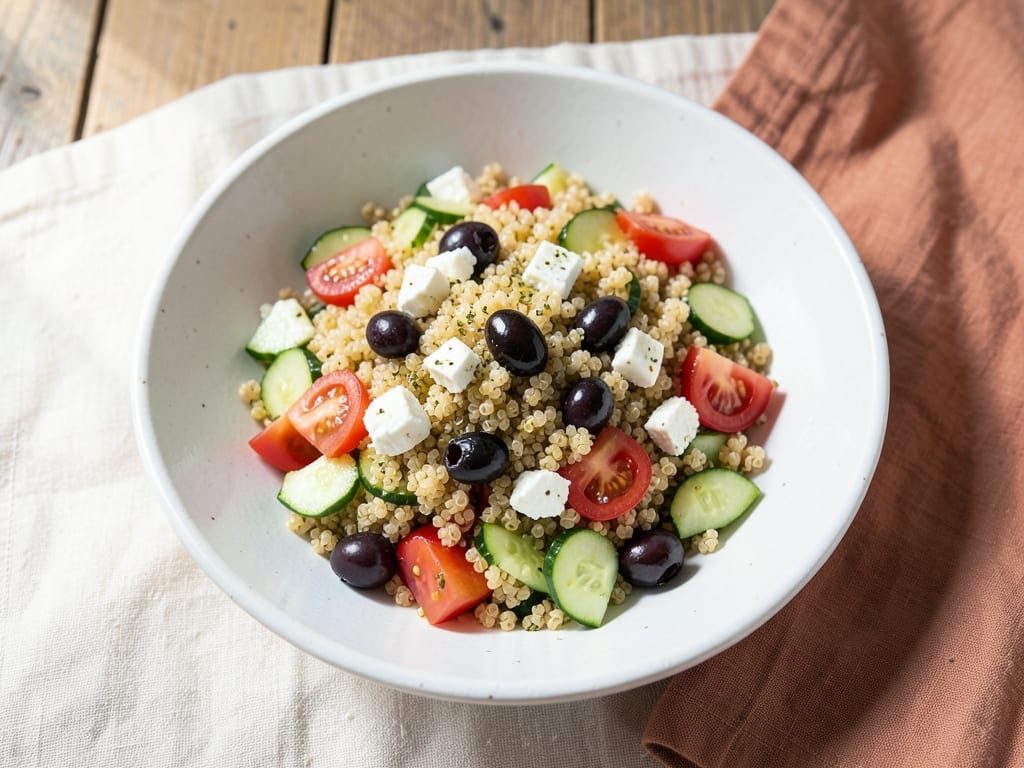
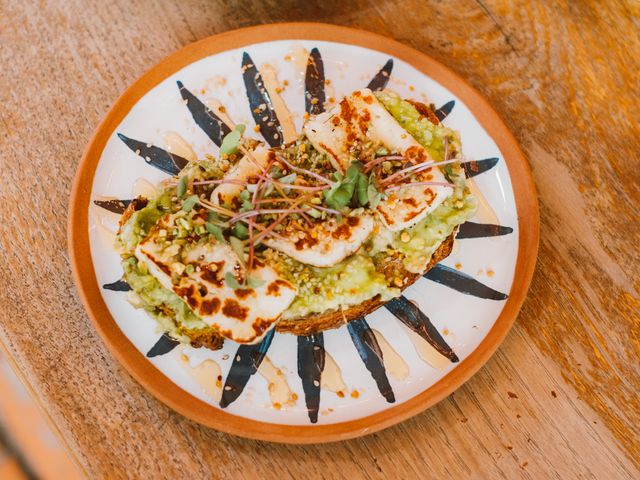
A vibrant Mediterranean bowl featuring crispy pan-fried halloumi cheese with a golden saganaki crust, served over fluffy oregano-infused quinoa with roasted vegetables, fresh herbs, and a bright lemon-olive oil drizzle. The contrast between the warm, squeaky cheese and cool quinoa creates a satisfying meal that's restaurant-quality yet simple to prepare at home.
Steps
Before you start
- Measure out dry quinoa and stock before starting.
- Slice halloumi into ⅜-inch (1 cm) slices and pat dry with paper towels—this prevents splattering and ensures crispiness.
- Have all fresh herbs and vegetables prepped and ready to assemble.
Start the quinoa
- Rinse the 1 cup (185 g) dry quinoa under cold water for 30 seconds to remove any bitter coating.
- In a medium saucepan, heat 2 cups (480 ml) vegetable or chicken broth over medium-high heat until it reaches a gentle boil.
- Add the rinsed quinoa, 1 teaspoon (3 g) dried oregano, and ¼ teaspoon (1.5 g) salt.
- Stir to combine.
+ Show details− Hide details
Ready when: Broth comes to a boil
Tip: Rinsing quinoa removes saponins and prevents a bitter taste.
Simmer quinoa covered
- Once the broth boils, reduce the heat to low, cover the saucepan with a lid, and simmer gently.
- Do not stir.
- Let the quinoa cook until all the liquid is absorbed and the grains are tender with a slight bite, about 15–18 minutes.
+ Show details− Hide details
Ready when: All liquid is absorbed; quinoa is fluffy and each grain is translucent
Tip: Don't peek or stir—this releases steam and unevens the cooking.
Prepare the breading station
- While the quinoa cooks, set up a breading station with three shallow bowls or plates.
- In the first bowl, place 3 tablespoons (25 g) all-purpose flour.
- In the second bowl, whisk 1 large egg until pale.
- In the third bowl, combine ½ cup (50 g) panko breadcrumbs and 2 tablespoons (30 g) crumbled feta cheese, stirring until well mixed.
+ Show details− Hide details
Ready when: Breadcrumbs and feta are evenly combined
Tip: Feta in the crust adds authentic saganaki flavor and extra seasoning.
Bread the halloumi slices
- Remove the halloumi from the refrigerator.
- Working with one slice at a time, coat both sides lightly in the flour, shaking off excess.
- Dip into the beaten egg, then press firmly into the panko-feta mixture, coating both sides evenly.
- Set the breaded slices on a clean plate.
- Do not stack them, or they will stick together.
+ Show details− Hide details
Ready when: All halloumi slices are evenly coated
Tip: Keep halloumi cold and pat it dry before breading—moisture will cause the coating to slide off during frying.
Heat the skillet
- Pour 3 tablespoons (45 ml) olive oil into an 8–10 inch (20–25 cm) skillet and heat over medium-high heat.
- When the oil shimmers and a breadcrumb dropped in sizzles immediately, it's ready.
+ Show details− Hide details
Ready when: Oil shimmers and breadcrumb sizzles on contact
Tip: Don't wait for smoke—medium-high heat gives a golden, crispy crust without burning the feta.
Pan-fry the halloumi
- Carefully place the breaded halloumi slices into the hot oil in a single layer (work in batches if needed).
- Fry for 2–3 minutes on the first side until the coating is deep golden brown and crispy.
- Flip gently and fry for another 2–3 minutes on the second side until equally golden.
- The cheese will soften inside and may squeak slightly when you bite it—this is perfect.
- Transfer to a clean plate and serve warm.
+ Show details− Hide details
Ready when: Coating is deep golden brown on both sides; halloumi is warm and slightly softened inside
Tip: Flip only once to maintain the crispy crust. If the coating browns too fast, lower the heat slightly.
Finish the quinoa
- When the quinoa is done (all liquid absorbed), remove it from heat and let it rest, covered, for 2 minutes.
- Fluff it gently with a fork.
- Stir in the 2 tablespoons (30 ml) extra-virgin olive oil and 2 tablespoons (30 ml) fresh lemon juice to brighten the flavor.
+ Show details− Hide details
Ready when: Quinoa is fluffy and lightly coated with oil and lemon juice
Tip: Adding oil and lemon while warm allows the quinoa to absorb the flavors fully.
Assemble the bowls
- Divide the warm oregano-lemon quinoa between two shallow bowls.
- Top each with half the diced cucumber, half the halved cherry tomatoes, and a generous pinch of fresh mint and flat-leaf parsley.
- Lean 2–3 crispy halloumi slices against the quinoa in the center of each bowl.
- Drizzle with a little extra-virgin olive oil and sprinkle with lemon zest.
- Season with freshly ground black pepper to taste.
+ Show details− Hide details
Ready when: Bowls are assembled with all components visible and appetizing
Tip: Arrange the halloumi upright so it stays warm and guests can see the golden crust.
Good to know
Tips
- For extra crispiness, let the breaded halloumi chill in the refrigerator for at least 30 minutes before frying—this helps the coating stay intact during cooking.
- If your pan-fried halloumi slices are browning but the inside isn't softening, reduce heat to medium and add a lid for 1–2 minutes to allow the cheese to warm through gently.
- Make this bowl heartier by adding roasted chickpeas, white beans, or a soft-boiled egg. For non-vegetarian versions, crumbled lamb or grilled chicken pairs beautifully with the halloumi.
- Toast the panko breadcrumbs lightly in a dry pan over medium heat for 1–2 minutes before mixing with feta—this deepens the crust color and adds a subtle nuttiness.
Make ahead
Quinoa can be cooked up to 1 day ahead and stored in the refrigerator. Reheat gently with a splash of water and a drizzle of olive oil. Halloumi is best fried fresh, but you can bread the slices up to 2 hours ahead and keep them on a parchment-lined plate in the refrigerator. Fry them just before serving for maximum crispiness.
Storage & reheating
Store cooled leftover quinoa in an airtight container in the refrigerator for up to 4 days. Fried halloumi is best consumed immediately but can be refrigerated for up to 2 days; reheat gently in a 350°F (175°C) oven for 5 minutes to restore crispness. Vegetables keep separately in an airtight container for up to 3 days. Do not freeze the fried halloumi, as the crust becomes soggy.
Substitutions
- vegetable or chicken broth → chicken broth or water. Chicken broth adds richer flavor; water works but is more neutral. If using salted broth, reduce the added salt to ⅛ teaspoon.
- panko breadcrumbs → regular breadcrumbs or crushed crackers. Regular breadcrumbs will brown faster and create a finer crust; watch heat closely. Crushed crackers add a more robust texture.
- feta cheese, crumbled → grated Parmesan cheese. Parmesan adds nuttiness instead of tang; use the same amount. This is equally traditional in some Greek saganaki recipes.
- fresh mint leaves → fresh dill or extra parsley. Dill brings a different Mediterranean note; parsley is milder. Either works well with halloumi.