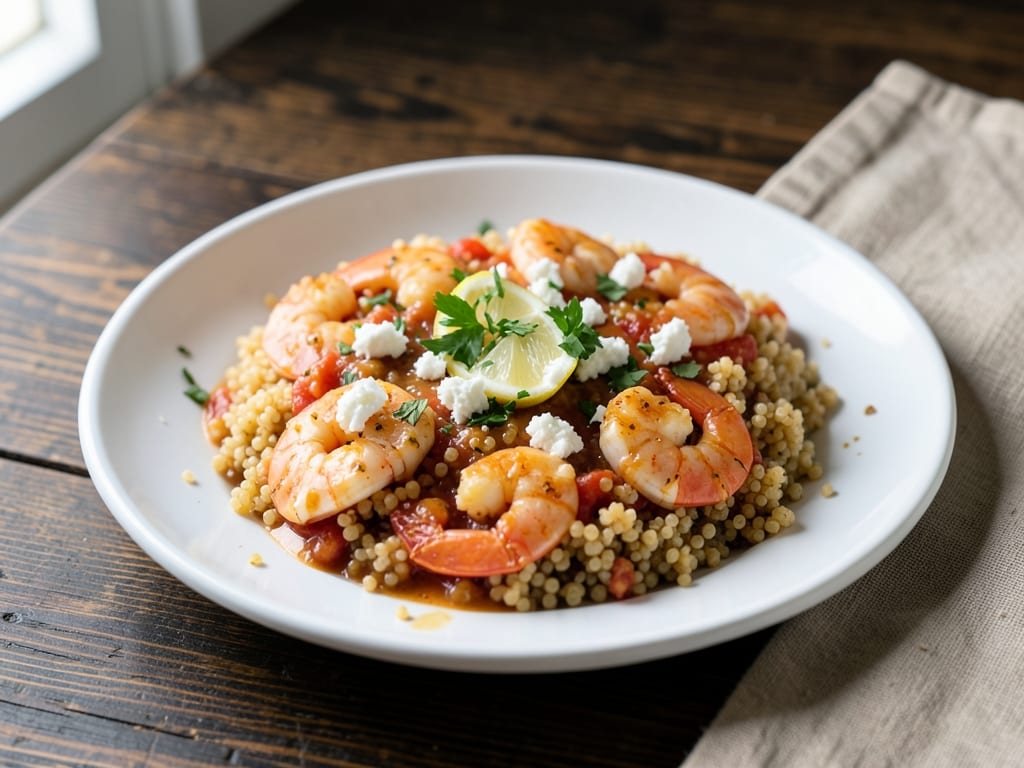
Greek Roasted Celeriac and Crispy Sumac Oil Buckwheat
A vibrant Mediterranean side dish pairing fluffy buckwheat groats with deeply caramelized roasted celeriac. Finished with a fragrant sumac-infused crispy oil that adds brightness and a subtle tart punch. This dish works beautifully alongside grilled fish or roasted chicken, or as the star of a vegetable-forward grain bowl.
- Prep
- 20 min
- Cook
- 45 min
- Wait
- 15 min
- Total
- 1 hr 20 min
- Makes
- 4 servings (about 1½ cups per person)
Steps
Before you start
- Preheat oven to 425°F (220°C)
- Measure out buckwheat groats and rinse them under cold water until water runs clear
- Line a large baking sheet with parchment paper
- Have all aromatic ingredients ready before heating the oil for the sumac oil
Roast the celeriacOven 425°F / 220°C
- Place the cubed celeriac on the prepared baking sheet.
- Toss with 3 tablespoons (45 ml) of olive oil and season generously with kosher salt and black pepper.
- Spread in a single layer and roast at 425°F (220°C) for 35 to 40 minutes, stirring halfway through, until the cubes are deeply golden and caramelized at the edges with tender, creamy centers.
- The exterior should have some charred spots.
+ Show details− Hide details
Ready when: Celeriac is deeply golden and caramelized with tender centers
Tip: Stir halfway to ensure even browning. Do not skip the second stir—it prevents the bottom from burning.
Cook the buckwheat
- While the celeriac roasts, bring 3 cups (720 ml) of vegetable broth to a boil in a large saucepan over high heat.
- Add the rinsed buckwheat groats and bay leaf.
- Stir once, reduce heat to low, cover with a tight-fitting lid, and simmer for 12 to 14 minutes until all liquid is absorbed and the grains are tender and fluffy.
+ Show details− Hide details
Ready when: All liquid is absorbed and grains are tender
Tip: Keep the lid on while simmering—removing it lets steam escape and the groats won't cook evenly.
Make the sumac oil
- While the buckwheat cooks, heat ⅓ cup (80 ml) of olive oil in a small saucepan over medium heat.
- Add the sliced garlic and red pepper flakes, stirring frequently for 3 to 4 minutes until the garlic is pale golden and very fragrant but not brown.
- Remove from heat immediately.
- Stir in the ground sumac and lemon zest until well combined.
- Let cool slightly for 1 minute before use.
+ Show details− Hide details
Ready when: Garlic is pale golden and fragrant; sumac is fully mixed in
Tip: Watch the garlic carefully—it goes from pale to burnt very quickly. Remove from heat as soon as it turns light golden.
Fluff and combine
- Remove the buckwheat from heat and let it rest, covered, for 2 minutes.
- Discard the bay leaf and fluff the grains gently with a fork to separate them and release steam.
- Transfer the cooked buckwheat to a large shallow serving bowl or platter.
- Top with the roasted celeriac cubes and drizzle the warm sumac oil over everything, scraping in any garlic and flakes from the bottom of the pan.
+ Show details− Hide details
Ready when: Buckwheat is fluffy and grains are separated
Tip: Don't stir the oil and buckwheat together yet—let guests see the layers and appreciate the visual contrast of the golden celeriac and glistening oil.
Finish and serve
- Scatter the chopped fresh dill over the top.
- If using feta, crumble it evenly across the surface.
- Taste a spoonful and adjust seasoning with more kosher salt or sumac if needed.
- Serve warm or at room temperature.
+ Show details− Hide details
Tip: The dill and feta brighten the earthy buckwheat and roasted celeriac. Add them just before serving so the dill stays vibrant.
Good to know
Tips
- Rinse the buckwheat groats thoroughly before cooking to remove dust and bitter tannins—this is essential for a clean flavor.
- Caramelization is key: don't rush the celeriac roasting. The longer it roasts, the sweeter and more complex it becomes.
- The sumac oil is best served warm to keep the garlic fragrant and the oil glossy. If it cools completely, you can gently warm it over low heat for 30 seconds before serving.
- This dish is naturally vegetarian and easily vegan (omit the feta cheese). It's also gluten-free and works well in meal prep, though you'll want to combine all components and reheat just before serving.
Make ahead
The roasted celeriac can be prepared up to 2 days ahead; store covered in the refrigerator. The buckwheat can be cooked up to 1 day ahead and reheated gently with a splash of broth over low heat. Prepare the sumac oil just before serving so the garlic and spice flavors are at their brightest.
Storage & reheating
Store leftovers in an airtight container in the refrigerator for up to 3 days. The components will soften slightly but remain delicious. Reheat gently in a saucepan with a tablespoon of broth or water over low heat for 3 to 4 minutes. Do not reheat the sumac oil—make fresh for the best flavor, or drizzle it cold over reheated components. Do not freeze.
Substitutions
- roasted buckwheat groats → quinoa or millet. Use the same amount by volume. Both cook in about 15 minutes with the same liquid-to-grain ratio. The texture will be slightly lighter but equally delicious.
- celeriac (celery root) → parsnips or a mix of parsnips and potatoes. Cut into the same ½-inch cubes. Parsnips roast slightly faster (30 to 35 minutes), so check them earlier.
- ground sumac → pomegranate molasses or grated lemon zest mixed with a pinch of paprika. Use ½ to ¾ of the amount of pomegranate molasses (it's more potent) or increase lemon zest to 1½ teaspoons. The tartness differs slightly but the brightness remains.
- fresh dill → flat-leaf parsley or a mix of parsley and fresh oregano. Use the same amount. Oregano adds an earthier note that pairs beautifully with the sumac oil.