Greek Feta Olive Rolls
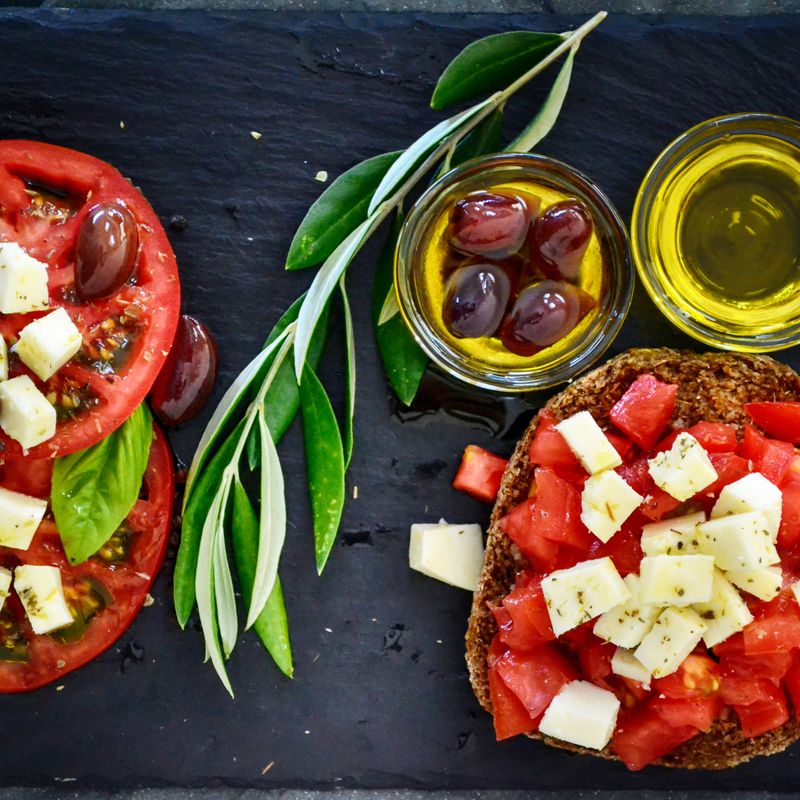
Soft, olive-oil-enriched dinner rolls studded with briny Kalamata olives, creamy feta and fragrant oregano. Each pull-apart roll is savory, tender and golden, perfect with soup, salads or a mezze spread.
- Prep
- 45 min
- Cook
- 24 min
- Wait
- 2 hr 5 min
- Total
- 3 hr 14 min
- Makes
- 12 rolls
Steps
Before you start
- Plan on about 3 hours 15 minutes from start to finish, most of it hands-off rising time.
- Pat the olives and feta very dry with paper towels. Excess brine makes the dough sticky and the rolls gummy.
- Use block feta in brine if you can; pre-crumbled feta is drier and won't melt into creamy pockets as well.
- Warm the milk and water to 105–110°F (40–43°C). It should feel comfortably warm, not hot, or it will damage the yeast.
Prep the filling
- Drain the olives and pat them very dry with paper towels, then chop into ¼-inch (6 mm) pieces.
- Pat the feta dry and crumble it into pea-size pieces.
- Toss the olives, feta and 1 tsp oregano together in a small bowl and refrigerate until needed.
+ Show details− Hide details
Ready when: Olives look matte, not wet, and feta crumbles are small and separate.
Tip: Wet olives bleed brine into the dough and make it slippery, so don't skip the drying.
Mix the dough
- In a large bowl, whisk the flour, yeast, sugar, salt and 2 tsp oregano.
- Add the warm milk, warm water, 3 tbsp olive oil and 1 egg.
- Stir with a wooden spoon, then your hands, for about 3 minutes until no dry flour remains and a shaggy, sticky dough forms.
+ Show details− Hide details
Ready when: Dough is shaggy with no dry flour patches left in the bowl.
Tip: Keep liquids at 105–110°F (40–43°C). Above 130°F (54°C) the yeast can die.
Knead until smooth
- Knead on a lightly floured counter for 8 minutes (or 6 minutes on medium-low speed with a dough hook).
- Add flour 1 tbsp at a time only if the dough sticks stubbornly to your hands.
+ Show details− Hide details
Ready when: Dough is smooth, soft and slightly tacky, and springs back slowly when poked. A small piece stretches into a thin, translucent windowpane without tearing.
Tip: A slightly tacky dough makes tender rolls. Too much extra flour makes them dense.
First rise
- Grease a large bowl with some of the 1 tbsp olive oil (save the rest for the pan).
- Shape the dough into a ball, turn it in the bowl to coat, cover with plastic wrap or a damp towel and leave in a warm spot (75–80°F / 24–27°C) for 60–75 minutes.
+ Show details− Hide details
Ready when: Dough has doubled and a floured finger pressed in 1 inch leaves an indentation that fills back slowly.
Tip: In a cool kitchen, set the bowl in the oven with only the light on.
Fold in the filling
- Turn the dough onto a lightly floured counter and gently press into a rough 12×16-inch (30×40 cm) rectangle.
- Scatter two-thirds of the olive-feta mixture over the surface, fold into thirds like a letter, then pat out again and scatter the remaining filling.
- Fold again and gently press the dough into a 9×12-inch (23×30 cm) rectangle about 1½ inches (4 cm) thick.
+ Show details− Hide details
Ready when: Olives and feta are evenly distributed in the dough with no large clumps on the surface.
Tip: Don't knead the filling in; it will smear the feta and tear the dough. Folding keeps pockets of cheese intact.
Cut and shape rolls
- Brush the 9×13-inch (23×33 cm) pan with the remaining olive oil.
- Using a bench scraper, cut the dough into 12 equal pieces (about 100 g each).
- Cup each piece under your palm and roll in small circles on the counter to form a smooth ball, tucking any exposed olives or feta underneath.
- Arrange in 3 rows of 4 in the pan, seam side down.
+ Show details− Hide details
Ready when: Each ball has a smooth, taut top with the filling tucked inside.
Tip: Pieces of cheese or olive sticking out will burn in the oven, so tuck them in.
Second riseOven 375°F / 190°C
- Cover the pan loosely with greased plastic wrap or a towel.
- Let rise 35–45 minutes until puffy and touching each other.
- About 20 minutes in, position a rack in the center of the oven and preheat to 375°F (190°C).
+ Show details− Hide details
Ready when: Rolls are visibly puffy, touching, and a gentle poke leaves a dent that slowly springs back.
Tip: If the dent stays and doesn't spring back at all, they are over-proofed; bake right away.
Egg wash and top
- Whisk the egg with 1 tbsp water until fully combined.
- Brush a thin, even layer over the tops of the rolls, being careful not to let it pool in the gaps.
- Sprinkle with sesame seeds if using.
+ Show details− Hide details
Ready when: Rolls have an even, glossy sheen.
Tip: Brush gently so you don't deflate the risen rolls.
Bake the rollsOven 375°F / 190°C
- Bake at 375°F (190°C) for 22–26 minutes, rotating the pan after 12 minutes, until deep golden brown.
- If the tops brown too quickly, tent loosely with foil for the last 8 minutes.
+ Show details− Hide details
Ready when: Tops are deep golden brown, the bottoms sound hollow when tapped, and an instant-read thermometer in the center of a roll reads 190°F (88°C).
Tip: Melted feta can leak and darken; that's normal and tasty.
Cool and serve
- Let the rolls cool in the pan for 5 minutes, then transfer to a wire rack.
- Cool at least 10 more minutes before serving so the cheese pockets set; serve warm.
+ Show details− Hide details
Ready when: Rolls are warm, not hot, and the bottoms are dry and crisp rather than steamy.
Tip: Leaving rolls in the hot pan too long will make the bottoms soggy.
Good to know
Tips
- Weigh the flour if possible. Too much flour is the most common cause of dry, dense rolls.
- Don't add salt directly on top of the yeast; whisking it into the flour first keeps the yeast active. The olives and feta are salty, so don't add extra salt to the dough.
- Add a pinch of lemon zest or a little chopped fresh parsley to the filling for brightness.
- For extra-soft, shiny crusts, brush the hot rolls with a little olive oil right after baking.
Make ahead
"After shaping (step 6), cover the pan tightly and refrigerate for up to 16 hours. Next day, let it stand at room temperature for 45–60 minutes until puffy, then egg wash and bake as directed, adding 2–3 minutes if needed. Baked rolls can also be frozen (see storage)."
Storage & reheating
"Room temperature: store in an airtight container or bag for up to 2 days. Fridge: up to 5 days. Freezer: wrap individually and freeze up to 3 months; thaw at room temperature. To reheat, wrap in foil and warm at 350°F (175°C) for 8–10 minutes (12–15 from frozen), or microwave a single roll for 15–20 seconds."
Substitutions
- pitted Kalamata olives → Pitted green olives such as Castelvetrano. Milder and buttery in flavor; drain and dry the same way.
- feta cheese → Firm goat cheese or halloumi cut into small cubes. Goat cheese gives a tangier, creamier result; halloumi stays chewy and less salty.
- bread flour → All-purpose flour. Rolls will be slightly softer and less chewy; you may need 1–2 tbsp less liquid.
- whole milk → Additional warm water or unsweetened plant milk. Gives a slightly crisper, less tender crumb but works well.