Gouda and Caramelized Onion Scones
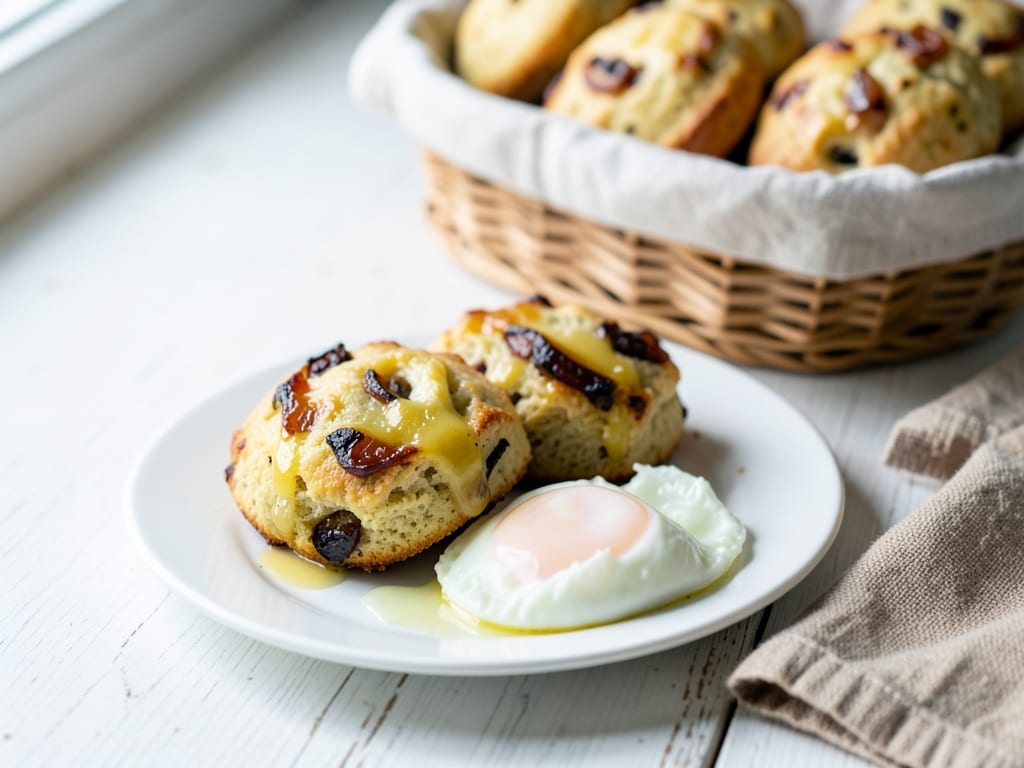
Savory Dutch-inspired scones studded with sharp Gouda cheese and sweet caramelized onions. Made using the traditional scone method—cold butter cut into flour creates tender, flaky layers that rise beautifully in a hot oven. Serve warm with softened butter for an elegant appetizer or tea-time treat.
Steps
Before you start
- Prepare caramelized onions ahead (see make-ahead section) or use store-bought; cool completely before adding to dough
- Chill 5 oz (140 g) unsalted butter in the freezer for 10 minutes before cutting
- Chill a large mixing bowl in the freezer for 5 minutes
- Preheat oven to 425°F (220°C) and line a baking sheet with parchment paper
- Read through the instructions—working quickly is key to tender, flaky scones
Mix dry ingredients
- In the chilled large bowl, whisk together the all-purpose flour, baking powder, kosher salt, black pepper, and fresh thyme (if using).
- Whisk gently for 1–2 minutes until all ingredients are evenly distributed.
- Set aside.
+ Show details− Hide details
Ready when: all ingredients are evenly combined and no streaks of thyme remain visible
Tip: A chilled bowl keeps the butter cold, which is essential for flaky scones
Cut in cold butter
- Add the cold cubed butter to the flour mixture.
- Using a pastry cutter, two sharp knives, or the tips of your fingers (work quickly), break the butter into the flour until the mixture resembles coarse breadcrumbs.
- Some pea-sized pieces of butter should still be clearly visible.
- This takes 2–3 minutes.
+ Show details− Hide details
Ready when: mixture resembles coarse breadcrumbs with pea-sized butter pieces still clearly visible throughout
Tip: Do not overmix; visible butter pieces create the flaky layers when the scones bake. If the butter starts to soften, chill the mixture for a few minutes
Fold in cheese and onions
- Gently fold the grated Gouda cheese and cooled caramelized onions into the flour-butter mixture using a rubber spatula or wooden spoon.
- Fold just until distributed throughout, leaving some visible pockets of cheese and onion.
- Do not worry about perfect uniformity.
+ Show details− Hide details
Ready when: cheese and onions are distributed throughout the mixture with some visible pockets remaining
Tip: Avoid overmixing at this stage; lumps of cheese and pockets of onion are desirable and add texture and flavor
Add buttermilk and form dough
- Create a well in the center of the mixture.
- Pour in the cold buttermilk and fold gently with a rubber spatula, just until a shaggy dough forms.
- The dough should barely hold together and may still look slightly crumbly.
- Stop folding as soon as the ingredients are mostly combined—you may not need all of the buttermilk.
+ Show details− Hide details
Ready when: dough just barely holds together when gently pressed, appearing shaggy and slightly crumbly
Tip: Add buttermilk gradually and stop as soon as the dough comes together—overmixing makes the scones dense and tough instead of tender and flaky
Shape and cut the dough
- Lightly flour a clean work surface.
- Turn the dough out onto it and gently pat it into a ¾-inch-thick disk, about 7 inches (18 cm) in diameter, using minimal handling.
- Using a sharp knife, cut the disk into 8 wedges like a pizza.
- Alternatively, use a 2-inch (5 cm) round biscuit cutter to cut 8 rounds, re-patting scraps gently if needed.
- Place the scones 2 inches (5 cm) apart on the parchment-lined baking sheet.
+ Show details− Hide details
Ready when: dough is shaped into 8 pieces and arranged on the baking sheet with 2 inches of space between them
Tip: Use a sharp knife for clean cuts (dull knives crush the dough). Handle the dough as little as possible—each extra fold makes scones tougher
Brush with egg washOven 425°F / 220°C
- In a small bowl, whisk together the egg yolk and 1 tablespoon of water until smooth.
- Lightly brush the top of each scone with egg wash.
- This creates a golden, shiny finish.
- Place the baking sheet in the refrigerator for 5 minutes to keep the dough cold before baking.
+ Show details− Hide details
Ready when: scones are lightly brushed with egg wash and have chilled for 5 minutes
Tip: Use a light hand with egg wash—a thin, even coat gives a prettier finish than a thick one
Bake until golden brownOven 425°F / 220°C
- Remove the scones from the refrigerator and place the baking sheet on the center rack of the oven.
- Bake at 425°F (220°C) for 18–22 minutes.
- The scones are done when the tops are deep golden brown, the scones are visibly puffed and light, and a toothpick or skewer inserted into the center of one comes out clean with no wet dough clinging to it.
+ Show details− Hide details
Ready when: scones are puffed and deep golden brown on top; a skewer inserted in the center comes out clean
Tip: Avoid opening the oven door before 18 minutes have passed—heat loss disrupts rising. If the tops are browning too fast, loosely cover with foil for the final 5 minutes
Cool and serve
- Let the scones cool on the baking sheet for 5 minutes.
- Transfer them to a wire cooling rack or a clean kitchen towel.
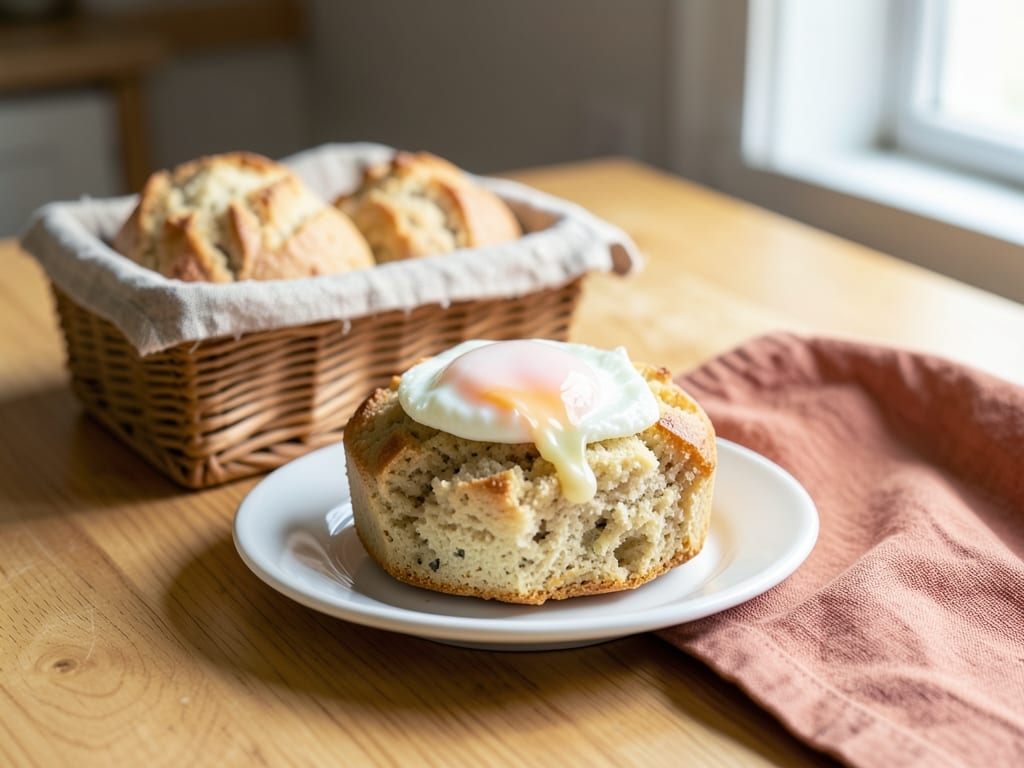
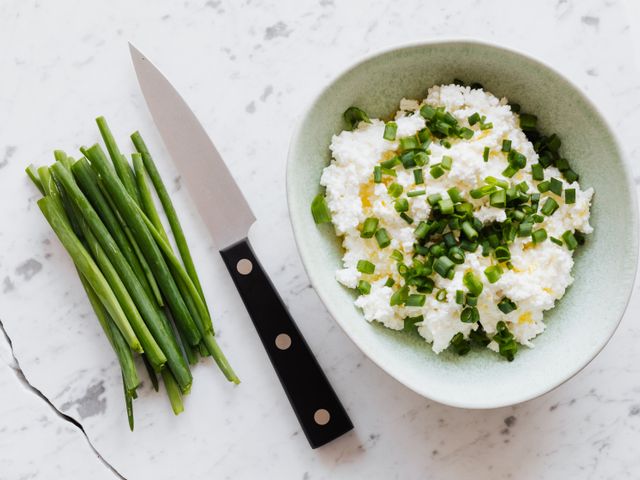
- Scones are best served warm, within 30 minutes of baking, with softened butter, tangy cheese spread, or alongside a warm soup or light salad.
+ Show details− Hide details
Ready when: scones have rested on the baking sheet for 5 minutes and are warm but handleable
Tip: Serving scones warm maximizes their tender, flaky texture; cooling on a rack prevents the bottoms from becoming soggy
Good to know
Tips
- The key to tender, flaky scones is keeping everything cold (butter, bowl, buttermilk, even your hands) and minimizing mixing. Every extra stir makes them tougher and denser.
- Caramelizing onions takes 30–40 minutes over medium-low heat, stirring occasionally. Plan ahead and make them 1–3 days before baking day to save time; they reheat gently or can be served cold from the refrigerator.
- For best results, work quickly when combining the dough. If your kitchen is warm, return the mixture to the freezer for 5 minutes after folding in the cheese and onions, before adding buttermilk.
- Serve scones warm, split in half, with softened butter or a tangy cheese spread. They are also delicious alongside a warm soup, salad, or as part of a charcuterie board. Room-temperature scones are less enjoyable, so time the baking to coordinate with serving.
Make ahead
Caramelized onions can be made 2–3 days ahead and stored in the refrigerator in an airtight container. Unshaped scone dough can be refrigerated in a covered bowl for up to 8 hours (the cold keeps the butter from melting). Shaped, unbaked scones can be frozen on the baking sheet (uncovered for 2 hours, then transferred to a freezer bag) for up to 1 month; bake from frozen, adding 2–3 minutes to the baking time.
Storage & reheating
Room temperature: Scones will stay fresh for 1 day in an airtight container on the counter. Refrigerator: Store in an airtight container for up to 3 days; reheat gently in a 300°F (150°C) oven for 8–10 minutes. Freezer: Baked scones can be frozen in an airtight container for up to 3 months; thaw at room temperature for 1 hour, or reheat directly from frozen in a 300°F (150°C) oven for 12–15 minutes.
Substitutions
- Gouda cheese → Gruyère or Emmental cheese. These Swiss cheeses have a similar nutty, complex flavor and melt slightly less than Gouda, creating a slightly firmer crumb. Use the same amount.
- buttermilk → Sour cream (6 tbsp) mixed with whole milk (6 tbsp). This mixture produces equally tender scones with a slightly richer, tangier flavor. Whisk together before adding to the dough.
- fresh thyme leaves → Fresh rosemary, finely chopped. Rosemary has a stronger, piney flavor that pairs beautifully with caramelized onions and cheese. Use the same amount, or reduce to ½ tablespoon if you prefer a milder herb flavor.
- caramelized onions → Caramelized shallots or leeks. Shallots and leeks (white and light green parts) offer a milder, more delicate sweetness and caramelize faster than onions. Use the same volume.