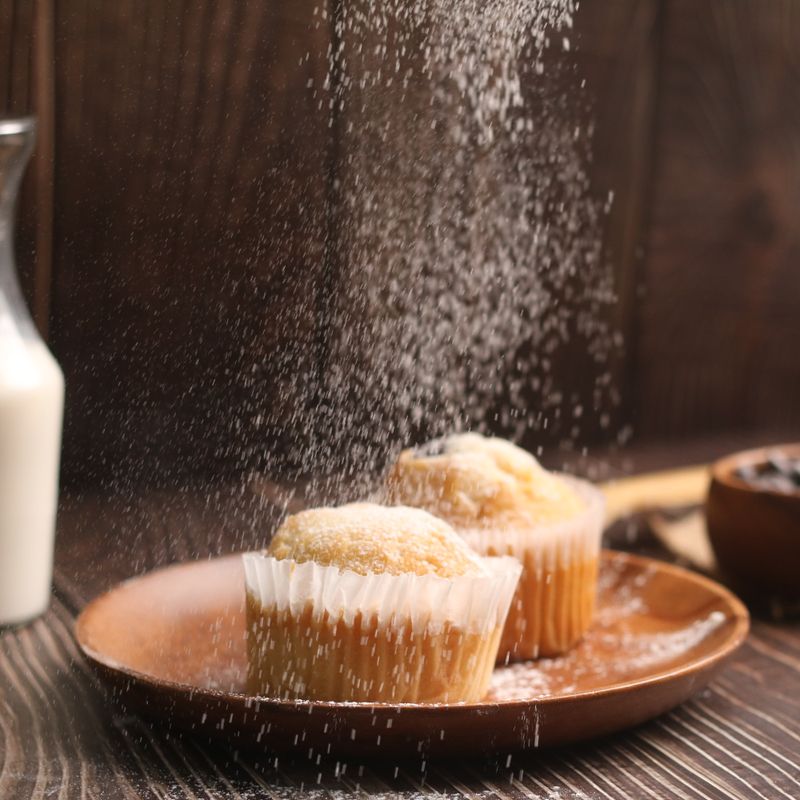
Fig and Anise Muffins
Tender honey-sweetened muffins studded with plump dried figs and scented with toasted anise seed and a little orange zest. Mediterranean flavors make them perfect for breakfast or an afternoon tea.
- Prep
- 20 min
- Cook
- 22 min
- Wait
- 25 min
- Total
- 1 hr 7 min
- Makes
- 12 standard muffins
Steps
Before you start
- Take the egg and milk out of the fridge 30 minutes ahead so they mix evenly and don't re-solidify the melted butter.
- Position an oven rack in the center and preheat to 375°F (190°C) while you prepare the figs.
- Measure flour by spooning it into the cup and leveling it off, or weigh it. Scooping packs in extra flour and makes dry muffins.
- Total time is about 67 minutes including a 10-minute fig soak and 15 minutes of cooling.
Prep pan and ovenOven 375°F / 190°C
- Position a rack in the center of the oven and preheat to 375°F (190°C).
- Line a 12-cup muffin tin with paper liners or grease the cups well.
+ Show details− Hide details
Ready when: Oven reaches 375°F (190°C) and the tin is ready.
Soak the figs
- Snip off the hard stems from the figs and cut the figs into ¼-inch (6 mm) pieces.
- Place them in a small bowl, pour over ½ cup (120 ml) just-boiled water, and let stand 10 minutes.
- Drain well in a sieve, pressing gently, and pat dry with a paper towel.
+ Show details− Hide details
Ready when: Figs feel soft and squishy when pressed, not leathery.
Tip: Drain thoroughly; extra water would thin the batter and make the muffins gummy.
Toast the anise
- Heat a small dry skillet over medium-low heat.
- Add the anise seed and toast, shaking the pan often, for 1 to 2 minutes.
- Tip onto a plate to stop the cooking, then crush lightly with a mortar and pestle or the flat side of a knife.
+ Show details− Hide details
Ready when: Seeds smell sweet and licorice-like and darken slightly; they should not smoke.
Tip: Anise burns quickly, so remove it from the pan as soon as it smells fragrant.
Mix the dry ingredients
- In a large bowl, whisk together the flour, brown sugar, baking powder, baking soda, salt, and crushed anise for 30 seconds, breaking up any brown sugar lumps.
- Add the drained figs (and walnuts, if using) and toss until every piece is coated in flour.
+ Show details− Hide details
Ready when: No visible lumps and the figs are separated and flour-dusted.
Tip: Coating the figs in flour keeps them from sinking to the bottom.
Whisk the wet ingredients
- In a medium bowl, whisk the honey with the room-temperature milk until the honey dissolves.
- Whisk in the egg, vanilla, and orange zest, then slowly whisk in the cooled melted butter until smooth.
+ Show details− Hide details
Ready when: Mixture is uniform with no streaks of honey or pooled butter.
Tip: If the butter is hot it will scramble the egg; let it cool 5 minutes first.
Combine gently
- Pour the wet mixture into the dry ingredients.
- Fold with a rubber spatula for about 12 strokes, just until no dry flour remains.
- The batter will be thick and slightly lumpy.
+ Show details− Hide details
Ready when: No dry flour pockets are visible; a few small lumps are fine.
Tip: Overmixing develops gluten and gives tough, tunneled muffins.
Fill the tin
- Divide the batter evenly among the 12 cups, using about ¼ cup (60 ml) per cup so each is filled about three-quarters full.
- Sprinkle the turbinado sugar over the tops.
+ Show details− Hide details
Ready when: Cups are evenly filled, rounded on top, and lightly sugared.
Bake the muffinsOven 375°F / 190°C
- Bake at 375°F (190°C) for 20 to 22 minutes, rotating the tin front to back after 12 minutes for even browning.
+ Show details− Hide details
Ready when: Tops are deep golden and spring back when pressed; a toothpick in the center comes out clean or with a few dry crumbs (fig jam smears do not count).
Tip: Avoid opening the oven in the first 12 minutes, or the muffins may not dome.
Cool and serve
- Let the muffins rest in the tin for 5 minutes, then lift them onto a wire rack.
- Cool at least 10 minutes more before serving; they are best slightly warm.
+ Show details− Hide details
Ready when: Muffins release easily and are warm, not hot, to the touch.
Tip: Don't leave them in the tin longer than 5 minutes or steam will make the bottoms soggy.
Good to know
Tips
- Don't skip draining and drying the soaked figs; excess water makes the batter heavy.
- Crush the anise just before using, since the aroma fades quickly once ground.
- Use a scoop for evenly sized muffins so they all bake in the same time.
- Brush the warm tops lightly with honey for a glossy, sweeter finish.
Make ahead
"Whisk the dry ingredients (without figs) and prepare the wet mixture separately the night before; cover the wet mixture and refrigerate, and keep the dry mixture covered at room temperature. In the morning, soak and add the figs, bring the wet mixture to room temperature, and mix and bake as directed."
Storage & reheating
"Room temperature in an airtight container with a paper towel for up to 2 days. Refrigerate up to 5 days. Freeze cooled muffins in a freezer bag for up to 3 months. Reheat thawed or refrigerated muffins at 325°F (160°C) for 8 to 10 minutes, or microwave one muffin for 15 to 20 seconds."
Substitutions
- dried figs (Mission or Calimyrna) → Chopped dried dates or apricots. Use the same weight; dates are sweeter, so reduce the brown sugar to ⅓ cup (65 g).
- anise seed → Fennel seed. Use the same amount for a milder, slightly sweeter licorice flavor.
- whole milk → Buttermilk or plain yogurt thinned with milk. Gives a tangier, softer crumb; the baking soda already accommodates the acidity.
- all-purpose flour → Half white whole wheat flour. Replace 125 g of the flour; add 1 tablespoon extra milk if the batter seems stiff.