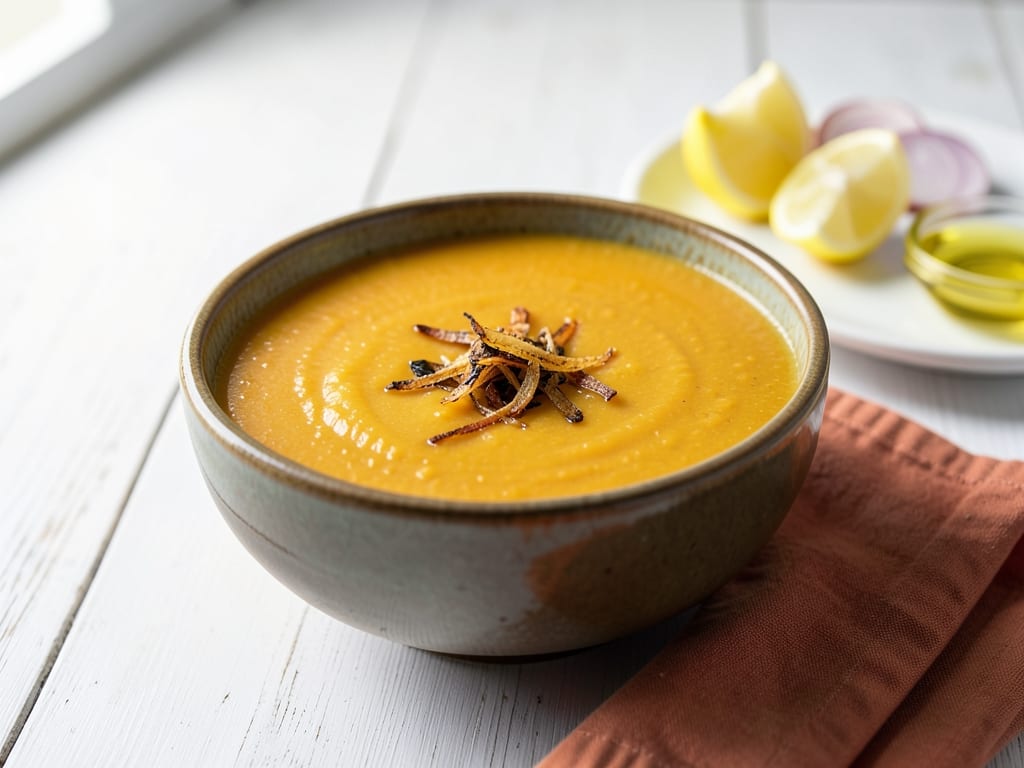
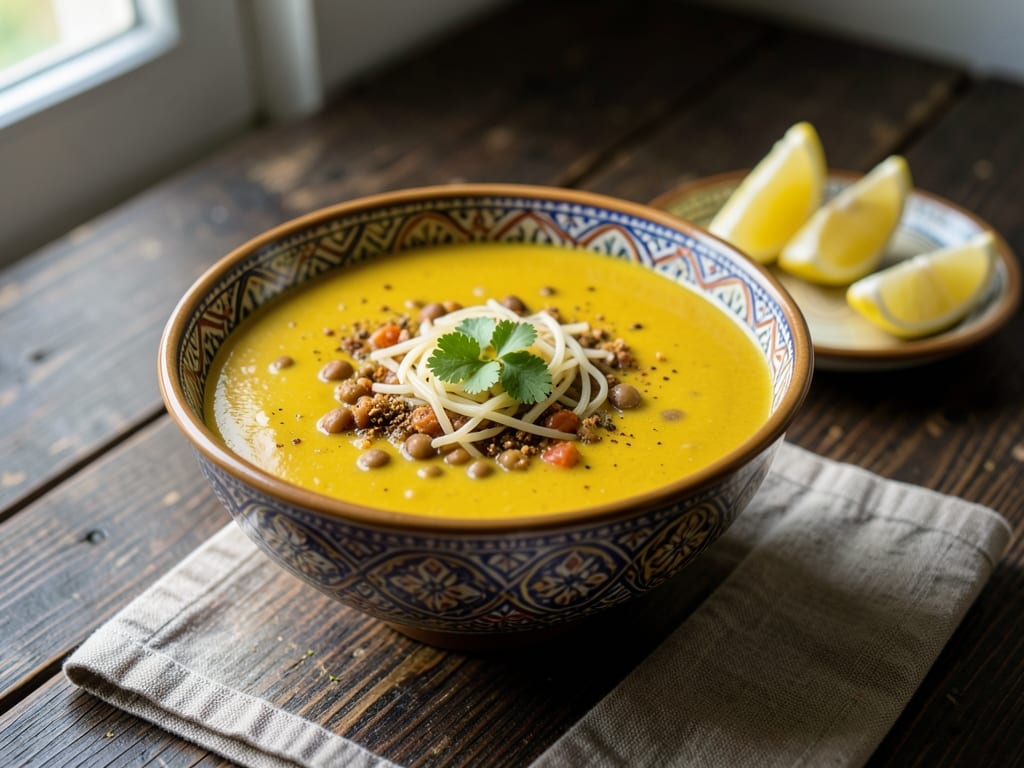
Ethiopian Red Lentil Misir Wot
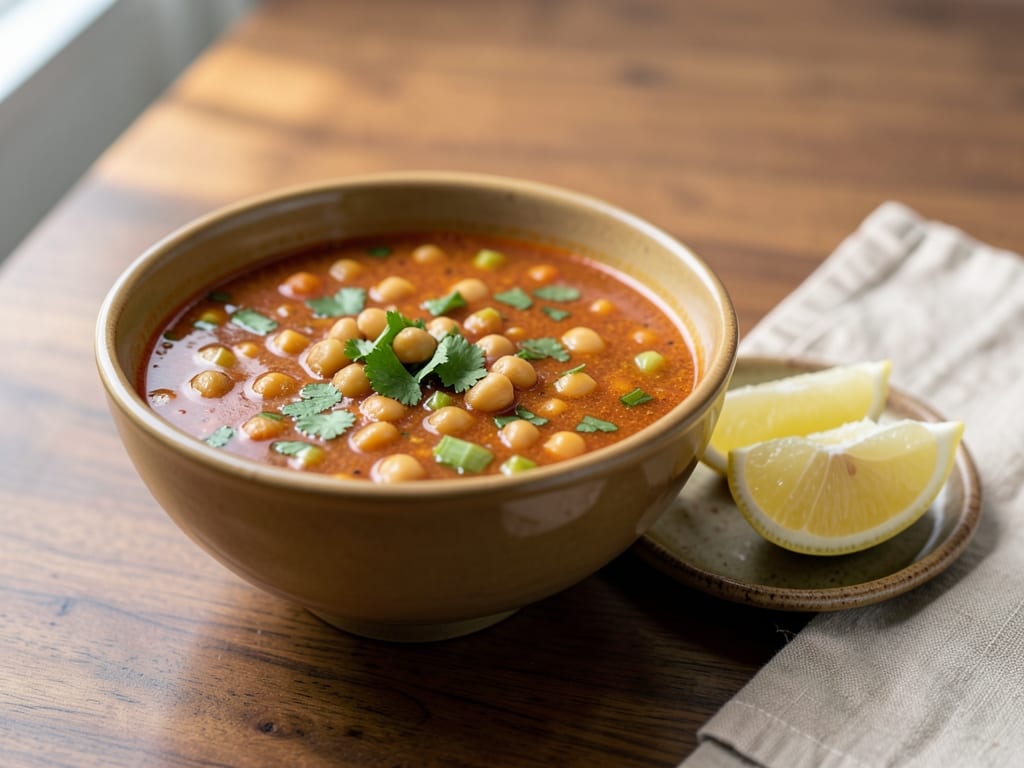
A fragrant, warming red lentil stew built on layers of toasted berbere spice, caramelized onions, and bright garlic-ginger notes. This Ethiopian staple is naturally plant-based, ready in under an hour, and deepens in flavor when made ahead. Traditionally served alongside injera flatbread to scoop up the silky, spiced sauce and tender lentils.
- Prep
- 15 min
- Cook
- 35 min
- Wait
- 5 min
- Total
- 55 min
- Makes
- About 3½ cups, 4 servings as a side with injera
Steps
Before you start
- Rinse red lentils in cold water until the water runs clear, then drain well
- Measure all ingredients before you start cooking—the process moves quickly once the lentils go in
- Have a wooden spoon ready for frequent stirring to prevent sticking
Bloom the spices
- Heat the oil in a large heavy-bottomed pot over medium heat.
- Once shimmering, add the berbere spice and stir constantly for 30 seconds to 1 minute until it becomes fragrant and the oil deepens in color.
- This blooming step releases the complex flavors of the spice blend.
+ Show details− Hide details
Ready when: Oil is visibly infused with spice color and smells rich and warm
Tip: Do not let the spices burn—keep stirring and watch closely. If the heat is too high, the spices will taste bitter.
Caramelize the onions
- Add the diced onion to the pot and stir well to coat with the spiced oil.
- Cook, stirring occasionally, for 8–10 minutes until the onions are soft, translucent, and beginning to turn golden at the edges.
- Lower the heat to medium-low if the bottom starts to brown too quickly.
+ Show details− Hide details
Ready when: Onions are soft, translucent, and have light golden edges
Tip: Stir every 2–3 minutes to ensure even cooking and prevent sticking on the bottom.
Add aromatics
- Stir in the minced garlic and grated ginger.
- Cook, stirring constantly, for 1–2 minutes until fragrant.
- The mixture should smell warm and bright.
+ Show details− Hide details
Ready when: Garlic and ginger are fragrant and no raw smell remains
Tip: Constant stirring prevents the garlic from scorching and ensures the ginger's heat distributes evenly.
Add lentils and liquid
- Pour in the rinsed red lentils and the water or broth.
- Stir well to combine, breaking up any clumps of lentils.
- Increase the heat to medium-high and bring the mixture to a gentle boil, then immediately reduce the heat to medium-low to maintain a steady simmer.
+ Show details− Hide details
Ready when: Liquid reaches a gentle boil with visible bubbles breaking the surface
Tip: Stir the lentils as they come to a boil to ensure they heat evenly and don't clump together.
Simmer until tender
- Maintain a gentle simmer, stirring occasionally (every 3–4 minutes) to prevent sticking on the bottom and to break up lentils gently as they soften.
- Cook for 18–22 minutes until the lentils have completely broken down into a thick, porridge-like consistency with no whole lentils remaining and the mixture coats the back of a spoon.
+ Show details− Hide details
Ready when: Lentils are completely dissolved into a thick sauce; no whole lentils visible, and the mixture is creamy and coats a spoon
Tip: If the wot begins to stick to the bottom before the lentils are tender, add a few tablespoons of water at a time. Red lentils release starch as they cook and can scorch if the heat is too high.
Season and finish
- Remove from heat.
- Stir in the salt and, if using, the cayenne pepper.
- Taste and adjust seasoning—the wot should taste warmly spiced, well-salted, and balanced.
- If you prefer more heat or more depth of spice, stir in additional cayenne or a pinch more berbere.
- Let the wot rest off the heat for 5 minutes to allow flavors to meld.
+ Show details− Hide details
Ready when: Wot is well-seasoned with a balanced, warm spice profile
Tip: Add salt at the end rather than during cooking; this prevents the lentils from toughening and allows you to taste and adjust to your preference.
Good to know
Tips
- For authentic presentation, mound the misir wot in a communal serving dish and tear pieces of injera flatbread to scoop and eat it alongside. Injera is essential to Ethiopian dining.
- If you have access to it, substitute some of the oil with niter kibbeh (spiced clarified butter). It transforms the dish and is worth seeking out at specialty shops or making ahead.
- The wot's consistency should be thick but pourable—somewhere between a stew and a dip. If it seems too thick after the 5-minute rest, stir in hot water or broth by the tablespoon until it reaches the desired texture.
- Misir wot is vegan and naturally plant-based, making it ideal for interfaith and inclusive meals. Pair it with fresh vegetables, avocado, hard-boiled eggs, or cheese on the side.
Make ahead
Misir wot actually improves when made 1–2 days ahead. The spices mellow and deepen, and the flavors integrate. Cool completely, then refrigerate in an airtight container for up to 4 days. Reheat gently on the stovetop over medium-low heat, stirring often and adding water or broth by the tablespoon if it has thickened too much.
Storage & reheating
Room temperature: up to 2 hours. Refrigerator: up to 4 days in an airtight container. Freezer: up to 3 months in a freezer-safe container; thaw overnight in the fridge before reheating. To reheat: warm gently on the stovetop over medium-low heat, stirring often and adding water or broth as needed to reach a stew-like consistency. Wot thickens as it cools and sits.
Substitutions
- Berbere spice blend → Homemade berbere blend (toast and grind 1½ tsp chili powder, ½ tsp fenugreek, ½ tsp coriander, ¼ tsp cardamom, ¼ tsp black pepper, 1 pinch clove, 1 pinch nutmeg, 1 pinch cinnamon, and ½ tsp salt together, then grind in a spice grinder or with a mortar and pestle). Homemade spice blend gives deeper, more authentic flavor if you have whole spices on hand. Adjust to taste, as homemade blends vary in intensity.
- Oil (preferably niter kibbeh or clarified butter, or neutral oil) → Niter kibbeh (Ethiopian spiced clarified butter: melt 4 oz butter over low heat, add 1 small pinch clove, 1 small pinch cardamom, 1 small piece cinnamon stick, ¼ tsp coriander seed, ¼ tsp fenugreek seed, and a small pinch of nutmeg; let infuse for 10 minutes off heat, then strain through cheesecloth). Niter kibbeh is the traditional fat and adds aromatic depth. If making it fresh, prepare it ahead and let it cool before using in the recipe.
- Water or vegetable broth → Half vegetable or chicken broth and half water, or all broth for deeper savory notes. Broth adds richness and can make the wot more savory, but water is traditional and allows the spices to shine. Avoid salted broth; salt at the end instead.
- Red lentils → Yellow lentils (yellow split peas or moong dal), using the same weight; these take slightly longer to break down (22–25 minutes) and will be a different color. Yellow lentils are slightly earthier and create a less orange appearance, but cook similarly. Red lentils are traditional and give the distinctive warm color.