Dominican Locrio de Pollo
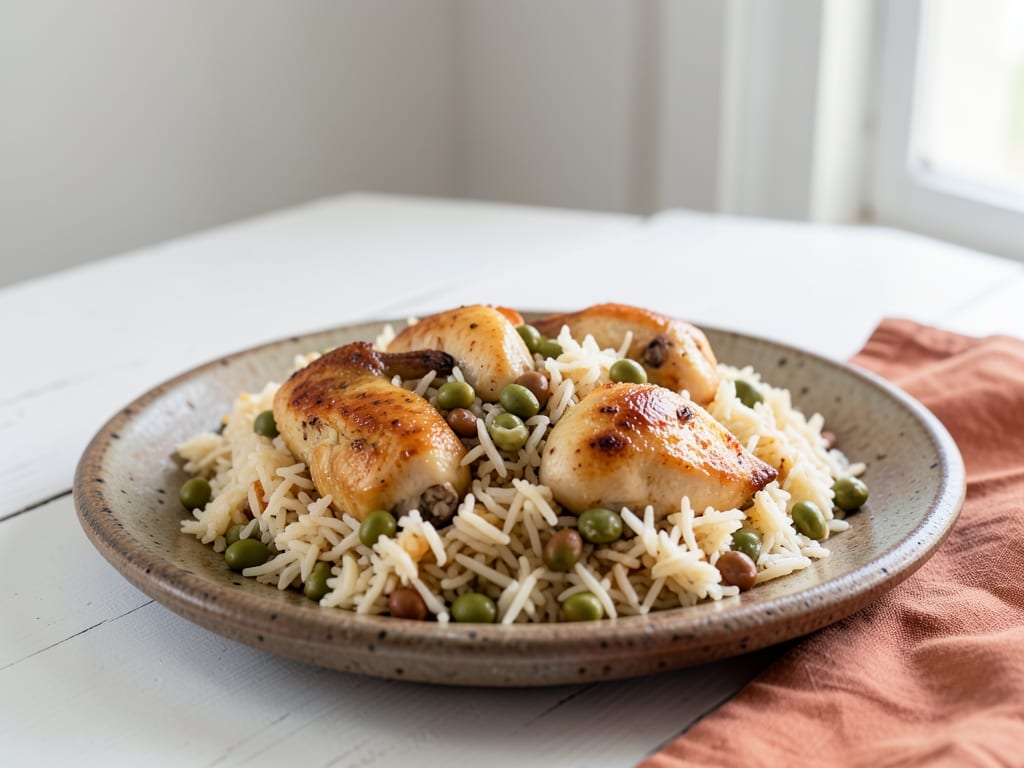
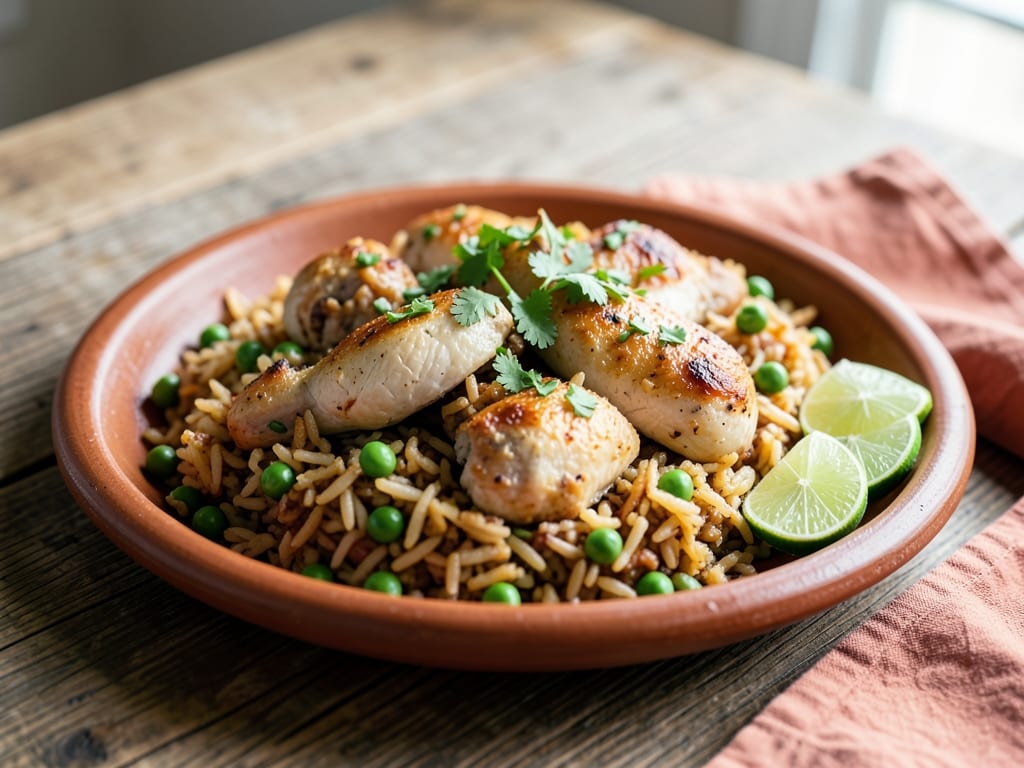
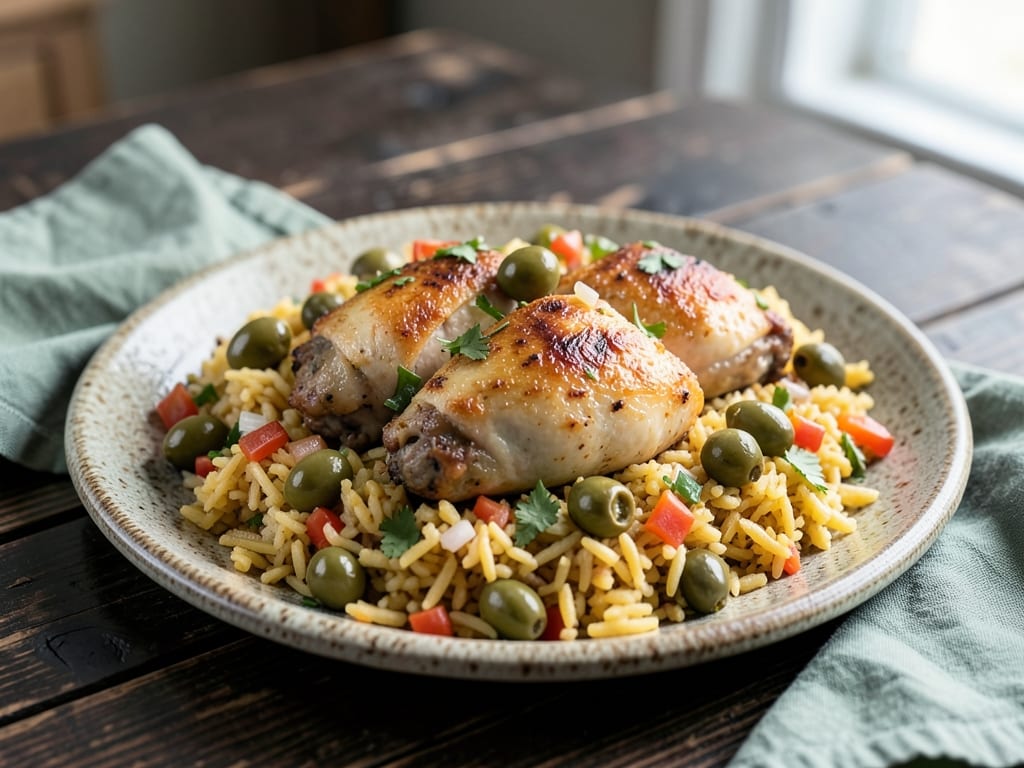
A savory Dominican one-pot rice dish with bone-in chicken, annatto oil, sofrito aromatics, and pimento-stuffed olives. The rice cooks in chicken broth infused with garlic, cumin, and oregano, with the chicken resting on top, steaming gently until tender. Finished with capers for a bright, briny accent. Served warm as a complete, hearty meal.
- Prep
- 15 min
- Cook
- 48 min
- Wait
- 5 min
- Total
- 1 hr 8 min
- Makes
- 6 servings (about 4 cups total)
Steps
Before you start
- Use store-bought annatto oil if available to skip the infusion step and save time
- Chop all vegetables before starting to cook (mise en place) so you can work quickly without interruption
- Pat the chicken completely dry with paper towels for better browning
- Have chicken broth at room temperature or warm to avoid shocking the pot temperature
Infuse oil with annatto
- In a large heavy-bottomed pot (3-quart / 2.8-liter or larger), combine olive oil and annatto seeds over medium heat.
- Heat, stirring occasionally, until the oil becomes deep reddish-orange and the seeds darken and smell fragrant, about 2–3 minutes.
- Watch carefully to avoid burning the seeds, which will turn bitter.
- Strain through a fine-mesh strainer into the pot, discarding the seeds.
- Return the pot to the stove.
+ Show details− Hide details
Ready when: Oil is deep reddish-orange and fragrant; seeds are dark but not scorched
Tip: Don't let the oil smoke or the annatto will taste acrid. Keep the heat moderate and watch constantly.
Brown chicken pieces
- Increase heat to medium-high.
- Season the dried chicken pieces generously on both sides with salt and pepper.
- Working in batches if needed to avoid crowding the pot, place chicken pieces skin-side down first in the annatto oil.
- Brown for 4–5 minutes until the skin is golden and crispy, without moving them.
- Flip and brown the second side for 3–4 minutes until golden.
- The meat won't be cooked through; you're just developing a flavorful crust.
- Transfer browned chicken to a clean plate.
+ Show details− Hide details
Ready when: Skin is deep golden-brown and crispy on both sides
Tip: Don't move the chicken constantly. Let each side sit undisturbed for the full time so the skin develops color and texture. Dry chicken browns much better than wet chicken, so the initial patting is essential.
Cook onion, peppers, and garlic
- Reduce heat to medium.
- In the same pot with the remaining annatto oil, add the diced onion and both bell peppers.
- Stir and cook, stirring occasionally (not constantly), for about 4–5 minutes until the vegetables are soft and beginning to turn translucent.
- The onion should look glossy.
- Add the minced garlic and cook, stirring, for 1 more minute until the raw garlic smell is gone and the mixture is fragrant.
+ Show details− Hide details
Ready when: Onion and peppers are soft and translucent; garlic is fragrant without any raw smell
Tip: Let the vegetables settle and caramelize slightly without stirring constantly; this builds deeper flavor. It's fine if the bottom of the pot browns lightly.
Toast tomato paste
- Stir in the tomato paste and cook, stirring constantly, for about 2 minutes.
- The paste will darken and deepen in color as it caramelizes, releasing rich umami flavors.
- Make sure it's well distributed throughout the vegetables and not sticking to the bottom of the pot.
+ Show details− Hide details
Ready when: Tomato paste has darkened by several shades and smells concentrated and sweet
Tip: Constant stirring prevents the tomato paste from burning or catching on the bottom. This brief step is crucial for building complexity and avoiding a raw tomato taste.
Toast rice briefly
- Add the rice to the pot and stir constantly for 2–3 minutes.
- The rice grains should become glossy, coated in the annatto oil and vegetable mixture, and start to turn slightly translucent at the edges.
- Some grains may stick lightly to the bottom, which is fine and adds flavor.
+ Show details− Hide details
Ready when: Rice grains look slightly translucent at the tips; no lumps or dry patches remain
Tip: Toasting rice in fat is a hallmark of Spanish and Dominican rice dishes. It changes the texture and prevents the finished dish from becoming mushy. Keep stirring to avoid burning.
Simmer rice with chickenOven 165°F / 75°C
- Pour in the chicken broth carefully (it may steam).
- Add the bay leaf, oregano, and cumin.
- Stir gently to combine, scraping up any browned bits stuck to the bottom of the pot.
- Nestle the browned chicken pieces on top of the rice without submerging them; they'll steam as the rice cooks.
- Increase heat to medium-high and bring the liquid to a boil, uncovered, for 1–2 minutes until you see steam and gentle bubbling.
- Immediately reduce heat to low, cover with the lid, and simmer without stirring for 20–25 minutes until the rice is tender, the liquid is mostly absorbed, and the chicken reaches an internal temperature of 165°F (74°C) in the thickest part of a thigh.
+ Show details− Hide details
Ready when: Rice is tender and fluffy; liquid is absorbed; no excess broth remains; chicken is opaque and reads 165°F (74°C) at the thickest part
Tip: Do not stir the rice during simmering. This preserves the texture and prevents grains from breaking apart and becoming mushy. The chicken rests on top and steams; it's fine if some parts are partially submerged.
Rest, fold in olives and capers
- Remove from heat and let stand, covered, for 5 minutes.
- This allows any remaining liquid to be absorbed and the flavors to meld.
- Remove the lid carefully (hot steam will escape).
- Discard the bay leaf.
- Using a fork, gently fold in the pimento-stuffed olives and drained capers while fluffing the rice.
- Taste and adjust seasoning with additional salt and pepper as needed.
- Transfer to a serving bowl or serve directly from the pot.
+ Show details− Hide details
Ready when: Rice is fluffy and light; olives and capers are evenly distributed throughout
Tip: The 5-minute rest is crucial and shouldn't be skipped. It makes a noticeable difference in texture. Use a fork to fluff, not a spoon, which can break grains and make the dish heavy.
Good to know
Tips
- Never stir the rice after it begins simmering. This is the secret to keeping grains separate and fluffy. Stirring releases starch and makes the dish mushy and gluey.
- Adjust liquid if needed: If rice is still firm after 25 minutes, add a few tablespoons of water, cover again, and simmer 2–3 minutes longer. If it's mushy, you may have added too much broth or covered the pot before it came to a boil.
- For more heat, add ¼–½ teaspoon cayenne pepper to the broth in Step 6, or nestle a whole Scotch bonnet or habanero pepper in the rice (remove before serving).
- For deeper, more complex flavor, make a quick sofrito: blend 1 small onion, ½ red pepper, 2 garlic cloves, and ¼ cup fresh cilantro with 3 tablespoons water into a paste, then sauté this paste in the annatto oil for 2 minutes before adding the diced vegetables. The rest of the recipe stays the same.
Make ahead
You can chop and measure all vegetables and dry ingredients up to 1 day ahead, storing them in airtight containers in the refrigerator or on a prepped plate. The locrio is best served fresh, but see storage below for leftovers.
Storage & reheating
Room temperature: up to 2 hours. Refrigerator: up to 3 days in an airtight container. Freezer: up to 2 months in an airtight container. Reheat on the stovetop over medium-low heat with a splash of broth or water, covered, until warmed through (about 10 minutes). Alternatively, microwave covered with a damp paper towel for 2–3 minutes per serving, stirring halfway through.
Substitutions
- Annatto seeds → Store-bought annatto oil or achote oil (use 3 tablespoons). Skip Step 1 and proceed directly to browning the chicken. This saves time and is more convenient for busy weeknights.
- Red bell pepper → Yellow, orange, or additional green bell pepper. Use any combination of bell peppers based on availability or preference. Color choice affects visual appeal but not the core flavor.
- Bone-in, skin-on chicken pieces (thighs, drumsticks, or mixed) → Bone-in, skin-on chicken breasts (will cook in about 15 minutes instead of 20–25 minutes) or all thighs. Thighs and drumsticks stay more tender and flavorful; breasts are leaner but can dry out if overcooked. Adjust final simmer time accordingly.
- Pimento-stuffed green olives → Castelvetrano olives, kalamata olives, or any green brined olives. Pimento-stuffed olives are traditional for their mild, slightly sweet character. Other varieties will shift the flavor slightly.