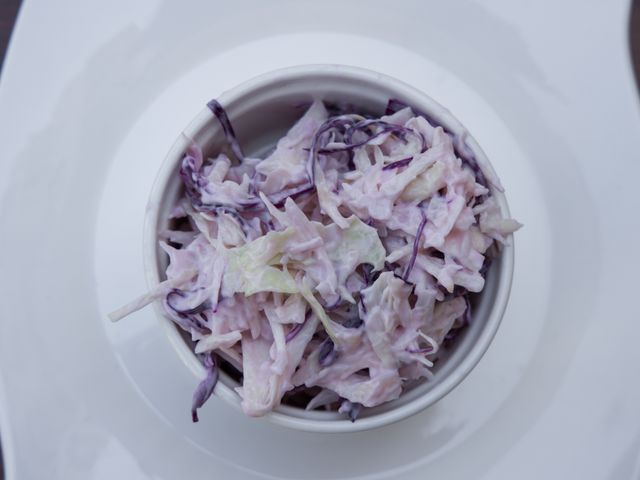
Creamy Coleslaw with Egg and Vinegar
A silky, tangy coleslaw bound with an emulsified egg yolk dressing. Shredded cabbage and carrots are tossed with a homemade vinegar dressing made from egg yolks, sugar, and mustard, creating a rich coating that's more substantial than mayo-based versions but lighter than pure cream slaws. Serve cold as a side dish or alongside barbecue and fried chicken.
- Prep
- 20 min
- Cook
- —
- Wait
- 30 min
- Total
- 50 min
- Makes
- 6 servings (about 5 cups)
Steps
Before you start
- Have all ingredients at room temperature
- Use a sharp knife or mandoline to shred cabbage and carrots thinly and evenly
- Ensure bowls and utensils are clean and free of oil for the egg yolk emulsion to work properly
Shred and salt vegetables
- On a cutting board, shred the green cabbage as thinly as possible—you want fine, delicate strands that will absorb the dressing.
- Peel the carrots and shred them to match the cabbage thickness.
- Place the shredded vegetables in a large mixing bowl and sprinkle with 1½ teaspoons of kosher salt.
- Toss gently but thoroughly so the salt is distributed evenly.
- Let the vegetables sit for 10 minutes; this releases some of their water and helps them soften slightly, creating a better texture for the final coleslaw.
+ Show details− Hide details
Ready when: Cabbage looks slightly wilted and a little liquid pools at the bottom of the bowl
Tip: Use a mandoline slicer or the shredding blade of a food processor for uniform, thin pieces that dress evenly.
Prepare dressing base
- In a small mixing bowl, whisk together the 2 room-temperature egg yolks, 2 tablespoons sugar, and ½ teaspoon dry mustard powder.
- Whisk vigorously for about 30 seconds until the mixture is pale and slightly thick—this aeration helps the emulsion form.
- The mixture should look lighter in color and hold a slight ribbon when you lift the whisk.
+ Show details− Hide details
Ready when: Mixture is pale, airy, and slightly thickened
Tip: Room-temperature eggs emulsify much more easily than cold ones, so don't skip this step. Whisking well also helps trap air and stabilize the emulsion.
Add vinegar and whisk
- Slowly add the ¼ cup white vinegar to the egg yolk mixture in a thin stream while whisking constantly.
- This gradual addition is crucial for the emulsion to take hold.
- Whisk continuously until the mixture becomes creamy and homogenous—it should look like thin, silky mayonnaise but with a sharper tang.
- This should take about 1–2 minutes of steady whisking.
+ Show details− Hide details
Ready when: Dressing is smooth, creamy, and uniform in color with no visible separation
Tip: If the mixture looks oily or breaks, it has split. Start over with a fresh egg yolk in a clean bowl, then slowly whisk in the split mixture a spoonful at a time to rescue it.
Finish dressing with butter
- Remove the bowl from heat and whisk in the 2 tablespoons of cold butter, one piece at a time, whisking well after each addition.
- The cold butter will firm up the emulsion slightly and add a subtle richness.
- Once all the butter is incorporated, taste the dressing and add a pinch of black pepper and a tiny pinch of salt if needed.
- The dressing should be creamy, tangy, and balanced between the vinegar's sharpness and the butter's richness.
+ Show details− Hide details
Ready when: Dressing is smooth, creamy, and tastes well-balanced between tangy and rich
Tip: Cold butter helps stabilize the emulsion further. If your kitchen is very warm, make sure the butter is freshly cut from the refrigerator.
Drain vegetables and combine
- Pour off any accumulated liquid from the salted vegetables (don't squeeze them—let the liquid drain naturally).
- Transfer the damp vegetables to a clean large mixing bowl.
- Pour the creamy vinegar dressing over the vegetables and toss gently but thoroughly, making sure every strand of cabbage and carrot is coated.
- Use a folding motion rather than vigorous stirring to avoid breaking the vegetables or damaging the delicate dressing.
+ Show details− Hide details
Ready when: All vegetables are evenly coated with the creamy dressing and no puddles of liquid remain at the bottom
Tip: Draining rather than squeezing keeps the vegetables crisp and prevents the dressing from becoming watery.
Chill and serve
- Transfer the dressed coleslaw to a serving bowl and refrigerate for at least 20 minutes before serving.
- This chilling time allows the flavors to meld and the coleslaw to achieve the ideal cold, creamy texture.
- The coleslaw will continue to absorb the dressing as it sits, so if it seems a bit loose right after dressing, it will thicken slightly in the refrigerator.
+ Show details− Hide details
Ready when: Coleslaw is chilled and the creamy dressing has set slightly
Tip: If the coleslaw sits for more than a few hours, a thin layer of liquid may pool at the bottom. Simply pour it off before serving, or stir it back in for a looser consistency.
Good to know
Tips
- For egg safety: Use pasteurized eggs from the store, or choose a pasteurized mayo-based version (see substitutions) if serving to vulnerable populations.
- The key to a successful emulsion is adding the vinegar slowly and whisking constantly. Rushing this step is the most common reason the dressing breaks.
- This coleslaw pairs beautifully with barbecued ribs, pulled pork, fried chicken, and seafood. It's also excellent in sandwiches or alongside grilled fish.
- For a slightly thinner dressing, whisk in 1–2 tablespoons of cold water or milk after the dressing is complete. For a thicker, more custard-like texture, reduce the vinegar to 3 tablespoons.
Make ahead
Prepare the coleslaw up to 8 hours ahead. Store it covered in the refrigerator. The flavors deepen and improve after 4–6 hours. Stir gently before serving and drain off any excess liquid if needed.
Storage & reheating
Refrigerate in an airtight container for up to 5 days. The dressing will continue to soften the vegetables, so the texture becomes creamier and more tender over time. The coleslaw does not freeze well due to the raw egg dressing and vegetable texture changes. For raw egg safety: use pasteurized eggs if anyone in your household is pregnant, very young, elderly, or immunocompromised. Alternatively, use store-bought mayonnaise in place of the homemade egg yolk dressing (see substitutions).
Substitutions
- large egg yolks → ¼ cup good-quality mayonnaise. Replaces the egg yolk dressing entirely. Mix mayo with 2 tablespoons sugar, ½ teaspoon dry mustard, and 2 tablespoons white vinegar for a similar creamy-tangy result. Whisk until smooth and use the same amount.
- white vinegar or distilled vinegar → Apple cider vinegar or rice vinegar. White vinegar is sharp and clean; apple cider vinegar adds mellow sweetness, and rice vinegar is milder. Use the same amount but taste and adjust sugar if needed.
- green cabbage, cored → Red cabbage or a 50/50 mix of green and red. Red cabbage is earthier and slightly sweeter; it will tint the dressing pink. The flavor profile remains excellent.
- unsalted butter, cold → Omit or use cold heavy cream (1 tablespoon). Omitting butter makes a leaner dressing; adding cream creates a richer, more custardy texture. Both are valid variations.