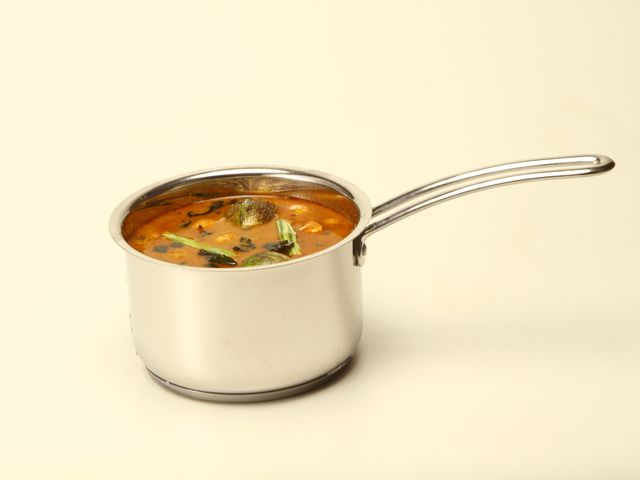
Corn, Zucchini and Bell Pepper Chowder
A creamy, vegetable-packed chowder loaded with sweet corn kernels, tender zucchini, and colorful bell pepper. Made on the stovetop with a silky roux-thickened vegetable broth that brings everything together. This is comfort food at its best—hearty enough for dinner yet light enough to pair with crusty bread or a salad.
Steps
Before you start
- Chop all vegetables before you begin cooking—mise en place makes the process flow smoothly
- Use a large 6-quart pot so there is room for all ingredients without crowding
- Have vegetable broth measured and ready to pour
- Bring heavy cream and butter to room temperature so they incorporate smoothly and won't cool down the finished chowder
Prepare the vegetables
- Dice the onion into ¼-inch pieces.
- Mince the garlic cloves.
- Dice the celery stalks into ¼-inch pieces about the same size as the onion.
- Remove the core and seeds from the bell pepper and dice it into ¼-inch pieces.
- Trim the zucchini and slice into ¼-inch-thick half-moons.
- Peel the potatoes and cut them into ½-inch cubes.
- If using fresh corn, carefully cut the kernels from the cob by holding the ear upright on a cutting board and slicing downward along the sides.
- If using frozen corn, thaw it if desired, though it can go straight into the pot still frozen.
- Set all vegetables aside, preferably organized by type.
+ Show details− Hide details
Tip: Uniform vegetable sizes ensure even cooking. Aim for consistency across all pieces so everything finishes at the same time.
Sauté the aromatics
- Pour the olive oil into a 6-quart pot and place it over medium heat.
- Once the oil is shimmering (about 1 minute), add the diced onion and celery along with a small pinch of salt and pepper.
- Sauté for 5 minutes, stirring occasionally with a wooden spoon, until the onion becomes soft and translucent.
- Add the minced garlic and cook for 1 minute more, stirring constantly, until fragrant.
+ Show details− Hide details
Ready when: Onion is soft and translucent; garlic is fragrant and light golden, not browned.
Tip: Medium heat prevents garlic from burning. If it scorches, it will taste bitter and cannot be salvaged—watch it closely during the final minute.
Make the roux with flour
- Sprinkle the flour over the sautéed vegetables and stir constantly with your wooden spoon for 2 minutes.
- The mixture will look dry at first, then gradually absorb the flour as you stir.
- Continue until the flour is completely absorbed and smells toasted and nutty—this cooks out any raw flour taste and develops the roux.
+ Show details− Hide details
Ready when: Flour is fully incorporated; the mixture has a toasted, nutty aroma.
Tip: This roux is the thickening agent that gives this chowder its silky, luxurious texture. Don't rush this step or skip it—it makes a real difference.
Add the vegetable broth
- Slowly pour the vegetable broth into the pot while stirring constantly for about 1-2 minutes.
- Stir thoroughly to ensure the roux and broth blend smoothly with no lumps forming.
- Drop the bay leaf into the pot.
- Increase the heat to medium-high and bring the mixture to a gentle simmer—you should see small bubbles breaking the surface regularly.
+ Show details− Hide details
Ready when: Mixture is simmering gently and has thickened slightly; the broth coats the back of a spoon.
Tip: Stir constantly while adding broth to prevent lumps. If small lumps do form, press them against the side of the pot with your spoon or pass the liquid through a fine-mesh strainer.
Add potatoes and zucchini, simmer
- Stir the diced potatoes and zucchini into the broth until everything is evenly distributed.
- Bring the chowder back to a gentle simmer.
- Reduce the heat to medium-low and simmer uncovered for 15 minutes, stirring occasionally (about every 3-4 minutes).
- The potatoes should become fork-tender but still hold their shape—you should be able to pierce a piece easily with a fork, but it should not fall apart when you stir.
+ Show details− Hide details
Ready when: Potatoes are fork-tender; zucchini is soft but still holds its shape.
Tip: Stir occasionally to prevent sticking and ensure even cooking, but avoid constant stirring, which can break down the delicate vegetables.
Add corn and bell pepper
- Add the corn kernels and diced bell pepper to the pot and stir well to combine.
- Return the chowder to a simmer over medium heat and cook for 10 minutes more, stirring occasionally, until the corn is heated through and tender, and the bell pepper is soft but not mushy.
+ Show details− Hide details
Ready when: Corn kernels are tender and heated through; bell pepper is soft; all vegetables are fully cooked.
Tip: Taste a piece of corn and pepper to check texture. They should be tender but not mushy—don't overcook at this stage.
Add cream, butter, and final seasonings
- Remove the pot from heat.
- Add the butter and heavy cream to the pot.
- Stir constantly for about 1-2 minutes until the butter is completely melted and the cream is fully incorporated into the broth, creating a silky, rich texture.
- Add the fresh thyme leaves (strip them from the stems if you're using whole sprigs).
- Remove the bay leaf from the pot using tongs or a spoon—make sure not to leave any pieces behind.
- Taste the chowder and season with salt and pepper—start with ¾ teaspoon salt and ¼ teaspoon pepper, then adjust to your preference.
- Return the pot to low heat and warm through gently for 1-2 minutes, stirring gently.
- Do not allow the chowder to boil.
+ Show details− Hide details
Ready when: Chowder is hot throughout and steaming; butter and cream are fully incorporated; no bay leaf is visible.
Tip: Never boil a cream-based soup after adding the cream and butter. High heat can cause the cream to separate and the butter to break, giving the soup a grainy, broken texture that cannot be fixed.
Serve
- Ladle the chowder into bowls and serve immediately while hot.
- Serve with crusty bread, oyster crackers, or alongside a fresh green salad for a complete meal.
Good to know
Tips
- The roux is essential: don't skip it or rush it. It thickens the chowder beautifully and adds subtle depth that plain broth cannot achieve.
- Keep the heat moderate during simmering. High heat causes vegetables to break down too quickly and makes the soup become mushy rather than chunky.
- Add vegetables in stages by cooking time: hearty potatoes go in first with zucchini, then quick-cooking corn and pepper join later. This ensures all vegetables reach perfect tenderness at the same moment.
- Taste as you season. Salt needs are individual, and you can always add more but cannot take it out once added.
Make ahead
This chowder actually tastes better the next day as the flavors have time to meld. Make it up to 2 days ahead and store in the refrigerator in an airtight container. You can also freeze it up to 3 months (ideally before adding the cream and butter for best texture, then add them when reheating).
Storage & reheating
Room temperature: up to 2 hours in a covered pot. Refrigerator: up to 3 days in an airtight container. Freezer: up to 3 months (freeze before adding cream and butter if possible, then stir in fresh cream and butter when reheating for best texture). To reheat: place on the stovetop over medium-low heat, stirring occasionally, until steaming. Add a splash of vegetable broth or milk if the chowder has thickened too much.
Substitutions
- sweet corn kernels, fresh or frozen → Canned or fresh corn kernels work equally well; frozen corn is excellent too and requires no thawing before adding.. Corn consistency may vary slightly but flavor and texture of the finished chowder will be equally good.
- heavy cream or heavy whipping cream → Whole milk or half-and-half (heavy cream is richer; whole milk makes a lighter, less rich version). The chowder will be less creamy with milk, but still delicious. Add 1-2 tablespoons of butter if using milk to add richness.
- red bell pepper → Any color of bell pepper (yellow, orange, green) or a combination of colors; red peppers are naturally sweeter. Green peppers will make the chowder taste slightly more vegetal; yellow and orange are mild and sweet.
- zucchini → Yellow summer squash, crookneck squash, or other summer squashes in the same amount. All summer squashes have similar mild flavor and texture in chowder; use whichever is available.
- russet potatoes → Yukon Gold potatoes or other waxy potatoes (avoid starchy Russets if you want potatoes to hold their shape better). Yukon Gold potatoes are buttery and won't become grainy; they hold their shape better than Russets during simmering.