Chilean Sopaipilla Dough (Sopaipillas con Zapallo)
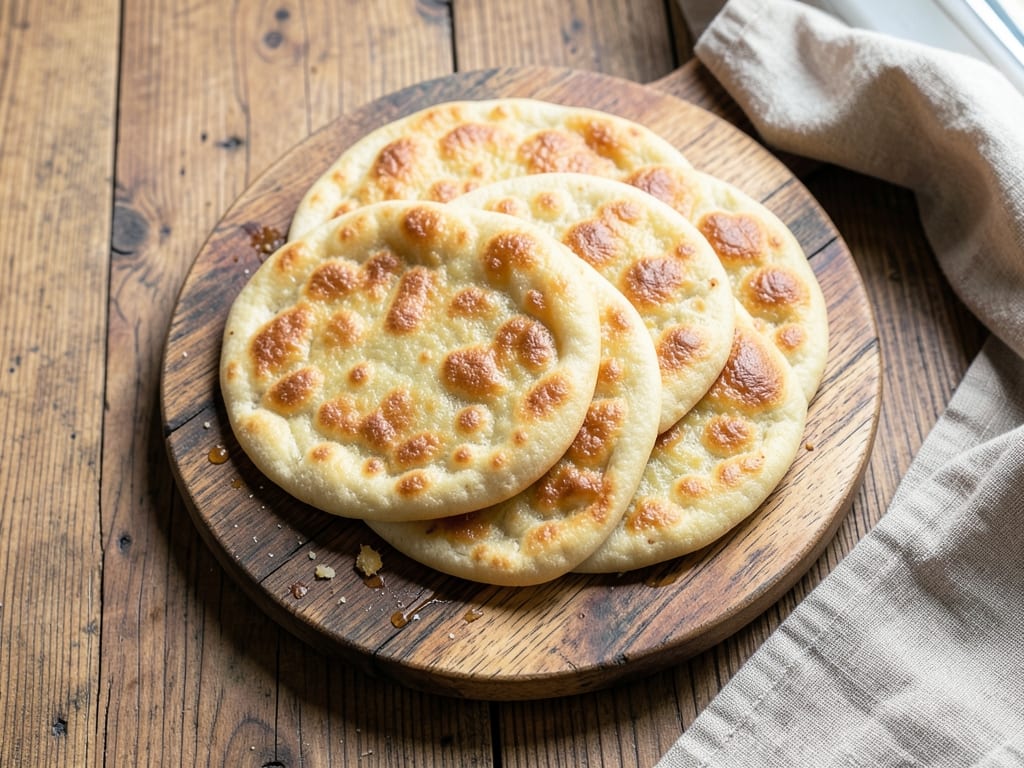
Classic Chilean fried pumpkin-squash flatbreads: a soft, supple dough enriched with lard and cooked squash that puffs into golden, blistered rounds with a tender, slightly chewy bite. Serve with pebre, or dunk in chancaca syrup.
- Prep
- 30 min
- Cook
- 35 min
- Wait
- 40 min
- Total
- 1 hr 45 min
- Makes
- About 16 sopaipillas (4-inch / 10 cm rounds)
Steps
Before you start
- Read the timing: the squash must be cooked and cooled to warm, and the dough needs a 30-minute rest before rolling.
- Set up a landing station for frying: a wire rack set over a baking sheet lined with paper towels.
- Have a deep-fry or instant-read thermometer ready; oil temperature is the key to puffed, non-greasy sopaipillas.
- Use a dry, mild-flavored squash such as kabocha or butternut for the best texture; watery squash makes sticky dough.
Simmer the squash
- Put the squash cubes and 3 cups (720 ml) water in a 3-quart saucepan.
- Bring to a boil over medium-high heat, then reduce to medium-low and simmer, partly covered, for 15 minutes.
+ Show details− Hide details
Ready when: A fork slides into a cube with no resistance and the edges begin to fall apart.
Tip: Don't drown the squash in extra water; too much water makes a wetter puree and sticky dough.
Mash and cool
- Reserve ½ cup (120 ml) of the cooking water, then drain the squash very well in a colander for 2 minutes.
- Return to the pot and mash until completely smooth, or blend in a food processor.
- You need about 1¼ cups (300 g) puree.
- Let it cool for 10 minutes until warm, not hot.
+ Show details− Hide details
Ready when: Puree is smooth with no lumps and warm to the touch (about 100°F / 38°C).
Tip: If the puree looks watery, stir it over low heat for 2 minutes to steam off moisture.
Mix dry ingredients
- In a large bowl whisk together the flour, baking powder and salt.
- Make a well in the center.
+ Show details− Hide details
Ready when: Baking powder and salt are evenly distributed with no clumps.
Form the dough
- Add the warm puree and melted lard to the well.
- Stir with a wooden spoon or your hand until a shaggy dough forms.
- If it is crumbly and dry, add the reserved cooking water 1 tablespoon at a time, up to 4 tablespoons (60 ml).
+ Show details− Hide details
Ready when: All the flour is hydrated and the dough holds together in a rough ball.
Tip: Add water sparingly; the dough should be soft but not sticky.
Knead briefly
- Turn the dough onto a lightly floured surface and knead for 3 minutes, just until smooth and elastic.
- Shape into a ball, cover with the upturned bowl or a damp towel.
+ Show details− Hide details
Ready when: Dough is smooth, springs back slowly when poked, and doesn't stick to your hands.
Tip: Don't over-knead; tough dough won't puff as tenderly.
Rest the dough
- Let the covered dough rest at room temperature for 30 minutes so the gluten relaxes and rolling is easy.
+ Show details− Hide details
Ready when: Dough feels softer and a gentle press leaves a slow-to-fill dent.
Tip: Use this time to set up the frying station.
Roll and cut
- Divide the dough in half.
- On a lightly floured surface, roll one half to ⅛ inch (3 mm) thick.
- Cut 4-inch (10 cm) rounds, then prick each round 3 or 4 times with a fork.
- Gather scraps, rest 5 minutes, re-roll once, and cut.
- Repeat with the second half to make about 16 rounds.
- Lay them on a floured tray without overlapping.
+ Show details− Hide details
Ready when: Rounds are an even ⅛ inch thick; you can faintly see your work surface's color through the edge.
Tip: Pricking keeps them from ballooning into hollow pockets, giving flat, evenly puffed rounds.
Heat the oilOven 360°F / 180°C
- Pour the oil into a 5-quart Dutch oven (about 2 inches / 5 cm deep).
- Heat over medium-high heat to 360°F (182°C).
+ Show details− Hide details
Ready when: Thermometer reads 360°F (182°C); a scrap of dough sizzles and floats immediately.
Tip: Oil that's too cool makes greasy sopaipillas; too hot browns them before the centers cook.
Fry in batchesOven 360°F / 180°C
- Fry 2 to 3 rounds at a time.
- Slide each in gently; they should puff within 10 seconds.
- Cook about 1 minute until golden underneath, flip, and cook 30 to 45 seconds more.
- Keep oil between 350 and 360°F (177–182°C), adjusting the heat between batches.
+ Show details− Hide details
Ready when: Both sides are deep golden with brown blistered spots, and the round is puffed and light.
Tip: Gently splash hot oil over the top with the spider while frying to encourage puffing. Don't crowd the pot.
Drain and serve
- Lift each sopaipilla with the spider, let excess oil drip off, and transfer to the rack set over paper towels.
- Let cool 5 minutes, then serve warm.
+ Show details− Hide details
Ready when: Surfaces are dry, not shiny with oil, and crisp outside with a soft interior.
Good to know
Tips
- Thin dough (⅛ inch) puffs best; thick rounds stay dense.
- Fry a test scrap first to check the oil temperature and seasoning of the dough.
- Keep rounds covered with a towel while waiting to fry so they don't dry out and form a crust.
- For the classic street-food treat, simmer chancaca (or dark brown sugar) with a cinnamon stick and orange peel into a syrup, and pour over warm sopaipillas.
Make ahead
"The dough can be made, wrapped tightly and refrigerated up to 24 hours; bring to room temperature for 30 minutes before rolling. Cut rounds can be stacked between parchment and refrigerated up to 4 hours before frying."
Storage & reheating
"Best eaten the day they're fried. Room temperature: up to 4 hours loosely covered. Fridge: up to 2 days in an airtight container. Freezer: up to 2 months, layered with parchment. Reheat on a rack in a 375°F (190°C) oven for 5 to 8 minutes until crisp and hot."
Substitutions
- lard → vegetable shortening or unsalted butter, melted. Shortening gives nearly identical texture; butter adds flavor but a slightly less crisp result.
- kabocha or butternut squash → canned unsweetened pumpkin puree (1¼ cups / 300 g). Skips steps 1 and 2; blot with paper towels if it seems wet.
- neutral oil (sunflower, canola or vegetable) → refined peanut oil or fresh lard. Both handle 360°F well; lard is the traditional choice.
- all-purpose flour → bread flour. Makes a slightly chewier sopaipilla; you may need an extra tablespoon of liquid.
More quick breads
See all →
Find more like this
- Meal
- Snack
- Method
- Stovetop
- Quick & Easy
- 5 Ingredients or Less