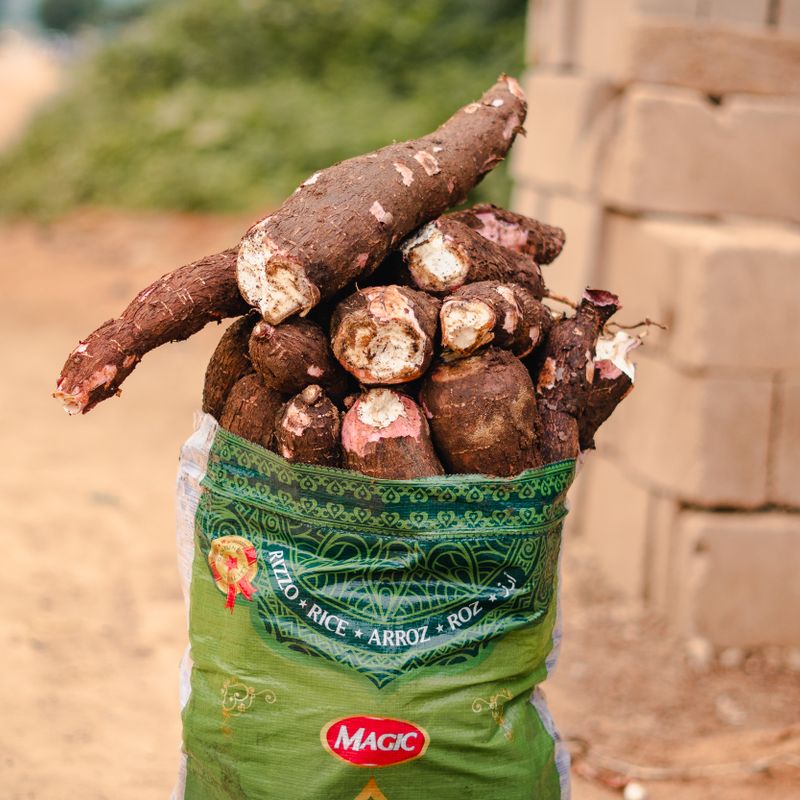
Charred Habanero and Crispy Cassava Root Rice
A vibrant Caribbean rice dish that combines fluffy white rice with crispy pan-fried cassava root cubes and charred habanero peppers for heat and smokiness. The cassava adds a starchy crunch while lime juice brightens the entire plate. Best served as a spiced side dish alongside grilled proteins or Caribbean stews.
- Prep
- 20 min
- Cook
- 35 min
- Wait
- 15 min
- Total
- 1 hr 10 min
- Makes
- 4 servings (about 1 cup each)
Steps
Before you start
- Peel and cut cassava root into even ½-inch cubes to ensure uniform cooking
- Have all ingredients measured and ready before you start cooking
- Use fresh habaneros; the char adds essential smoky flavor to the dish
Parboil the cassava
- Bring a pot of salted water to a boil.
- Add the cassava cubes and simmer for 8–10 minutes until they are just tender but still hold their shape.
- The cassava should be cooked enough that a fork easily pierces it, but it should not be soft or mushy.
- Drain well and pat dry with paper towels—removing excess moisture is essential for crispy edges.
+ Show details− Hide details
Ready when: Cassava is fork-tender but still holds its shape; pieces are pale gold, not soft
Tip: Pat the cassava dry thoroughly—wet cassava will steam rather than crisp. Do not skip this step.
Rinse and cook rice
- Rinse the rice under cold water in a fine-mesh strainer until the water runs clear, about 1–2 minutes.
- In a 2-quart saucepan, bring 2½ cups of water to a boil over high heat.
- Add the rinsed rice and ½ teaspoon salt, stir once, and reduce heat to low.
- Cover tightly with a lid and simmer for 15 minutes without lifting the lid.
- Remove from heat and let rest, still covered, for 5 minutes.
+ Show details− Hide details
Ready when: Rice grains are tender and fluffy; liquid is fully absorbed
Tip: Do not peek under the lid while the rice cooks—steam escape will result in unevenly cooked rice.
Crisp the cassava
- While the rice rests, heat 3 tablespoons of oil in a large cast-iron or heavy-bottomed skillet over medium-high heat until the oil shimmers, about 1 minute.
- Working in batches to avoid crowding, add the dry cassava cubes and cook for 8–10 minutes, stirring occasionally and adjusting the heat as needed, until they are golden brown on all sides and crispy.
- Transfer to a plate lined with paper towels and season lightly with salt and black pepper.
+ Show details− Hide details
Ready when: Cassava cubes are deep golden brown on all sides with a crispy texture; they sound hollow when tapped
Tip: Don't crowd the pan—cassava needs space to brown evenly. Cook in two batches if necessary. The crisping is what makes this dish special.
Char the habaneros
- Reduce the heat to medium.
- Add the remaining 1 tablespoon of oil to the same skillet.
- Place the whole habanero peppers in the dry pan and cook for 3–4 minutes, turning occasionally with tongs, until the skin is charred and blistered all over.
- The peppers should be soft and fragrant.
- Transfer to a cutting board and allow to cool slightly, about 1 minute.
+ Show details− Hide details
Ready when: Habanero skin is blistered and charred; pepper is soft to gentle pressure
Tip: Charring mellows the habanero's raw bite while adding smoky depth. Wash your hands after handling; the oils can irritate skin and eyes.
Mince and infuse peppers
- Once cool enough to handle, finely mince the charred habaneros, removing the stem and large seed clusters but keeping smaller seeds for extra heat if desired.
- The charred skin and all flesh should be included—don't peel them.
- Set aside.
+ Show details− Hide details
Ready when: Habaneros are finely minced into ⅛-inch pieces or smaller
Tip: Keep seeds for maximum heat, or remove most for a milder result. The charred flavor is the star here, not pure heat.
Toast garlic briefly
- In the same skillet over medium heat with any remaining oil, add the minced garlic and cook for about 1 minute, stirring constantly, until fragrant but not browned.
- Be careful not to let the garlic burn, as it will become bitter.
+ Show details− Hide details
Ready when: Garlic is fragrant and light golden at the edges
Tip: Keep the heat moderate and watch closely—garlic burns in seconds. Remove from heat if it starts to darken.
Combine rice, cassava, and peppers
- Fluff the cooked rice with a fork and add it to the skillet with the garlic.
- Fold in the crispy cassava cubes and minced charred habaneros gently but thoroughly with a wooden spoon, breaking up any clumps.
- Cook over medium heat for 2 minutes, stirring, to warm everything through and meld the flavors.
+ Show details− Hide details
Ready when: All components are evenly distributed and warmed through; no steam escapes
Tip: Use a gentle folding motion to keep the cassava pieces from breaking into crumbs. The visual appeal of whole crispy cubes matters.
Finish with lime and butter
- Remove from heat.
- Squeeze the fresh lime juice over the rice and fold in gently.
- If desired, add a small pat of butter for richness.
- Season to taste with additional salt and black pepper, stirring gently.
- Top with fresh cilantro if using.
+ Show details− Hide details
Ready when: Lime juice is evenly distributed; cilantro is visible throughout
Tip: Add lime juice just before serving for maximum brightness. The acidity ties together the charred peppers and starchy cassava.
Good to know
Tips
- The cassava must be parboiled first, then crisped—this two-step process ensures the inside is tender while the outside becomes crispy and golden. Skipping parboiling will leave the centers hard and starchy.
- Char the habaneros directly in a dry or lightly oiled pan over medium heat rather than boiling or steaming them. This char is the signature element that defines the dish's flavor profile.
- If the cassava browns too quickly before softening through, the parboiling stage was too brief. Conversely, if it becomes mushy after parboiling, reduce the simmering time by 1–2 minutes next time.
- Lime juice should be added at the very end, right before serving, to preserve its fresh, bright acidity rather than cooking it off or allowing it to become bitter.
Make ahead
Cassava can be parboiled, drained, and refrigerated in an airtight container for up to 1 day. Crisp it just before serving. Rice can be cooked up to 4 hours ahead and reheated gently in a covered skillet with 1–2 tablespoons of water over low heat for 2–3 minutes. Assemble the final dish only when ready to eat.
Storage & reheating
Store leftovers in an airtight container in the refrigerator for up to 3 days. The cassava will soften slightly but remain pleasant. Reheat gently in a covered skillet over low heat with 1–2 tablespoons of water, stirring occasionally, for 3–4 minutes until warmed through. Do not microwave, as this will further soften the cassava's crispness. Freezing is not recommended due to texture changes in both rice and cassava.
Substitutions
- fresh habanero peppers → 1 Scotch bonnet pepper or 2 jalapeños, charred the same way. Scotch bonnets offer similar heat and fruity flavor; jalapeños will be milder and grassy rather than spicy.
- fresh cassava root (yuca) → 8 oz (227 g) diced potato (Yukon Gold or russet) or plantain. Both will crisp nicely and add starch. Plantain will be sweeter; potato more neutral.
- long-grain white rice → jasmine, basmati, or parboiled long-grain white rice. Use the same volume of water; jasmine and basmati may absorb liquid slightly differently, so taste and adjust seasoning.
- fresh cilantro → flat-leaf parsley or fresh scallions, thinly sliced. Parsley is milder and more herbaceous; scallions add a subtle onion bite. Either brightens the finished dish.