Charred Garlic Scape and Black Vinegar Dip
A smoky, umami-rich dip inspired by Chinese condiment traditions. Garlic scapes are charred until blackened at the edges, then blended with nutty sesame paste, tangy black vinegar, and salty soy sauce to create a complex, addictive dip with depth and heat. Serve with crudités, crispy bread, or roasted vegetables.
- Prep
- 10 min
- Cook
- 8 min
- Wait
- 5 min
- Total
- 23 min
- Makes
- About 1 cup (240 ml) dip; 6 servings
Steps
Before you start
- Gather all ingredients and have them ready
- Pat garlic scapes dry with a towel to help them char evenly
- Use a mortar and pestle or food processor for blending
Char the scapes
- Heat a 10–12-inch cast-iron or heavy stainless-steel skillet over medium-high heat until smoking slightly, about 2 minutes.
- Add the garlic scapes in a single layer (work in batches if needed to avoid crowding).
- Let them sit undisturbed for 2–3 minutes until charred and blackened on one side, then toss and char on the other side and along the length for another 2–3 minutes.
- The scapes should be tender and deeply charred at the edges.
+ Show details− Hide details
Ready when: Scapes are blackened on most surfaces and tender when pierced with a knife
Tip: Don't stir too early; let the first side char fully to develop deep flavor. Don't crowd the pan.
Cool and chop
- Transfer the charred scapes to a cutting board and let cool for 5 minutes.
- Once cool enough to handle, roughly chop them into 1-inch pieces, discarding any tough stem ends if they exist.
+ Show details− Hide details
Ready when: Scapes are cool to the touch
Tip: Don't skip cooling—warm scapes will break apart instead of chopping cleanly.
Blend the dip
- In a food processor or with a mortar and pestle, combine the chopped charred scapes, sesame paste, black vinegar, soy sauce, and neutral oil.
- Pulse or grind until you reach a coarse, chunky paste with some texture—you want a dip that isn't completely smooth.
- Add the warm water 1 tablespoon at a time, pulsing between additions, until the dip reaches a thick but spreadable consistency that holds together but isn't gelatinous.
- Stir in the toasted sesame oil and white pepper.
- Taste and adjust: add more black vinegar for tang, more soy sauce for saltiness, or a tiny pinch more sesame oil for richness.
+ Show details− Hide details
Ready when: Dip is coarse-textured, thick, and spreadable; not smooth or liquidy
Tip: Add water slowly—it's easier to thin than to thicken. A slightly chunky texture is more interesting than a purée.
Optional raw garlic finish
- If desired, fold in the minced raw garlic clove for a sharp, fresh bite that cuts through the richness.
- This is optional but recommended for extra depth.
+ Show details− Hide details
Tip: Add raw garlic sparingly—it's potent. You can always add more at the table.
Serve
- Transfer the dip to a small bowl.
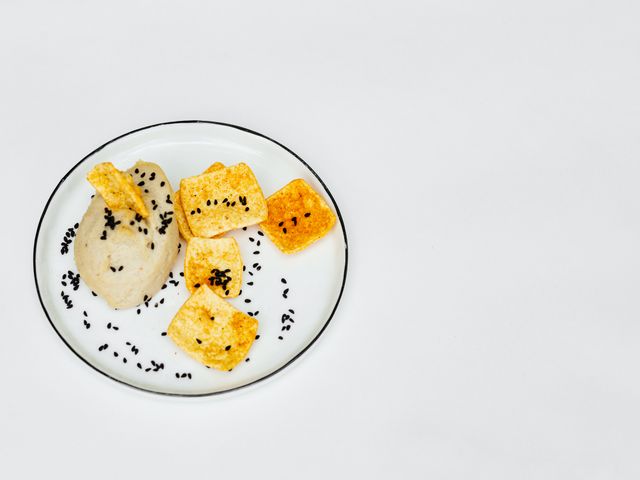
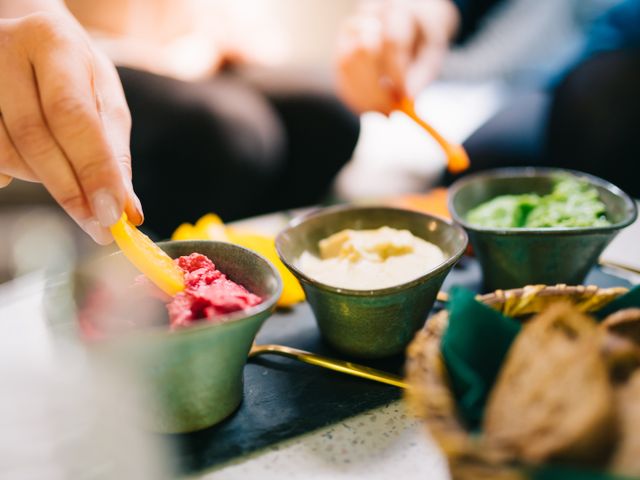
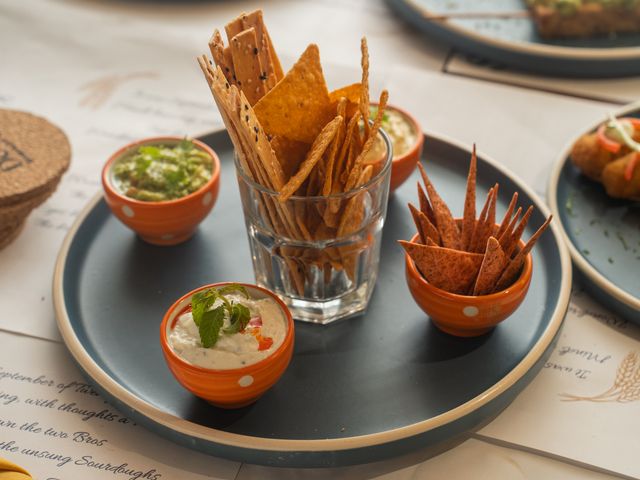
- Serve at room temperature with vegetable crudités (cucumber, bell peppers, radishes), crispy bread, or roasted vegetables.
- A drizzle of sesame oil on top adds a finishing flourish.
+ Show details− Hide details
Tip: Bring the dip to room temperature before serving if chilled—flavors open up as it warms.
Good to know
Tips
- Charring develops smoky depth and mellows garlic scapes' sharpness—don't skip this step or steam them instead.
- Black vinegar is a Chinese pantry staple with complex sweet and tangy notes; regular vinegar tastes flat by comparison and isn't a true substitute.
- The texture matters: a chunky dip with some char bits feels more artisanal and tastes more interesting than a smooth purée.
- Serve this dip with pickled vegetables, roasted cauliflower, or warm flatbread—the richness pairs beautifully with acidity and crunch.
Make ahead
The dip can be made up to 2 days ahead and stored in the refrigerator. Bring to room temperature before serving for best flavor.
Storage & reheating
Room temperature (2 hours): covered in a bowl. Refrigerator (up to 3 days): transfer to an airtight container. Freezer (up to 1 month): freeze in an airtight container, but the texture may become slightly grainy upon thawing; best thawed in the refrigerator overnight and stirred before serving.
Substitutions
- Chinkiang black vinegar (or Chinese black rice vinegar) → balsamic vinegar or rice vinegar mixed with a touch of soy sauce. Black vinegar has a sweet, tangy depth; balsamic mimics this but is less funky; rice vinegar needs the soy to build complexity.
- tahini or Chinese sesame paste → unsweetened peanut butter or almond butter. Sesame paste is traditional and more subtle; peanut butter will dominate more but works in a pinch. Use the same amount.
- fresh garlic scapes, cleaned → charred scallions or 2 oz (60 g) charred soft garlic cloves plus 1 tablespoon fresh chives. Scapes have a mild, sweet garlic flavor; scallions are sharper; soft garlic loses the vegetable texture but gives pure garlic depth.
- soy sauce (salty variety preferred) → miso paste (1 tablespoon red or brown miso mixed with 1 teaspoon water). Soy brings saltiness and umami; miso adds fermented depth and is slightly thicker, so reduce water by 1 tablespoon.