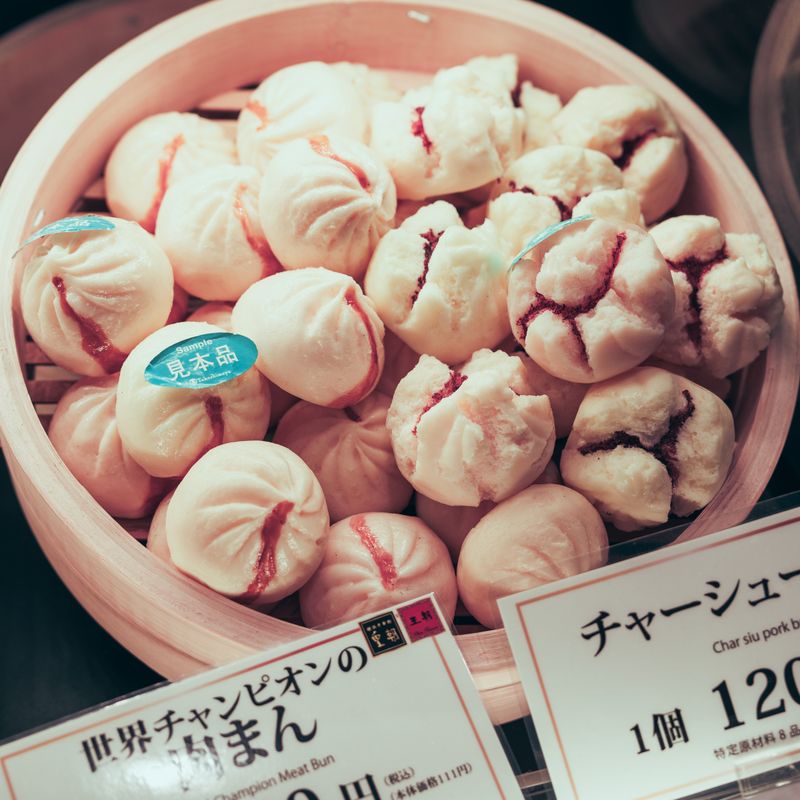
Char Siu Soh (Flaky Chinese BBQ Pork Pastries)
Golden, shatteringly flaky layered pastries filled with diced char siu pork in a glossy, sweet-savory hoisin sauce. A traditional water-and-oil dough is rolled and folded into dozens of thin layers, then baked until crisp and deeply golden.
- Prep
- 1 hr 31 min
- Cook
- 25 min
- Wait
- 1 hr 10 min
- Total
- 3 hr 6 min
- Makes
- 12 pastries
Steps
Before you start
- Use fully cooked char siu from a Chinese barbecue shop or your own batch. Dice it into ½-inch (1 cm) pieces, trimming any large pieces of fat.
- Read the whole recipe first. The dough needs three rests (30, 15 and 10 minutes), and you cook the filling while the first rest is coming up.
- Use shortening or lard at cool room temperature, soft but not melted. Butter makes a less flaky, less crisp pastry.
- Line two large rimmed baking sheets with parchment paper. Preheat the oven to 375°F (190°C) about 20 minutes before you shape the pastries.
Cook the filling sauce
- Heat the neutral oil in a medium saucepan over medium heat.
- Add the minced shallot and cook, stirring, for 1 minute until soft and fragrant but not browned.
- Add the hoisin, oyster sauce, honey, soy sauce and stock.
- Bring to a gentle simmer, then stir the cornstarch slurry (cornstarch and cold water) and pour it in while stirring.
- Cook 1–2 minutes more.
+ Show details− Hide details
Ready when: The sauce is thick, glossy and coats the back of a spoon, leaving a clear line when you drag your finger through it.
Tip: Stir the slurry again right before adding it, because the cornstarch settles quickly.
Fold in the pork
- Remove the pan from the heat.
- Stir in the sesame oil and white pepper, then fold in the diced char siu until every piece is coated.
- Spread the filling on a plate and refrigerate while you make the dough.
+ Show details− Hide details
Ready when: The filling is thick and clumps together, not runny. It should be cold before it goes into the dough.
Tip: Warm filling melts the dough layers and makes the pastry greasy and hard to seal.
Mix the water dough
- In a large bowl, whisk 240 g (2 cups) flour, the sugar and the salt.
- Rub in 50 g (4 tbsp) shortening with your fingertips until the mixture looks like damp sand.
- Pour in the 120 ml (½ cup) water and stir to form a shaggy dough.
- Knead on the counter for about 5 minutes.
+ Show details− Hide details
Ready when: The dough is smooth, soft and slightly tacky but doesn't stick to your hands. It springs back slowly when poked.
Tip: If the dough feels dry and crumbly, knead in water ½ teaspoon at a time. If sticky, dust with a little flour.
Mix the oil dough
- In a second bowl, combine 160 g (1⅓ cups) flour and 80 g (6 tbsp) shortening.
- Press and smear together with the heel of your hand or a spatula for 2–3 minutes.
- Do not add any liquid.
+ Show details− Hide details
Ready when: The mixture forms a smooth, soft, pliable paste with no dry flour streaks. It holds its shape when squeezed.
Tip: If it's too soft to shape, chill it for 10 minutes. If it's crumbly, mash in 1 teaspoon more shortening.
Rest both doughs
- Shape the water dough into a ball and flatten the oil dough into a disc.
- Wrap or cover each tightly with plastic wrap.
- Let them rest at room temperature for 30 minutes so the gluten relaxes and the dough rolls out without springing back.
+ Show details− Hide details
Ready when: The water dough feels soft and stretches without tearing.
Portion and wrap
- Divide the water dough into 12 pieces of about 37 g each and the oil dough into 12 pieces of about 20 g each.
- Roll each into a ball and keep them covered.
- Flatten one water-dough ball into a 3-inch (8 cm) disc, set an oil-dough ball in the center, then pinch the edges up and around to enclose it.
- Place seam side down and repeat with the rest, keeping the wrapped balls covered.
+ Show details− Hide details
Ready when: The oil dough is completely sealed inside with no gaps or leaks.
Tip: Weigh the pieces on a scale so the pastries are even and bake at the same rate.
First roll and fold
- Working with a few balls at a time, press one seam side down and roll it into an oval about 6 × 3 inches (15 × 8 cm), using light, even pressure.
- Roll up the oval tightly from a short end into a short cylinder.
- Place seam side down on the counter and cover with plastic wrap.
- Repeat with all 12 pieces and rest for 15 minutes.
+ Show details− Hide details
Ready when: The oval is thin and smooth with no oil breaking through the surface.
Tip: If the oil dough pokes through, dust lightly with flour and keep rolling more gently.
Second roll and fold
- Turn a cylinder so the open end faces you, press it flat with your palm and roll it into another oval about 6 × 3 inches (15 × 8 cm).
- Roll up tightly again into a short cylinder, seam side down.
- Repeat with the rest, cover and rest 10 minutes.
+ Show details− Hide details
Ready when: Each cylinder is smooth and tightly rolled, with spiral layers visible at the ends.
Shape and fill
- Stand a cylinder on its end with a spiral facing up, press it flat with your palm and roll it into a round about 4 inches (10 cm) wide, slightly thinner at the edges.
- Place about 2 tablespoons (30 g) of chilled filling in the center.
- Bring the edges up and pinch and pleat them to seal tightly, then twist off any excess dough at the top.
- Set seam side down on a lined baking sheet, spacing the pastries 2 inches (5 cm) apart (6 per sheet).
- Gently pat each into a slightly flattened dome.
+ Show details− Hide details
Ready when: The pastries are fully sealed with no filling showing, so they won't leak during baking.
Tip: Keep the filling away from the edge of the round, because any grease or sauce on the rim will stop it sealing.
Glaze and bakeOven 375°F / 190°C
- Position racks in the upper and lower thirds of the oven and preheat to 375°F (190°C).
- Beat the egg with 1 tablespoon water and brush a thin, even coat over each pastry.
- Sprinkle with sesame seeds if using.
- Bake for 25–28 minutes, swapping and rotating the sheets halfway through.
+ Show details− Hide details
Ready when: The pastries are deep golden brown all over, the layers have puffed, and the bottoms are golden when lifted.
Tip: Don't let egg wash drip down the sides, or it will glue the layers together and stop them rising.
Cool before serving
- Transfer the pastries to a wire rack and cool for at least 15 minutes.
- Serve warm or at room temperature.
+ Show details− Hide details
Ready when: The crust is crisp and the pastry is warm, not hot, to the touch.
Tip: The filling stays very hot for a while, so cool them before biting in.
Good to know
Tips
- Keep unused dough covered at all times. A dry skin on the dough will crack and stop the layers forming.
- Roll with firm, even pressure but don't press hard enough to squeeze the oil dough out of the water dough.
- Chill the filling fully so it stays thick. A loose or warm filling will leak and make the layers soggy.
- To check the layers, cut one baked pastry in half. You should see many thin, distinct spirals.
Make ahead
"Make the filling up to 2 days ahead and refrigerate it in a covered container. Shape the unbaked pastries (without egg wash), freeze them on a tray until solid, then store in a freezer bag for up to 1 month. Bake from frozen at 375°F (190°C), adding 5–8 minutes, after brushing with egg wash."
Storage & reheating
"Room temperature: up to 8 hours, loosely covered, for best crispness. Refrigerator: up to 3 days in an airtight container. Freezer: baked pastries up to 2 months. Reheat from the fridge or freezer on a baking sheet at 350°F (175°C) for 10–15 minutes (15–20 from frozen) until the centers reach 165°F (74°C) and the crust is crisp. Don't microwave, as it makes the pastry soggy."
Substitutions
- vegetable shortening or lard → Lard. Gives the most traditional flavor and flakiness. Use the same weight in both doughs.
- char siu pork (cooked) → Roast pork or leftover pork tenderloin with 1 extra tbsp hoisin. Use if you can't find char siu. The flavor will be less sweet and smoky.
- oyster sauce → Vegetarian mushroom stir-fry sauce. Use the same amount for a similar savory depth.
- chicken stock or water → Water. The filling will be slightly less savory but still works well.