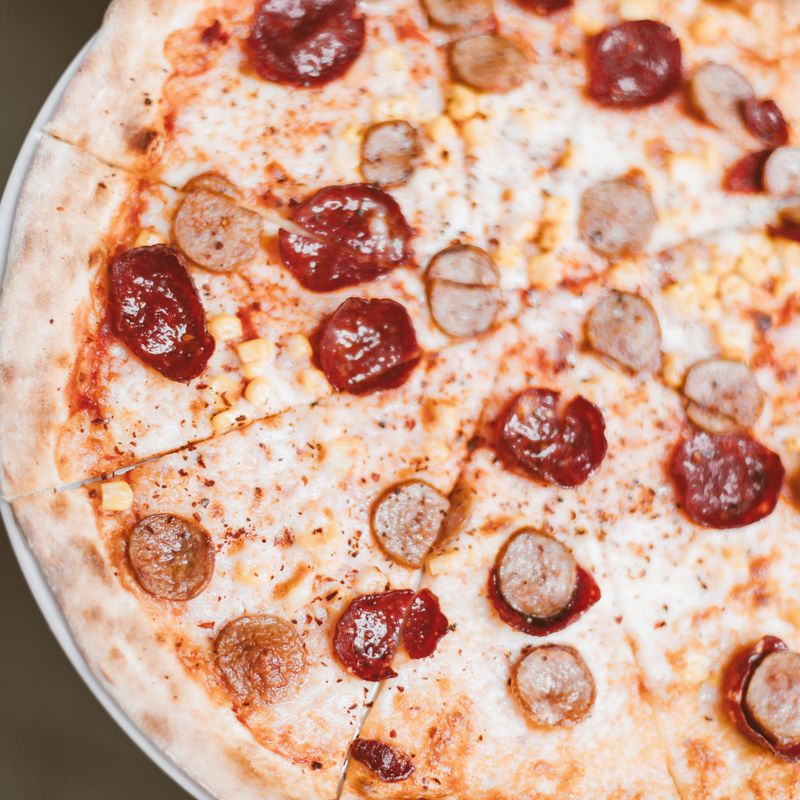
Baked Mac and Cheese with Smoked Sausage
A hearty, one-dish baked pasta with tender elbow macaroni, smoky sausage, and a creamy three-cheese sauce finished with a crispy breadcrumb topping. Rich enough for a main course, comforting enough for a family dinner.
- Prep
- 15 min
- Cook
- 45 min
- Wait
- 10 min
- Total
- 1 hr 10 min
- Makes
- One 9×13-inch baking dish (6 generous servings)
Steps
Before you start
- Preheat oven to 375°F (190°C)
- Have a 9×13-inch baking dish ready
- Fill a large pot with salted water and bring to a boil for pasta
Cook the pasta
- Bring a large pot of salted water (about 6 quarts) to a boil.
- Add elbow pasta and cook until just shy of fully tender—about 2 minutes less than package directions.
- The pasta will finish cooking in the oven.
- Drain in a colander and set aside.
- Do not rinse.
+ Show details− Hide details
Ready when: Pasta is bendable but still firm to the bite (al dente minus 2 minutes)
Tip: Undercooking the pasta here prevents mushiness after baking; residual starch on the noodles helps bind the sauce.
Brown the sausage
- Heat a large 12-inch skillet over medium-high heat.
- Add sausage half-moons and cook, stirring occasionally, until the edges are browned and the sausage releases its oils—about 6 minutes.
- Transfer to a plate.
+ Show details− Hide details
Ready when: Sausage is browned on edges and renders its fat
Tip: Don't worry about cooking the sausage all the way through; it will finish in the oven. Browning adds flavor.
Make the roux
- In the same skillet (do not clean), reduce heat to medium.
- Add 4 tablespoons cold butter and let it melt completely.
- Sprinkle flour over the butter and whisk constantly for 1–2 minutes until the mixture bubbles gently and smells toasty but does not brown.
+ Show details− Hide details
Ready when: Roux is smooth, bubbles gently, smells toasty, and shows no brown color
Tip: Keep the heat at medium to avoid browning the roux, which would darken the sauce. A pale roux makes the creamiest sauce.
Build the sauce
- While whisking constantly, slowly pour in 2 cups cold milk.
- Continue whisking until the mixture is smooth and no lumps remain—about 1 minute.
- Then slowly pour in 1 cup heavy cream while still whisking.
- The sauce should be smooth and silky.
+ Show details− Hide details
Ready when: Cream and milk fully incorporated; no lumps visible
Tip: Add cold dairy slowly while whisking to prevent lumps. If lumps form, press them against the side of the pan with the whisk.
Simmer and thicken
- Increase heat to medium-high and bring the sauce to a gentle simmer, stirring often with a wooden spoon.
- Once simmering, reduce heat to medium-low and continue stirring for 3–4 minutes until the sauce coats the back of a spoon and drips slowly (it will thicken slightly as it heats).
+ Show details− Hide details
Ready when: Sauce coats a spoon and drips slowly; no raw flour smell
Tip: Don't rush this step; simmering removes raw flour flavor and allows the sauce to reach its full body.
Melt in the cheese
- Remove skillet from heat.
- Add Dijon mustard and stir well.
- Add grated sharp cheddar, Gruyère, and Parmigiano-Reggiano in three additions, stirring after each handful until fully melted and smooth.
- Season with cayenne (if using), kosher salt, and freshly ground black pepper to taste.
- The sauce should taste bold—slightly underseasoned, since it will meld with the pasta.
+ Show details− Hide details
Ready when: All cheese is melted and sauce is smooth; no visible curds
Tip: Removing the pan from heat prevents the cheese from breaking and becoming grainy. Stir gently to fully incorporate.
Combine pasta and sauce
- Add the drained pasta back to the skillet and fold it gently with the cheese sauce using a wooden spoon or rubber spatula for about 2 minutes, making sure every noodle is coated and the sausage is evenly distributed.
- Then add the browned sausage back in and fold gently until combined.
+ Show details− Hide details
Ready when: Pasta is evenly coated; no dry noodles visible; sausage is distributed throughout
Tip: Fold gently to avoid breaking the pasta. The mixture should look creamy, not stiff.
Transfer to baking dish
- Pour the entire pasta mixture into a 9×13-inch baking dish and spread it in an even layer with a wooden spoon or spatula.
+ Show details− Hide details
Ready when: Pasta is evenly distributed in the dish
Tip: Use a slightly greased 9×13 dish if you have one; it makes plating easier, though not essential.
Make the topping
- In a small bowl, toss panko breadcrumbs with 3 tablespoons melted butter until every crumb is moistened and looks sandy.
- Scatter evenly over the pasta mixture, pressing gently to create a cohesive layer.
+ Show details− Hide details
Ready when: Breadcrumbs are evenly moistened and distributed
Tip: Moist breadcrumbs toast to golden brown; dry ones will scorch. Use your hands to toss if easier.
Bake until goldenOven 375°F / 190°C
- Bake uncovered in a preheated 375°F (190°C) oven for 25–30 minutes, until the breadcrumb topping is deep golden brown and the sauce is bubbling at the edges of the dish.
- The center should feel warm to the touch.
+ Show details− Hide details
Ready when: Breadcrumb topping is deep golden; sauce bubbles at the edges; center is hot
Tip: If the topping browns too quickly, tent loosely with foil and continue baking. Rotate the dish halfway through for even browning.
Rest before serving
- Remove from oven and let the baking dish rest on a trivet or cooling rack for 10 minutes.
- This allows the sauce to set slightly so servings hold together neatly.
+ Show details− Hide details
Ready when: Bubbling has subsided; surface is no longer piping hot
Tip: Resting also makes it safer to serve immediately to family members.
Garnish and serve
- If desired, top with fresh chopped parsley for color and brightness.
- Scoop into bowls or plates directly from the baking dish while still warm.
+ Show details− Hide details
Tip: Fresh parsley cuts through the richness and adds a pop of color—not essential but recommended.
Good to know
Tips
- Freshly grated cheese melts far more smoothly than pre-shredded cheese, which contains anti-caking agents. If using pre-shredded, it may clump.
- The Dijon mustard enhances the cheese flavor without adding visible mustard taste; do not skip it.
- For a creamier, less sturdy dish, reduce the baking time to 20 minutes; for firmer, more sliceable results, bake the full 30 minutes.
- The sausage renders fat as it cooks, enriching the sauce. Don't drain the skillet after browning it—that's essential flavor.
Make ahead
Can be assembled up to 8 hours ahead: prepare the recipe through Step 7 (combining pasta and sauce), transfer to the baking dish, cover tightly with plastic wrap, and refrigerate. Add the breadcrumb topping just before baking. Add 5–10 minutes to bake time if baking from cold.
Storage & reheating
Refrigerate leftovers in an airtight container for up to 3 days. To reheat, cover with foil and bake at 350°F (175°C) for 15–20 minutes until heated through. Add a splash of milk if the sauce has tightened. Freezing is not recommended; the sauce can become watery upon thawing.
Substitutions
- sharp cheddar cheese, block → Aged white cheddar or extra-sharp cheddar. Use extra-sharp for deeper cheese flavor; substitute weight for weight.
- Gruyère cheese, block → Swiss cheese (Emmental) or Fontina. Both melt smoothly and add nutty flavor; use the same weight.
- smoked beef sausage (like kielbasa or Andouille) → Bacon (8–10 oz), chopped; or diced ham; or fully cooked andouille sausage. Bacon requires cooking in a separate pan; ham and andouille can be used raw as the sausage is already cooked.
- panko breadcrumbs → Crushed saltine crackers or crushed buttery crackers (like Ritz); or grated day-old bread. Use the same weight; crackers brown quickly, so watch closely. Grated fresh bread may require more butter to bind.
More baked pasta
See all →


Find more like this
- Meal
- Dinner
- Diet
- HalalSugar-Free
- Method
- Oven